

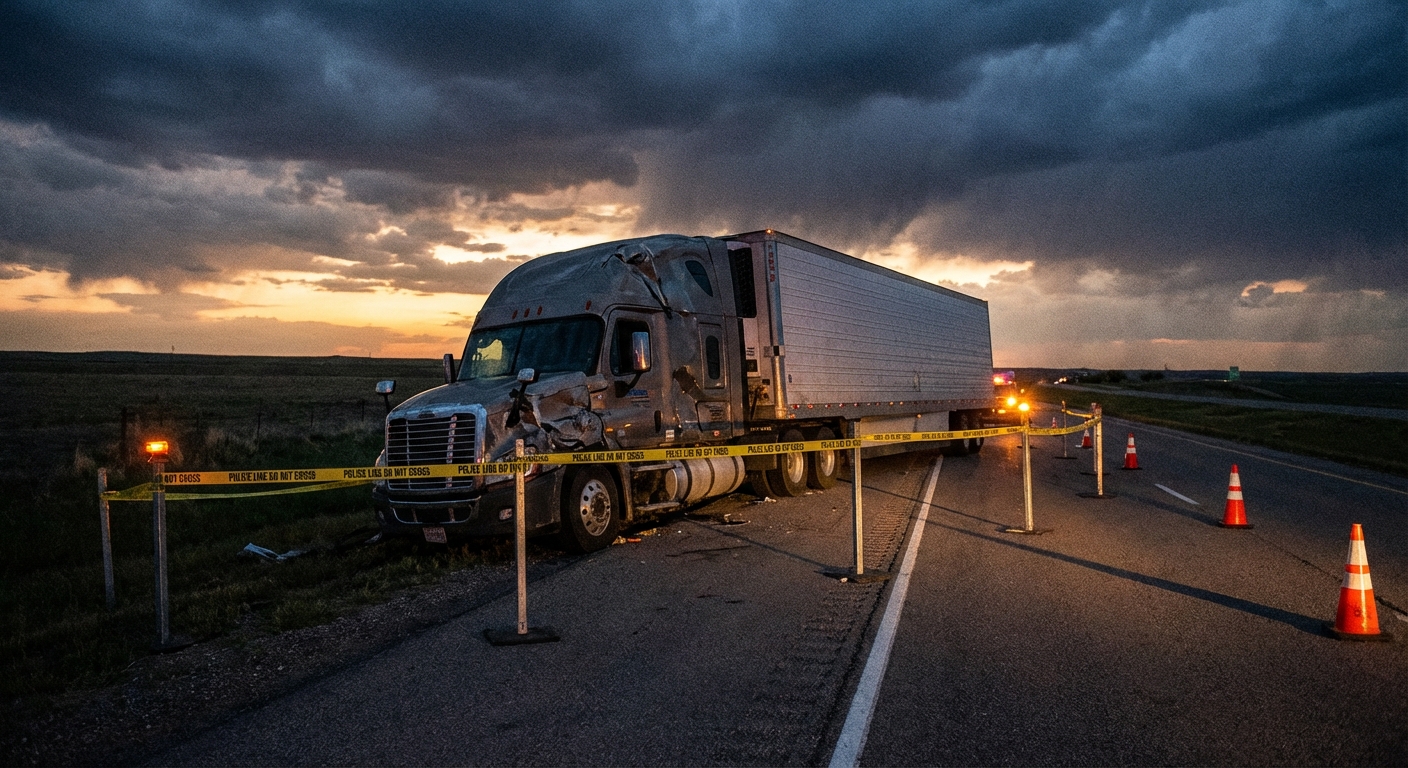
How UPS Truck Accidents Differ From Car Accidents
When a UPS truck hits you, the legal and financial stakes are fundamentally different from a standard car accident. A UPS vehicle is a commercial motor vehicle (CMV) regulated by the Federal Motor Carrier Safety Administration (FMCSA). That means UPS operates under stricter safety standards, more detailed record-keeping requirements, and higher liability limits than ordinary drivers. The defendant isn't just an individual—it's a large corporation with insurance carriers, safety departments, and regulatory history. The evidence you'll pursue is different: ELD logs, maintenance records, driver qualification files, and CSA scores. Settlement ranges for truck-versus-passenger-vehicle collisions run substantially higher because of the weight disparity and injury severity. Your claim strategy must account for federal motor carrier regulations, not just state traffic law.
When a UPS truck accident wins: Fault and liability factors
- Extreme weight disparity. An 80,000-pound fully-loaded semi versus a 4,000-pound passenger car. The physics dictate injury severity and liability exposure.
- Federal regulations create clear liability. The [FMCSA enforces hours-of-service rules](https://www.fmcsa.dot.gov/), maintenance standards, and driver qualification files. Violations are evidence of negligence.
- Well-documented evidence trail. UPS maintains ELD logs, dispatch records, maintenance schedules, and driver qualification files. These records are legally required to be preserved and are discoverable.
- Deep insurer and corporate resources. UPS carries higher liability insurance and has dedicated safety departments. The insurance carrier will defend aggressively, but that also means adequate coverage to satisfy judgments.
- Injury severity is typically higher. When an 18-wheeler collides with a passenger vehicle, the occupants of the car almost always sustain more severe injuries. This drives settlement amounts upward.
When a regular car accident wins: Simplicity and faster resolution
- Simpler factual pattern. No federal regulatory layer. State traffic law governs, and the defendant is usually an individual or small business with straightforward insurance.
- Fewer expert witnesses. Car accidents may require an accident reconstructionist; truck accidents require accident reconstruction, trucking safety experts, and medical testimony. More experts mean longer, costlier litigation.
- Faster discovery and settlement. Without federal records to preserve and produce, the case typically moves faster. Many car accident cases settle within 12–18 months.
- Lower insurance caps. Personal vehicle owners carry standard liability limits ($25k–$100k in most states). While lower, they're often easier to reach settlement with because the defendant cannot hide behind corporate structure.
- Less aggressive defense. Individual defendants often lack the resources for multi-level appeals and expert depositions. UPS has a dedicated defense team and adjusters trained in carrier liability.
Talk to a truck accident lawyer today
Free consultation — no fees unless your case wins.
Get started →Cost comparison: Settlement ranges
UPS truck accidents:
- Minor injuries (soft tissue): $100k–$300k
- Moderate injuries (fractures, surgery): $300k–$1M
- Severe injuries (permanent disability, disfigurement): $1M–$3M+
- Wrongful death: $2M–$5M+ (varies by jurisdiction and jury)
Regular car accidents:
- Minor injuries (soft tissue): $10k–$50k
- Moderate injuries (fractures, surgery): $50k–$250k
- Severe injuries (permanent disability): $250k–$1M+
- Wrongful death: $500k–$2M+ (varies by jurisdiction)
These ranges are driven by injury severity, applicable liability caps, and the defendant's resources. [NHTSA crash data](https://www.nhtsa.gov/) shows that commercial vehicle crashes result in higher injury and fatality rates than standard vehicle accidents. UPS's federal obligations and insurance limits typically result in settlements at the higher end of available coverage.
Critical differences in evidence and discovery
UPS truck accident claims require a different evidence strategy from the start. You must send a preservation letter within days of the crash. Under FMCSA regulations, UPS is required to retain driver qualification files, ELD data, maintenance records, and dispatch logs for specific periods. After those periods expire, destruction of records is legally permitted—but a preservation letter stops the clock.
In a regular car accident, you request standard insurance documents and medical records. In a UPS truck claim, you're requesting federal records: the driver's CSA score, the motor carrier's safety ratings, the vehicle's maintenance history, and compliance audits. These are public records available through the FMCSA and create an independent liability claim against UPS itself, separate from the driver's personal negligence.
The timeline is also different. UPS cases rarely settle quickly because defense counsel must gather and analyze federal safety data. This complexity extends litigation but often strengthens the plaintiff's position if violations are found.
Common questions
Is UPS automatically liable if one of its trucks hits me?
No. UPS must still be proven negligent. However, the weight disparity, federal safety regulations, and higher insurance limits create a strong foundation for liability. If the UPS driver violated FMCSA rules—such as hours-of-service violations—that strengthens your claim considerably.
What evidence is most important in a UPS truck accident claim?
ELD logs, dispatch records, driver qualification files, maintenance records, and CSA safety scores. These are federal records and mandatory in UPS cases. They prove whether the carrier was operating in compliance with FMCSA standards.
Why do UPS truck settlements cost more than car accident settlements?
Three reasons: the vehicle weight creates more severe injuries, federal liability standards are stricter, and UPS carries much higher insurance coverage. A $300k settlement in a car accident might become $800k in the same factual scenario involving a commercial truck.
How long does a UPS truck accident case take?
Typically 1–3 years from crash to settlement or judgment. The need to obtain and analyze federal safety records, depose trucking safety experts, and prepare for discovery takes time. Car accidents often settle in 12–18 months.
Should I hire a lawyer for a UPS truck accident?
Yes. UPS will immediately assign defense counsel experienced in carrier liability. You need an attorney who understands FMCSA regulations, federal record preservation, and the discovery process specific to commercial motor vehicle claims.
Experienced truck accident attorneys. No upfront cost.
Free consultation →