

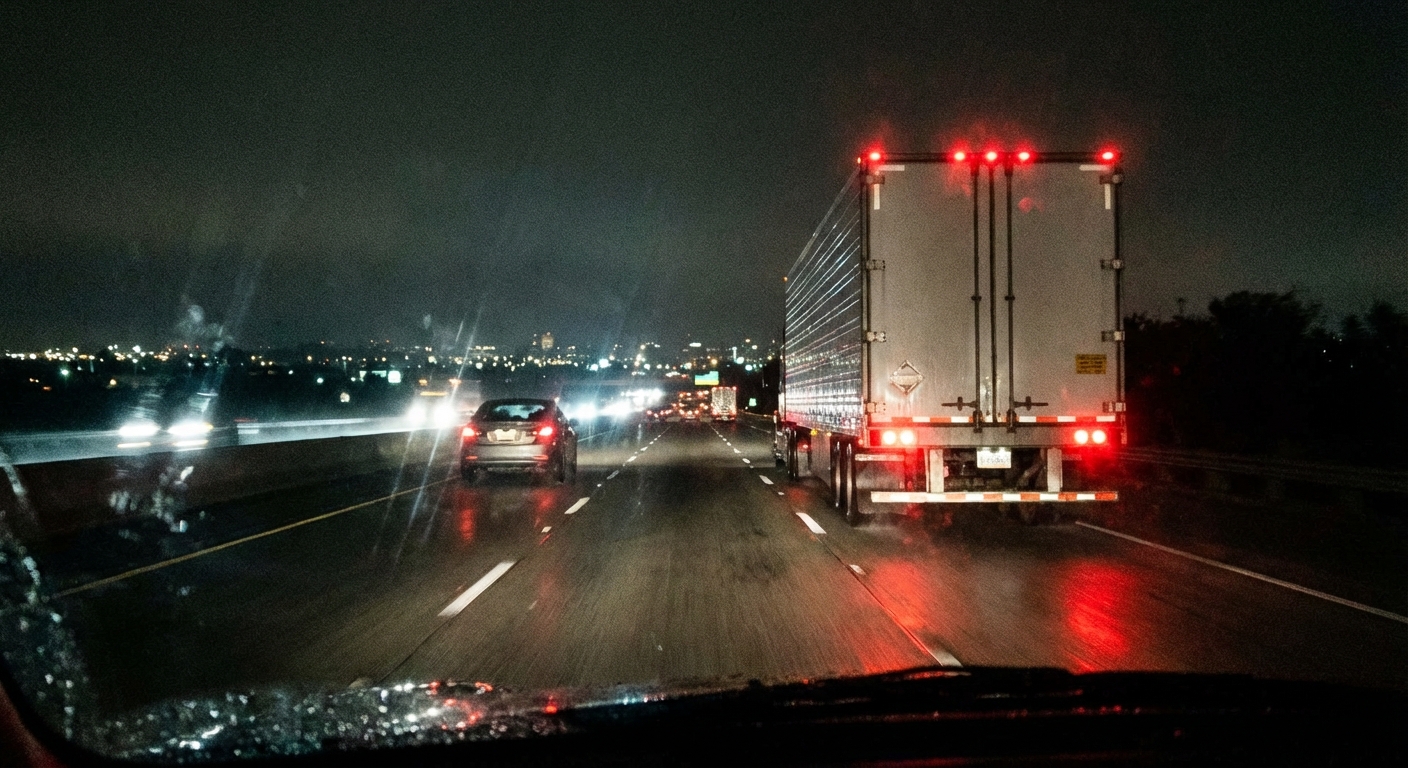
Tyler Truck Accident Attorney for Commercial Vehicle Crash Victims
A truck accident attorney in Tyler helps victims of commercial vehicle crashes recover damages by investigating the collision, preserving critical evidence from the motor carrier, and negotiating or litigating against trucking companies and their insurers. Tyler truck crashes often involve large commercial vehicles whose drivers and employers are governed by federal DOT and FMCSA regulations — electronic logging device (ELD) data, hours-of-service violations, and maintenance records become essential evidence in proving liability. An experienced attorney in this practice area files preservation letters to prevent evidence destruction, subpoenas the driver's qualification file, and analyzes CSA scores to establish negligence. Settlements in truck accident cases typically exceed vehicle-only claims because of the severe injuries that result from the physics of an 80,000-pound tractor-trailer colliding with a passenger vehicle. Your case likely involves multiple defendants: the driver, the motor carrier, potentially a shipper or broker, and insurance carriers with substantial policy limits.
What a Tyler Truck Accident Attorney Does: At a Glance
A truck accident attorney in Tyler handles a specific kind of personal injury claim: crashes involving commercial motor vehicles (CMVs) — 18-wheelers, tractor-trailers, semis, and other Class 8 trucks. These cases differ fundamentally from car-versus-car collisions because the defendants are trucking companies and their insurers, the evidence is heavily documented (ELDs, logs, maintenance records), and the injuries are often catastrophic.
Here's what your attorney will do in the first 30 days:
- File a preservation letter to the motor carrier, shipper, broker, and any third parties, instructing them to retain all evidence related to the crash. Without this, companies may legally destroy ELD data after 15 days.
- Subpoena the driver's qualification file (DQF), including the driver's CDL history, DOT physicals, training records, and any prior violations.
- Obtain the vehicle maintenance and inspection records from the motor carrier, looking for defects in brakes, tires, coupling, or lights that may have contributed to the crash.
- Request dispatch communications, load documentation, and bill of lading to establish whether the shipper or broker bears liability for how the cargo was loaded or time pressures imposed on the driver.
- Analyze the CSA (Compliance, Safety, Accountability) score of the motor carrier. A CSA score above the intervention threshold in unsafe driving or hours-of-service violations establishes negligence against the carrier itself, separate from the driver.
Tyler truck accident cases often settle in the six- or seven-figure range, depending on injury severity and the carrier's insurance policy limits. But recovery hinges on aggressive evidence preservation from day one.
FMCSA Evidence Preservation and the Spoliation Clock
The Federal Motor Carrier Safety Administration (FMCSA) requires trucking companies to retain ELD data for six months, but many companies retain it for only 15 days before purging. A preservation letter stops that clock legally and protects your right to access the data in discovery.
Why ELD data matters:
Electronic logging devices record a continuous timestamp of the driver's hours worked, miles driven, location, and vehicle diagnostics. This data reveals:
- Whether the driver was in violation of the 11-hour driving limit or the 14-hour work window.
- Sudden braking events, speeding, or harsh acceleration that may indicate fatigue or recklessness.
- Vehicle speed at the moment of impact (if the ELD logged it).
- Geolocation and proof the driver was where the crash occurred.
What you must request immediately:
- The ELD event data and narrative logs for the driver's account on the day of the crash, covering at least the prior 24 hours.
- The vehicle's diagnostic module (VDCM) data, which may capture airbag deployment, brake application, and speed.
- The motor carrier's standard operating procedures for driver training, fatigue, and compliance.
- Any post-crash drug screen results (required by FMCSA within 8 hours of a reportable crash).
The spoliation threat:
If a preservation letter is not sent within days of the crash, the trucking company may legally delete ELD data after 15 days. If you file a lawsuit after that window, you've lost evidence that could prove the driver's fatigue or hours-of-service violation. Federal courts and many state courts allow adverse inference — the judge or jury can infer that the missing evidence would have supported your case.
Talk to a truck accident lawyer today
Free consultation — no fees unless your case wins.
Get started →Establishing Negligence Against Motor Carriers
A truck accident attorney doesn't just pursue the driver; the legal strategy focuses on the motor carrier — the trucking company that employed or contracted with the driver. Under federal law and Texas negligence doctrine, the motor carrier can be held liable for:
1. Negligent Hiring and Retention
- If the driver had prior HOS violations, failed a DOT physical, had a history of unsafe driving, or was disqualified from driving, the carrier should not have hired or retained them.
- Your attorney requests the driver's qualification file, CDL history, and training records to establish negligent selection.
2. Negligent Supervision and Failure to Train
- Carriers must train drivers on hours-of-service rules, vehicle inspection, cargo security, and safe operation.
- If training records are missing or inadequate, liability attaches to the carrier.
3. CSA Score and Regulatory Violations
- The FMCSA's Compliance, Safety, Accountability (CSA) program tracks carrier safety in seven categories: unsafe driving, hours-of-service compliance, driver fitness, controlled substance and alcohol use, vehicle maintenance, cargo-related hazards, and criminal history.
- If the motor carrier's CSA score exceeds the intervention threshold in unsafe driving or HOS, you can establish direct negligence against the carrier independent of the driver's actions.
- CSA scores are public and searchable on the FMCSA Safety and Fitness Electronic Records System (SAFER).
4. Vicarious Liability
- Texas law holds employers liable for the negligent acts of employees committed within the scope of employment.
- The driver's negligence automatically becomes the carrier's negligence.
Motor carriers carry commercial liability insurance with policy limits often exceeding $1 million. This is where the settlement money comes from.
Settlement Valuation Under Texas Comparative Negligence Law
Texas is a comparative negligence state, meaning settlement value depends partly on your own degree of fault.
Texas's Modified Comparative Negligence Rule:
You can recover damages as long as your negligence does not exceed 50%. If a jury finds you 40% at fault, your recovery is reduced by 40%. If you're found 51% or more at fault, you recover nothing.
What makes a truck accident settlement larger than a car accident settlement:
- Injury severity: Collisions with 80,000-pound trucks cause far more severe injuries — traumatic brain injuries, spinal cord damage, crushing injuries, limb loss, and death.
- Policy limits: Commercial trucking insurance policies typically carry limits of $1M–$5M or higher. Underinsured motorist (UIM) coverage may add additional recovery.
- Comparative negligence burden on the defense: Even if the plaintiff is partially at fault, the trucking company carries a much heavier burden of proof that the driver's fatigue, HOS violation, or vehicle defect did not contribute to the crash.
Typical settlement ranges by injury tier (Texas truck accidents):
- Minor injuries (soft tissue): $50,000–$150,000
- Moderate injuries (broken bones, lacerations): $150,000–$500,000
- Severe injuries (permanent disfigurement, disability): $500,000–$1.5M+
- Catastrophic or fatal: $1M–$5M+
These ranges assume the motor carrier bears significant liability. Smith County juries tend to be receptive to commercial negligence claims, particularly if the motor carrier's CSA score is poor or the crash involved a violation of federal hours-of-service rules.
Choosing the Right Tyler Truck Accident Attorney
Not every personal injury attorney is equipped to handle commercial truck accident cases. The stakes, evidence, and federal regulatory framework require specialized knowledge.
What to look for:
- Experience with FMCSA and DOT regulations. Your attorney should be fluent in the Federal Motor Carrier Safety Regulations (Part 49 CFR 390–399). They should understand ELD systems, HOS rules, driver qualification files, CSA scoring, and vehicle standards.
- A track record of multi-million-dollar settlements. Truck accident cases with severe injuries routinely settle for $500,000 or more. Ask a prospective attorney for examples of settlements they've secured in the past three years.
- Relationships with trucking industry experts. Your attorney should have access to accident reconstruction experts, FMCSA investigators, and experts in ELD data forensics who can testify at trial.
- Willingness to litigate. Insurance companies often lowball truck accident claims. A strong attorney is prepared to file suit and take the case to trial rather than accept an inadequate settlement offer.
- Immediate action on evidence preservation. The attorney should send a preservation letter within 48 hours of hiring. Any delay risks spoliation of critical ELD data.
Questions to ask during your consultation:
- Have you handled truck accident cases involving this motor carrier or similar carriers?
- What's your average settlement for injuries similar to mine?
- Do you have relationships with FMCSA experts and accident reconstructionists?
- How quickly can you file a preservation letter?
- Will you file suit if the insurer's offer is unreasonable?
Common questions
How long do I have to file a truck accident lawsuit in Texas?
Texas law allows two years from the date of injury to file a personal injury lawsuit (Texas Code of Civil Procedure § 16.003). However, you should hire an attorney immediately. Evidence preservation, investigation, and settlement negotiations take months, and waiting until near the deadline risks missing the filing window.
What's a CSA score and why does it matter in my case?
A CSA (Compliance, Safety, Accountability) score is the FMCSA's safety rating for trucking companies, based on violations in seven categories including unsafe driving and hours-of-service compliance. If a carrier's CSA score exceeds the intervention threshold, it's direct evidence of negligence. CSA scores are public; your attorney will request this data early.
Can I hold the trucking company liable if the driver was an independent contractor?
In most cases, yes. Even if the driver is an independent contractor, the motor carrier can be liable if they negligently hired or retained the driver, failed to supervise, or if the driver violated federal FMCSA regulations. You may also pursue the contractor themselves. Your attorney will investigate the contractual relationship and identify all liable parties.
How much is my truck accident settlement worth?
Settlements depend on injury severity, medical treatment costs, lost wages, the motor carrier's degree of fault, and available insurance policy limits. Truck accident settlements range from $100,000 for minor injuries to $5M+ for catastrophic or fatal injuries. Your attorney will evaluate your case based on comparable settlements and evidence strength.
What does a preservation letter do?
A preservation letter is a formal legal notice sent to the motor carrier, shipper, broker, and other parties instructing them to retain all evidence related to the crash — ELD data, maintenance records, dispatch communications, and more. Without it, the motor carrier may legally delete ELD data after 15 days. Failure to preserve can result in adverse inference at trial.
Do I need an attorney who specializes in truck accidents?
Yes. Truck accident cases involve federal FMCSA regulations, ELD forensics, CSA scoring, and motor carrier liability law that differ significantly from car accidents. A general personal injury attorney may not know how to request ELD data, analyze HOS violations, or identify all liable parties. Specialized expertise maximizes your recovery.
Experienced truck accident attorneys. No upfront cost.
Free consultation →