

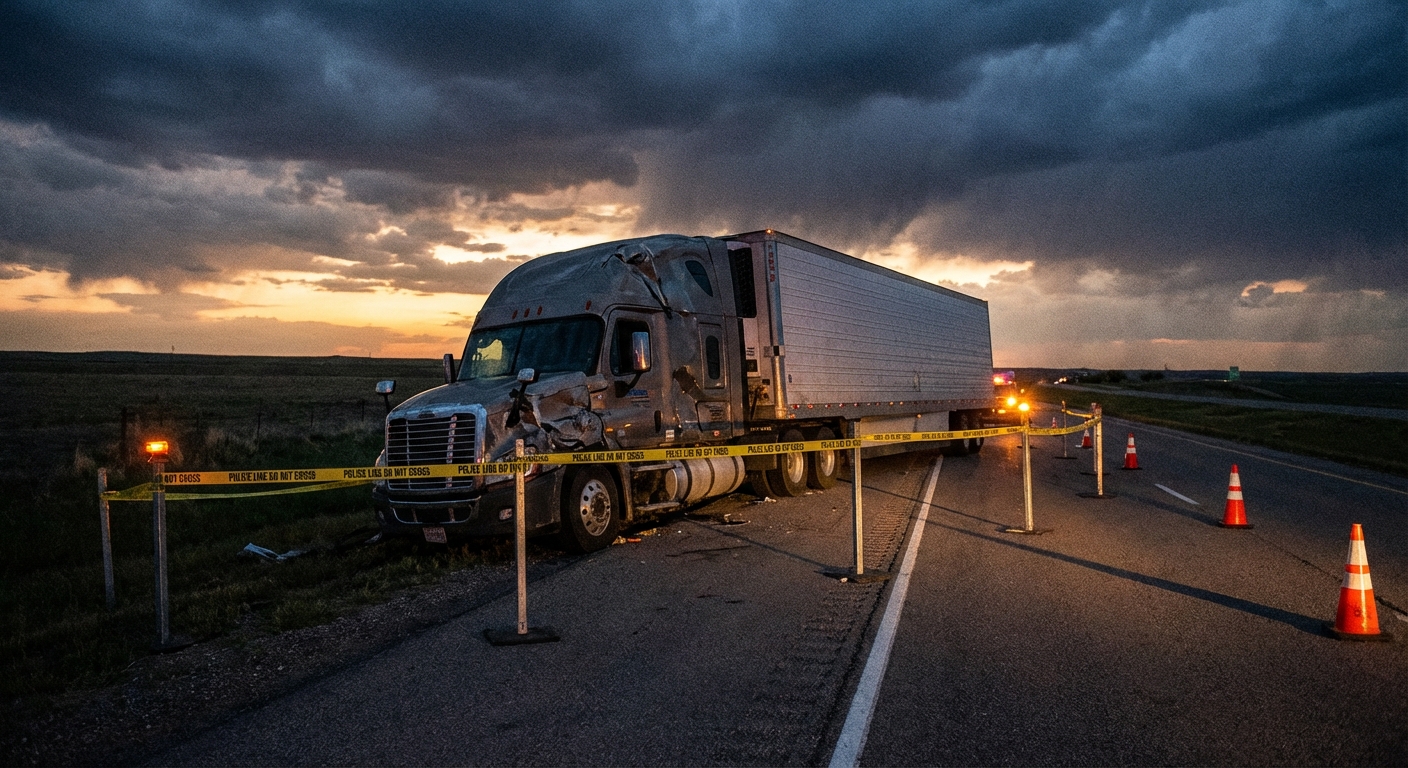
Truck Accident Settlement Calculator for Los Angeles
Truck accident settlements in Los Angeles typically range from $75,000 for minor injuries to $2 million or more for catastrophic outcomes. The real number depends on the severity of injury, degree of negligence by the motor carrier or driver, liability for CSA violations or HOS violations, available insurance coverage, and the jury pool's track record in Los Angeles County civil cases. California's pure comparative negligence rule means you can recover even if partially at fault. A preservation letter sent immediately after the crash—demanding the driver's ELD data, maintenance records, and dispatch logs—often unlocks critical evidence that substantially increases settlement value. Most truck accident cases in Los Angeles settle before trial, but settlement amounts vary widely based on how aggressively the plaintiff's team pursues that discovery.
Settlement ranges by injury severity
Minor injuries (contusions, minor fractures, short-term treatment): $75,000–$200,000
Moderate injuries (significant fractures, soft-tissue damage requiring ongoing physical therapy, temporary lost wages): $200,000–$600,000
Serious injuries (permanent disability, multiple broken bones, spinal cord involvement, chronic pain requiring long-term medication): $600,000–$2,000,000
Catastrophic or fatal (brain injury, quadriplegia, amputation, wrongful death): $2,000,000–$10,000,000+
These ranges assume the plaintiff pursues aggressive discovery and the motor carrier's safety record supports a negligence finding. If the crash occurred during a documented federal violation—such as the driver operating beyond the 11-hour service limit under [FMCSA regulations](https://www.fmcsa.dot.gov/), or the carrier's [Compliance, Safety, and Accountability (CSA) score](https://www.fmcsa.dot.gov/safety-security/fmcsa-data-tools) exceeded the intervention threshold—settlement values typically shift upward by 20-40%. Los Angeles County juries historically apply higher damages in catastrophic cases compared to rural counties, and defense counsel account for that risk premium when evaluating settlement authority.
What factors determine your settlement
Driver's hours of service compliance. The FMCSA mandates 11-hour maximum driving periods and 10 consecutive hours off-duty. ELD (electronic logging device) data proving a violation substantially strengthens liability and increases settlement leverage.
Motor carrier CSA score. A carrier's Compliance, Safety, and Accountability (CSA) score above the intervention threshold in unsafe driving, hours-of-service violations, or vehicle maintenance is public record. High CSA scores in those categories support a direct negligence claim against the carrier itself, separate from the driver.
Vehicle maintenance records. Brake failure, tire defects, coupling failures, or lighting defects discovered in post-crash inspection are powerful liability evidence. Request the motor carrier's last three pre-crash inspections (DVIR records) immediately.
Comparative negligence. California allows recovery even if you're partly at fault. Juries weigh your percentage of fault against the defendant's. If expert analysis shows the trucking company 85% at fault and you 15%, damages are reduced by 15%.
Medical severity and permanence. Permanent scarring, chronic pain, amputation, or mobility loss command higher settlements than temporary injury. Medical records, imaging, and expert testimony establish this foundation.
Lost wages and earning capacity. Document all lost income and future earning capacity if the injury prevents you from returning to your prior job. An economist's report often increases settlement value by 15-25% for serious cases.
Insurance policy limits. A trucking company's liability insurance cap often sits at $1 million (federal minimum for hazmat carriers) or $750,000 (standard). If damages exceed the cap, the case becomes more complex and occasionally settles at the policy limit.
Dispatch and load-planning records. Evidence of pressure to meet a deadline, improper loading, or known safety violations strengthens the negligence narrative.
Post-crash drug screen and prior violations. If the driver tested positive for controlled substances or had prior moving violations, that evidence is admissible and increases liability findings.
Defense counsel's litigation capability. Large motor carriers hire well-resourced defense firms. If the defendant is represented by top-tier counsel, the legal battle is longer and more expensive, but insurance companies often settle earlier to avoid trial costs.
Talk to a truck accident lawyer today
Free consultation — no fees unless your case wins.
Get started →Typical ranges by severity (Los Angeles County context)
| Injury Tier | Settlement Range | Key Drivers |
|---|---|---|
| Minor | $75K–$200K | Quick healing, no surgery, minimal lost wages, no scarring |
| Moderate | $200K–$600K | Ongoing physical therapy, 6–12 months lost work, partial permanent limitations |
| Serious | $600K–$2M | Significant permanent disability, multiple surgeries, lifetime care or limitations, substantial lost earning capacity |
| Catastrophic | $2M–$10M+ | Brain injury, paralysis, amputation, wrongful death, or combinations thereof |
LA County juries tend to award higher damages than statewide averages, especially in catastrophic cases. The metropolitan jury pool's familiarity with high cost-of-living and complex medical testimony typically results in awards 15-25% above the statewide median for the same injury profile. Defense counsel factors this into settlement posture early in the case.
Los Angeles and California specific factors
Statute of limitations. [California Code of Civil Procedure § 335.1](https://leginfo.legislature.ca.gov/faces/codes_displaySection.xhtml?lawCode=CCP§ionNum=335.1) sets a two-year deadline from the date of injury. Missing that deadline bars your claim entirely. File a preservation letter (demand for evidence retention) within 30 days of the crash. It doesn't count against the statute, but it creates a legal duty on the trucking company to protect evidence.
Comparative negligence rule. California applies pure comparative negligence. Unlike modified-negligence states, you recover damages even if you're 99% at fault. This rule shifts settlement negotiations because insurance adjusters can't lean on the assumption that any plaintiff negligence eliminates their obligation.
Discovery leverage in LA. Los Angeles County Superior Court discovery rules are favorable for plaintiffs in commercial cases. Trucking companies anticipate extensive document production (ELD files, dispatch logs, maintenance records, driver qualification files). Early demand for this discovery often accelerates settlement negotiations.
FMCSA jurisdiction. The Federal Motor Carrier Safety Administration has direct oversight of trucking operations. CSA scores and safety audits are public. If the motor carrier was under a safety review or remedial order at the time of the crash, that's admissible evidence of a pattern of negligence.
Venue and jury pool. Stanley Mosk Courthouse (the central civil courthouse) handles most commercial cases in LA County. LA County juries have higher median awards for catastrophic injury than inland counties, and defense counsel accounts for that risk.
Medical infrastructure. LAC+USC, Cedars-Sinai, Harbor-UCLA, and other Level 1 and Level 2 trauma centers in LA County provide detailed medical records and expert testimony. The quality of initial trauma care often affects long-term prognosis and settlement values.
When a settlement calculator isn't enough
A calculator provides a rough frame, but several variables fall outside its scope.
Complex liability chains. Was the trucking company the owner? Was there a separate trailer owner, a shipper, a broker, or a loader? Each party may carry separate insurance. Your actual recovery could exceed a single defendant's policy limits if multiple parties are liable.
Underinsured/uninsured motorist coverage. Your own auto insurance may cover gaps if the motor carrier's liability policy is insufficient. Many truck accident survivors recover more through their own UIM (uninsured/underinsured motorist) coverage than the defendant's policy.
Third-party claims. If the trucking company employed a contractor driver (instead of a direct employee), the liability structure changes. Owner-operators and temporary drivers create separate discovery paths and sometimes separate defendants.
Spoliation and evidence preservation. If the trucking company failed to preserve ELD data, maintenance records, or dispatch logs, courts may impose sanctions ranging from adverse inference instructions (telling the jury to assume the missing data supported the plaintiff) to punitive damages. This isn't captured in a basic calculator but often doubles or triples settlement value.
An experienced commercial truck accident attorney evaluates your case against these variables and typically adjusts the calculator's output based on specific facts. That's why settlement ranges are so wide—the difference between $200,000 and $2,000,000 often comes down to discovery success and how aggressively the defense pursues spoliation arguments.
Common questions
Do I need an attorney to settle a truck accident case in Los Angeles?
Not legally, but statistically yes. Unrepresented plaintiffs typically settle for 30-50% less than those with counsel, especially in serious injury cases. A lawyer's primary value is discovery leverage—demanding the driver's ELD data, the carrier's CSA score, and maintenance records. Without those demands, insurers have little reason to offer maximum settlement.
How long does a truck accident settlement take in Los Angeles?
Minor cases often settle within 6-12 months. Serious and catastrophic cases typically take 18-36 months because medical causation, permanent disability, and earning-capacity loss require detailed expert reports. Settlement negotiation usually accelerates after discovery closes and expert reports are exchanged.
Can I recover if I was partially at fault in Los Angeles?
Yes. California's pure comparative negligence rule allows recovery even if you're partly at fault. A jury will assign fault percentages to both parties, and damages are reduced by your percentage. If you're 20% at fault and damages are $1,000,000, you recover $800,000.
What if the trucking company's insurance doesn't cover the full settlement?
Your own auto insurance uninsured/underinsured motorist (UIM) coverage often fills the gap. Additionally, if other parties are liable (shipper, broker, trailer owner), their insurance policies may provide additional coverage. An attorney examines all available coverage sources.
How much can I expect to pay in legal fees?
Most commercial truck accident attorneys in Los Angeles work on contingency—typically 33% to 40% of your settlement. You pay nothing upfront. Court costs, expert fees, and medical record retrieval are often advanced by the firm and deducted from settlement, so confirm these terms in your retainer agreement.
What's the most important step to take immediately after a truck crash?
Preserve evidence. Request a preservation letter be sent to the trucking company within 30 days, demanding retention of the driver's ELD data, dispatch records, maintenance logs, and the driver's qualification file. After 15 days, many companies legally dispose of this data. A preservation letter creates liability for spoliation if they destroy it anyway.
Experienced truck accident attorneys. No upfront cost.
Free consultation →