

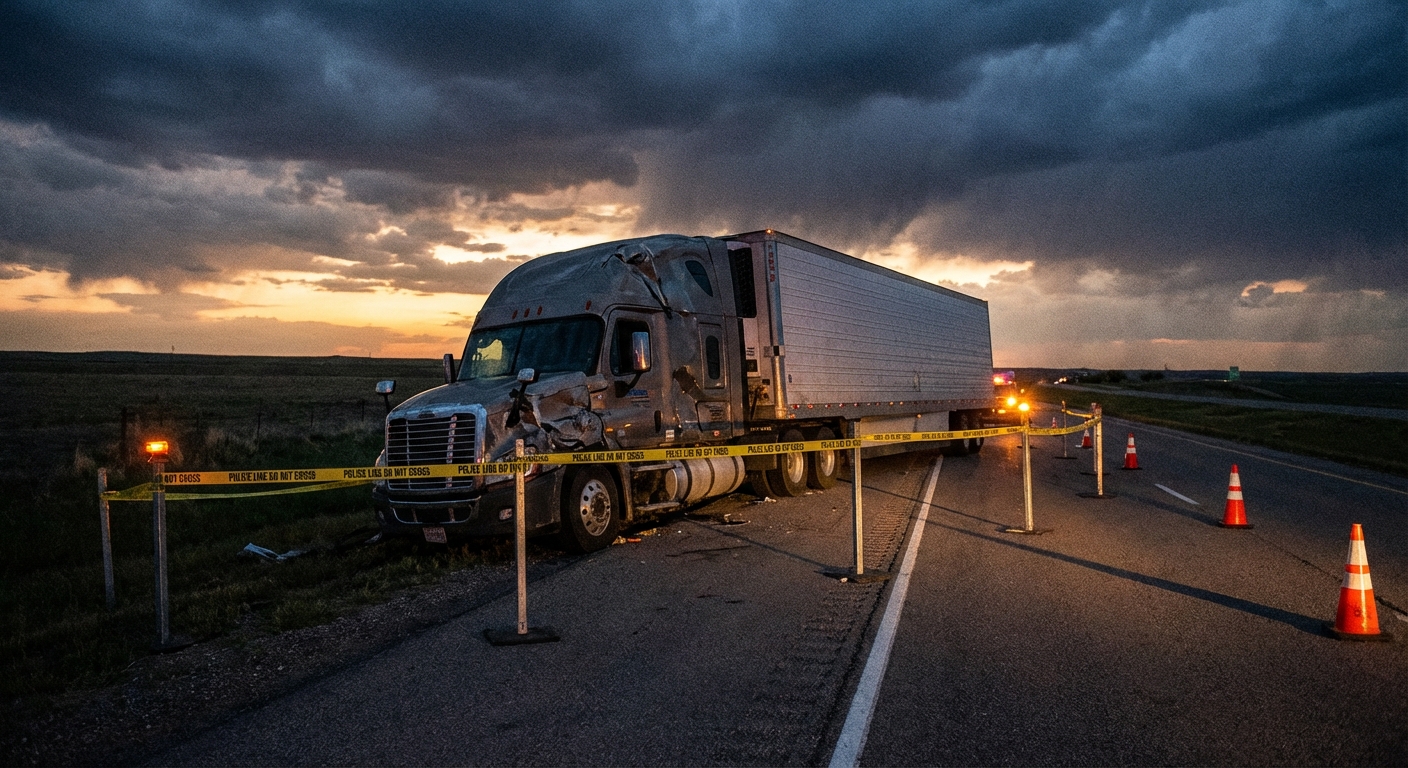
Truck Wreck Lawyer in Houston
A truck wreck lawyer in Houston handles commercial vehicle accidents involving an 18-wheeler and a motor carrier. These cases differ from car accidents: the defendant controls critical evidence — ELD logs, driver qualification files, dispatch records, maintenance histories — and federal retention rules let them delete most data after specific periods. Preserving evidence before deletion is often the most critical legal step. Houston's I-10, I-45, and Gulf Freeway corridors carry concentrated truck traffic. Texas law gives you two years from the crash date to file suit, and Texas uses modified comparative negligence: you can recover if less than 51% at fault. A truck wreck lawyer needs expertise in federal FMCSA regulations, CSA carrier safety scores, and the trucking industry's evidence preservation rules.
Why a Truck Wreck Lawyer is Different
A standard personal injury lawyer may have handled car accidents, slip-and-fall cases, and medical malpractice. A truck wreck lawyer works inside federal trucking regulations — FMCSA hours-of-service rules, electronic logging device (ELD) data, driver qualification standards, vehicle maintenance schedules, and motor carrier safety records. The defendant isn't just a driver; it's often a motor carrier with in-house counsel and insurance carriers that specialize in trucking defense.
Here's what makes it different:
Evidence control. The motor carrier's dispatch system, telematics, ELD records, and maintenance logs are owned and maintained by the defendant. Federal regulations permit retention periods as short as 6 months for some records. A preservation letter from a lawyer stops the deletion clock immediately. Without it, critical evidence vanishes legally.
Regulatory violations. A truck driver operating beyond the 11-hour HOS limit, skipping required 10-hour rest breaks, or failing a DOT physical creates federal violations that form the foundation of negligence claims against both driver and carrier. These violations are strict liability in many contexts.
Carrier liability. The motor carrier itself can be liable for negligent hiring, inadequate training, failure to monitor CSA scores, or knowingly dispatching an unsafe driver. The driver alone often isn't solvent enough to cover the full claim.
Medical severity. An 80,000-pound loaded tractor-trailer versus a 4,000-pound passenger car creates collision physics that result in severe, often permanent injuries. [The National Highway Traffic Safety Administration (NHTSA)](https://www.nhtsa.gov/) reports that truck-involved crashes result in significantly higher rates of severe injury and fatality compared to passenger vehicle collisions. Injuries include spinal cord damage, traumatic brain injury, amputation, and death—often requiring emergency care at Level 1 trauma centers such as Memorial Hermann-TMC. These cases demand economic damages reflecting lifelong care needs, lost earning capacity, and decades of pain and suffering, not just medical bills and a few weeks off work.
Defense sophistication. Motor carriers and their insurers have specialized defense counsel familiar with trucking regulations and expert testimony about driver behavior, vehicle mechanics, and causation. You need counsel equally fluent in that landscape.
Evidence Preservation: Protecting Critical Trucking Data
The moment a commercial truck accident happens, a discovery battle begins. The motor carrier controls the ELD data, maintenance records, dispatch communications, dashcam footage, and driver qualification files. Federal regulations let carriers dispose of many records after specific periods—often as short as 6 months. Once deleted, that evidence is gone, and the plaintiff's case depends on testimony and circumstantial evidence instead.
The preservation letter. When a lawyer sends a formal preservation letter to the motor carrier, it triggers a legal duty to retain all potentially relevant evidence. Failing to preserve after receiving a preservation letter is called spoliation, and courts punish it by allowing adverse inferences (telling the jury the destroyed evidence was probably bad for the defendant) or by dismissing the carrier's defenses entirely.
What to demand in discovery:
- The driver's electronic logging device (ELD) data for at least 30 days before the crash
- The driver's qualification file, including all DOT physicals and medical certifications
- Maintenance records for the tractor and trailer for at least 12 months prior
- Dispatch communications and routing instructions for the date of the crash
- Telematics data if the vehicle was equipped with GPS or on-board diagnostics
- The motor carrier's CSA (Compliance, Safety, Accountability) score and any safety audit reports
- Post-crash drug screen results for the driver
- Cell phone records for the driver and dispatcher
- The bill of lading and any communications with the shipper about cargo weight
Time is critical. Every day the motor carrier retains control of its servers, the risk of deletion increases. A preservation letter sent immediately—within hours or days of the crash—often means the difference between a strong case built on objective data and a weak case built on reconstruction experts and testimony. This is why a truck accident lawyer's first call is often to opposing counsel, not to a damages expert. Preserve first, then investigate.
Talk to a truck accident lawyer today
Free consultation — no fees unless your case wins.
Get started →Federal Trucking Regulations and Carrier Negligence
Commercial truck drivers and motor carriers operate under federal regulations enforced by the [Federal Motor Carrier Safety Administration (FMCSA)](https://www.fmcsa.dot.gov/). These rules exist to prevent accidents; when violated, they provide a foundation for a negligence claim.
Hours of service (HOS) violations. Federal law limits a CMV driver to 11 hours of operation after 10 consecutive hours off-duty. A driver can't exceed 14 consecutive hours from the start of a shift (including off-duty time) in a single day. If your crash occurred at hour 12, 13, or 14 of a driver's shift, that's a federal violation. A jury hearing that the driver was operating in violation of federal HOS rules often infers negligence—fatigue is the assumed cause.
Electronic logging device (ELD) data. Drivers must record their hours on an ELD, which automatically captures the driver's status: on-duty driving, on-duty non-driving, off-duty, or sleeper berth. Falsified logs (log-rolling, logbook manipulation) are common in trucking accidents and are federal violations. ELD data showing a driver falsified logs strengthens your case immensely.
DOT physicals and driver qualification standards. Drivers must pass a DOT medical examination every two years. Failures to update certifications, medical disqualifications ignored, or hiring drivers with known medical issues can be carrier negligence.
Vehicle maintenance. Federal regulations require regular vehicle inspections (Level 1 and Level 2 roadside inspections, pre-trip inspections, and maintenance). Brake failure, tire blowout, lighting defects, or structural damage caused by deferred maintenance can be a negligence claim against the carrier.
CSA scores. The FMCSA publishes each motor carrier's CSA (Compliance, Safety, Accountability) score. If the defendant carrier's CSA score is above intervention thresholds in unsafe driving, hours-of-service, or crash history, that score can be introduced as evidence of the carrier's negligent hiring, training, or retention practices.
The combination of federal violations, carrier negligence, and the carrier's poor CSA history often makes the liability case clear.
Identifying All Defendants: Driver, Carrier, Shipper, and Broker
A single truck accident may involve multiple responsible parties, each with separate insurance and separate liability exposure. Naming all defendants early matters because it:
- Preserves your right to sue each party
- Triggers discovery obligations on each defendant
- Increases total insurance coverage available to settle or pay a judgment
- Prevents one defendant from blaming another and shifting liability away
The driver. The driver is usually operating under the authority of the motor carrier but may own their own truck or lease it to the carrier. The driver can be personally liable for negligent operation.
The motor carrier. The carrier is liable for its own negligence (negligent hiring, retention, training, supervision) and for the driver's negligent operation under the doctrine of vicarious liability. The carrier controls the driver's HOS, assigns dispatch routes, owns or leases the vehicle, and maintains it. Carriers often carry $750,000 to $1 million in liability insurance per incident, sometimes more.
The shipper. The shipper—the company that hired the carrier to move cargo—can be liable if it was negligent in packaging, loading, or securing cargo. Improperly secured cargo can shift during braking, causing a rollover or jackknife. The shipper may have separate liability insurance.
The broker. The freight broker arranges transportation between shipper and carrier. If the broker negligently matched a carrier with a poor safety record or misrepresented load specifications, the broker can be liable. Brokers typically carry $100,000 to $500,000 in liability insurance.
The loader/lumper. Third-party loading companies may have loaded the trailer improperly, causing weight distribution issues. They can be separately liable and insured.
Other vendors. Maintenance contractors, tire shops, and repair facilities can be liable if faulty repairs or maintenance contributed to the crash.
A comprehensive claim identifies and serves all potentially liable parties. Each brings additional insurance and evidence to the table. Many settlements are structured across multiple defendants' insurance policies.
When to Hire a Truck Wreck Lawyer
If you or a family member was injured or killed in a commercial truck accident, you should consult a truck wreck lawyer as soon as possible. Here's why timing matters:
Evidence preservation. The motor carrier begins its legal clock the moment the crash is reported. Within days, they may move records to off-site storage or delete them under retention schedules. A lawyer's preservation letter stops that clock. If you delay, evidence is gone.
Statute of limitations. Texas law gives you two years from the crash date to file a personal injury lawsuit in Harris County District Court. Two years sounds like a long time until you're managing medical recovery, physical therapy, and financial strain. Many claimants miss filing deadlines because they delayed hiring counsel. Filing suit before the deadline is non-negotiable.
Investigation window. The accident scene is preserved for a limited time. Debris is cleared, skid marks fade, photographs are taken by police (not plaintiff's counsel). Hiring a lawyer early means independent accident reconstruction, site inspection, and photographic documentation while evidence is still present.
Medical documentation. Your medical team will order scans, imaging, and testing. A lawyer can ensure those records are properly collected, organized, and explained by expert testimony. Medical records are foundational to damages calculations.
Settlement negotiations. Motor carriers and their insurers move quickly to low-ball settlements, especially against unrepresented claimants. An early-engaged lawyer can begin settlement discussions backed by evidence, medical documentation, and regulatory expertise.
When you may not need a specialist lawyer. If you were in a minor fender-bender with a passenger car and your injuries are minor (soft tissue, resolved in weeks), a general personal injury attorney may suffice. But if a commercial truck was involved, injuries are significant, or liability is complex, a truck accident specialist is essential.
The cost of early consultation is minimal; the cost of delayed action is often a weak claim or a missed deadline.
Common questions
What should I do immediately after a truck accident in Houston?
Call 911 for emergency response and medical care. If safe, photograph the crash scene from multiple angles. Get the truck driver's name, company, and insurance information, plus contact details from any witnesses. Do not discuss fault or circumstances with the driver or motor carrier—anything you say can be used against you. Call a truck wreck lawyer immediately, even before calling your insurance company. Your lawyer will send a preservation letter to stop evidence deletion and begin protecting your rights.
How much is a truck accident settlement worth?
Settlement amounts vary widely based on injury severity, medical costs, lost wages, permanent disability, and the strength of your negligence claim. Minor injuries may settle in the $50,000–$150,000 range. Moderate injuries often range $150,000–$500,000. Severe or permanent injuries frequently exceed $500,000 and can reach into the millions. A truck wreck lawyer will evaluate your specific case, medical prognosis, expected lifetime care costs, and the defendants' liability exposure before suggesting a realistic settlement range.
What is the statute of limitations for a truck accident lawsuit in Texas?
Texas law gives you two years from the date of the crash to file a personal injury lawsuit. If you miss that deadline, your claim is barred and you cannot sue, regardless of the strength of your case. This is why early consultation with a truck wreck lawyer is critical. Some exceptions may extend the deadline (minor plaintiffs, defendants who leave the state), but the general rule is two years.
Can I sue both the truck driver and the motor carrier?
Yes. You can sue the driver for negligent operation and the motor carrier for its own negligence (negligent hiring, retention, training, or supervision) and for vicarious liability for the driver's actions. The motor carrier is often the defendant with the most insurance coverage—$750,000 to $1 million or more per incident. Multiple defendants mean multiple insurance policies and greater total recovery potential.
What if I was partially at fault for the truck crash?
Texas follows modified comparative negligence. You can recover damages even if you were partially at fault, as long as you were less than 51% responsible for the crash. For example, if you were 30% at fault and the total damages are $100,000, you can recover $70,000. Your lawyer will defend your percentage of fault and argue for the lowest possible comparative negligence finding.
How much does a truck accident lawyer cost?
Most truck wreck lawyers work on a contingency fee basis: they take a percentage of your settlement or judgment (typically 25–40%) and charge no upfront fee. You pay nothing unless you win or settle. Your lawyer should explain the fee structure and cost obligations clearly before you sign a representation agreement. Some lawyers advance costs like expert reports and filing fees; others ask you to reimburse those costs from your settlement. Clarify costs and fees upfront.
Experienced truck accident attorneys. No upfront cost.
Free consultation →