

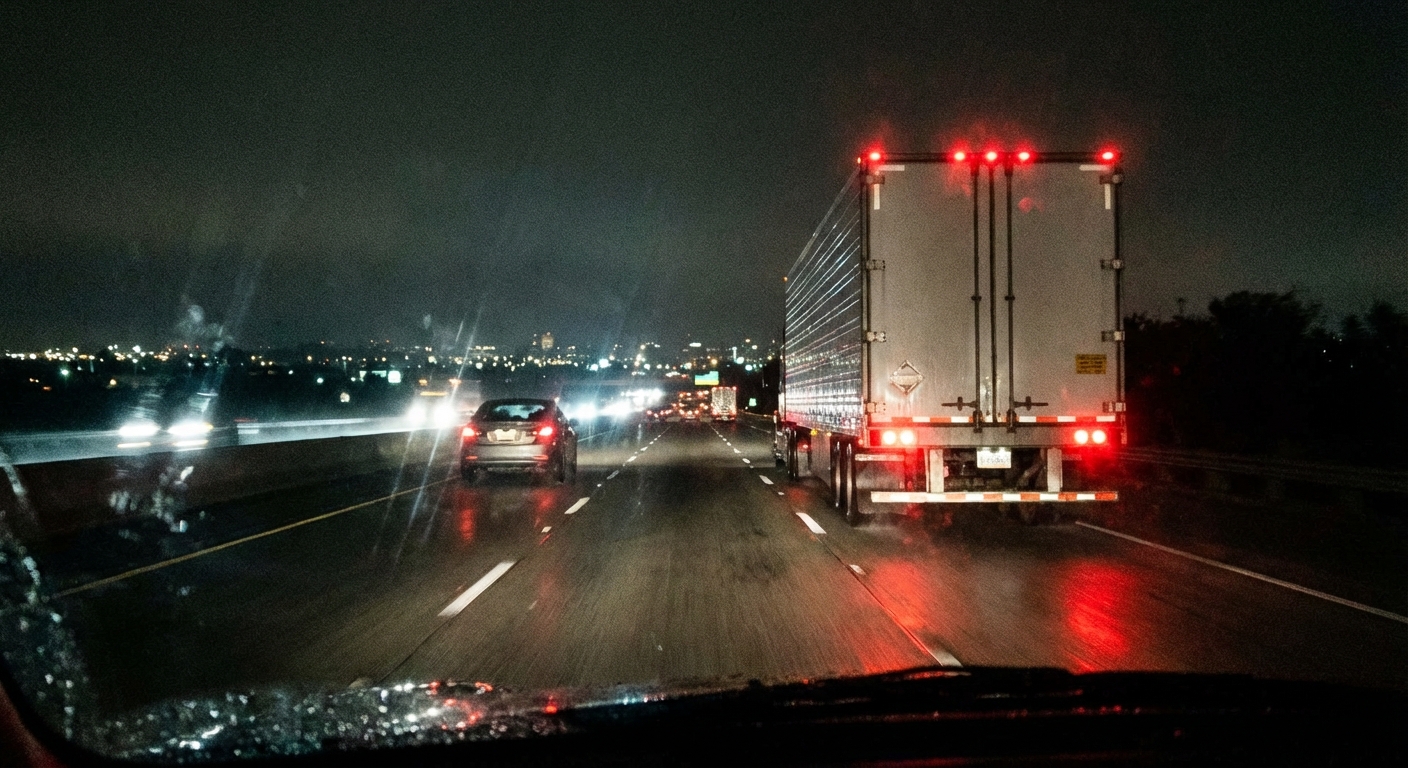
Truck Accident Attorney in Riverside, California
A truck accident in Riverside typically involves federal jurisdiction—the FMCSA governs the driver's hours of service, the motor carrier's CSA safety record, and the equipment maintenance standards that determine liability. Most 18-wheeler crashes are litigated in Riverside County Superior Court, where you'll need discovery of the driver's ELD data, DOT physicals, and carrier maintenance records. A Riverside truck accident attorney with FMCSA background knows which evidence the defense will suppress and how to preserve it before the motor carrier's destruction timeline expires. In Riverside County—home to major freight corridors like I-10 and I-215—commercial vehicle claims often involve multiple defendants: the carrier, the shipper, the broker, sometimes the trailer owner.
What Makes a Riverside Truck Accident Different
Riverside is at the convergence of multiple interstate corridors. I-10 runs east-west through the city, connecting Los Angeles and San Bernardino. I-215 runs north-south. CA-60 and CA-91 add additional cross-traffic. This concentration of routes means carrier volume is high, accident frequency is high, and jury expectations in Riverside are shaped by visible, frequent truck presence.
Under FMCSA regulations, drivers are limited to 11 hours of operation after 10 consecutive hours off-duty. If a crash happened during hour 12 or beyond, that's a federal violation. Motor carriers must maintain CSA safety records; if a carrier's score is above intervention thresholds in unsafe driving, hours of service, or vehicle maintenance, that's discoverable and admissible. Riverside juries are familiar with these violations—they see the trucks daily.
Local factors also matter. Riverside County has pure comparative negligence rules, meaning even a plaintiff 50% at fault can recover 50% of damages. This differs from modified comparative negligence states and affects settlement math significantly.
Most Dangerous Routes and Intersections in Riverside
I-10 through downtown Riverside and the I-215 interchange account for a disproportionate share of truck-involved crashes. The interchange itself is a merge zone where drivers often skip their required 100-yard-ahead scan.
I-215 northbound from the I-10 junction through Jurupa Valley is another high-incident corridor. Grade changes, narrow shoulders, and frequent lane merges create conditions where loaded tractors take too long to decelerate.
CA-91 between I-10 and the Orange County line is a high-speed corridor where carriers often run light loads; speed and inadequate following distance are common causation factors.
CA-60 eastbound near the I-215 junction has a history of carrier speed violations, particularly during peak freight windows (evening rush transitions).
Downtown Riverside surface streets (Mission Inn Avenue, University Avenue) see commercial vehicles navigating tight urban corridors—jackknife and sidesweep injuries are common in these zones.
Each of these routes generates specific discovery: weigh station records, posted speed enforcement data from CHP, and carrier CSA violation history for that specific corridor.
Talk to a truck accident lawyer today
Free consultation — no fees unless your case wins.
Get started →What to Do at the Scene of a Truck Crash in Riverside
Call 911 immediately. Riverside Police Department dispatch will send units and a traffic investigation team if the crash involves injury or significant property damage. Request a full police report; note the report number for later discovery requests.
Do not leave the scene. If you're injured, stay in a safe position but do not move if spinal injury is suspected. Riverside University Health System Medical Center is the closest Level 1 trauma center; paramedics will transport severe injuries there directly.
Request the driver's information and carrier name. Get the tractor-trailer plate number, carrier MC number (on the door), and the driver's CDL and medical certification card if available. Request the shipping papers (bill of lading) and the dispatch records for that trip.
Photograph the scene, road conditions, and vehicle positions before anything is moved. Document weather, traffic control devices, and sight lines. Photograph the cargo if visible.
Request a separate report from the carrier's driver about pre-trip vehicle inspections (DVIR) and any mechanical issues that may have contributed to the crash. Get the driver's logbook or request ELD data through legal channels afterward.
Do NOT sign anything or make recorded statements to the carrier's insurance adjuster.
Report the crash to Riverside Police non-emergency (951-353-7945) if you need to file a separate complaint or obtain additional documentation.
Evidence Preservation and Local Reporting in Riverside County
In Riverside County Superior Court, discovery timelines run 30 days for interrogatories and 20 days for document requests. Motor carriers often claim they have no obligation to preserve evidence beyond their standard retention periods—typically 15 to 45 days depending on the carrier and the type of data.
Send a preservation letter immediately. Address it to the motor carrier (not the insurance adjuster) and demand preservation of: the driver's ELD data, the electronic logging device itself (as physical evidence), the driver's qualification file, the last three DOT physicals, CSA records, maintenance logs and parts receipts for the past 12 months, dispatch communications, and pre-trip and post-trip vehicle inspection reports (DVIRs). The preservation letter stops the carrier's clock for destruction and creates an independent record if spoliation is later disputed.
Request Riverside Police records (CHP reports if the crash was on a state highway) through public records request. Include the case number from the incident report.
File a public records request with Riverside County Assessor's Office for any traffic control device maintenance records or prior complaints about the specific intersection or route.
Engage a forensic engineer early. Riverside juries understand heavy vehicle dynamics because of the local truck presence. A detailed reconstruction establishes the carrier's speed, braking distance, and reaction time—often the centerpiece of liability.
Finding a Truck Accident Attorney in Riverside
Not all personal injury attorneys handle commercial vehicle cases. Truck accident litigation requires fluency in FMCSA regulations, CSA scoring, ELD data interpretation, and federal discovery rules that differ from standard auto cases.
Look for attorneys or firms with FMCSA experience. An attorney who understands the federal regulatory landscape can identify violations early and build discovery requests that expose systemic negligence by the carrier, not just the driver.
Ask about prior truck accident cases in Riverside County. Riverside has a developed plaintiff's bar, but depth in commercial vehicle work varies. An attorney with a track record of Riverside County truck trials and settlements will know local judges, local juries, and the types of experts that resonate in the courtroom.
Verify willingness to engage forensic specialists. Truck cases require expert testimony on driver fatigue (HOS violations and ELD interpretation), vehicle dynamics, and sometimes biomechanics. An attorney who balks at expert costs or timelines may not be the right fit.
Ask about CSA discovery strategy. The motor carrier's public CSA record is a lever few personal injury attorneys use. A truck-focused attorney will know how to request and interpret FMCSA safety ratings.
Check Riverside County Superior Court records for the attorney's case history. Public dockets show dismissals, trial results, and settlement patterns. An attorney with frequent truck settlements in Riverside will have credibility with local carriers and insurers.
Common questions
What should I do immediately after a truck crash in Riverside?
Call 911 and request Riverside Police dispatch. Get the driver's information, the carrier's MC number, and the tractor plate. Photograph the scene, vehicles, and any visible cargo. Do not sign statements or leave the scene. Request the police report number and file a non-emergency follow-up with Riverside PD (951-353-7945) if needed.
How long do I have to file a truck accident lawsuit in California?
California's statute of limitations is two years for personal injury claims and three years for wrongful death. The clock starts from the date of injury, not the date you discover the injury. Do not wait—settlement discussions and evidence preservation should begin within weeks, not months.
What evidence should I preserve from a truck accident?
Send a preservation letter immediately to the motor carrier demanding: ELD data, driver logbooks, DOT medical certificates, CSA records, maintenance logs, dispatch records, and pre-trip inspection reports. Request Riverside Police reports and CHP records if the crash was on a state highway. Engage a forensic engineer to photograph and measure the scene.
Can I sue the trucking company directly, or only the driver?
You can sue both. Under respondeat superior, the motor carrier is liable for the driver's negligence. You can also sue the carrier for its own negligence—failing to hire a qualified driver, inadequate training, insufficient maintenance, or ignoring CSA safety violations. The carrier is often the more solvent defendant.
What FMCSA violations are most common in Riverside truck crashes?
Hours-of-service violations (driving beyond the 11-hour limit or without required rest periods) and vehicle maintenance failures are the most frequent. ELD data often proves HOS violations. Poor CSA scores in unsafe driving, hours of service, or vehicle maintenance are additional liability levers. Discovery should always include the carrier's CSA record and the specific driver's three-year history.
Experienced truck accident attorneys. No upfront cost.
Free consultation →