

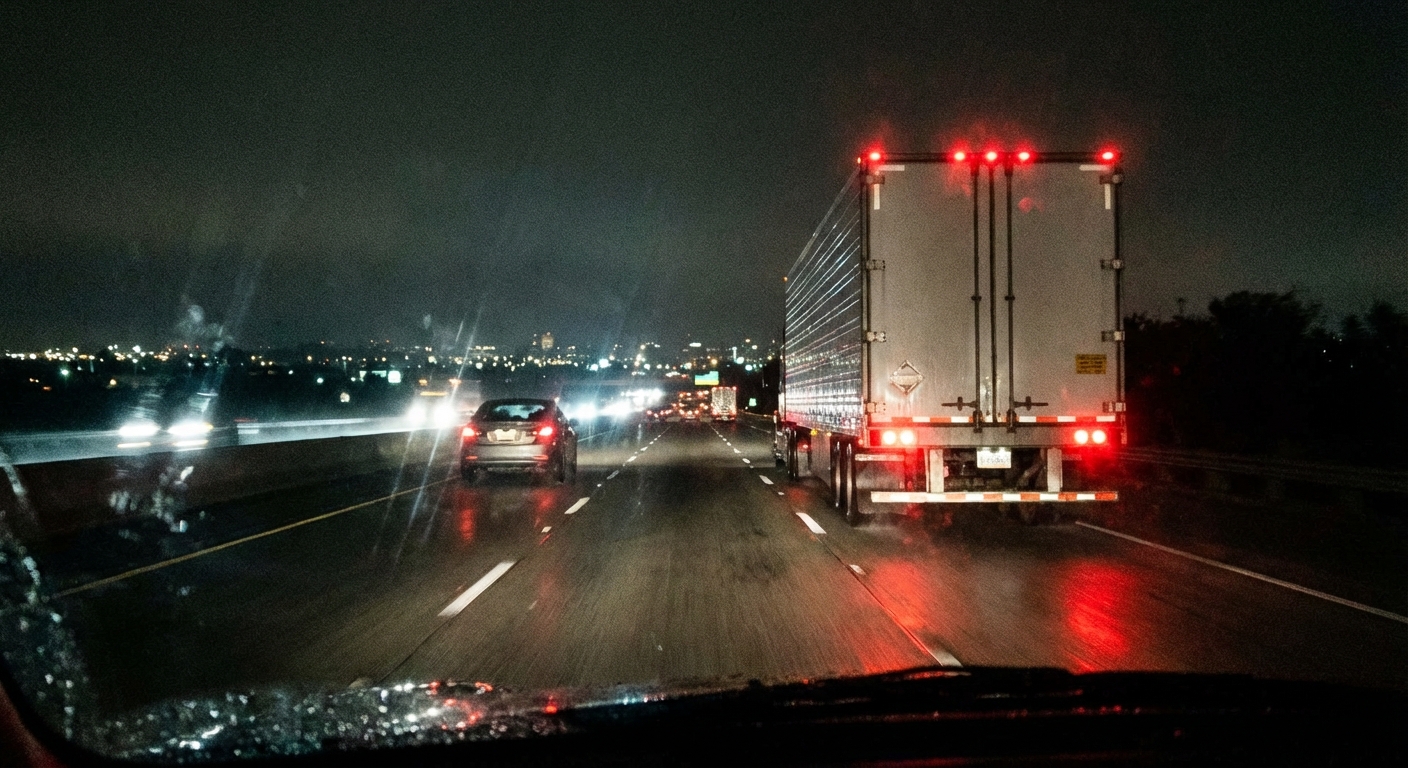
7 Critical Steps After a Truck Accident in Fresno
Truck accidents in Fresno often involve commercial motor vehicles traveling through the Central Valley on Highway 99 or I-5—routes with high crash frequency and severe injury outcomes. The initial hours after a collision are critical: evidence preservation determines whether the plaintiff's team can access ELD data, hours-of-service logs, driver qualification files, and maintenance records. A preservation letter sent to the motor carrier within 24 hours stops the spoliation clock in California and secures data the defense might otherwise delete. This guide walks through the seven steps that matter most in the first days after a crash.
1. Send a Preservation Letter Within 24 Hours
The most time-sensitive action after a truck accident is notifying the motor carrier and its insurance company that the plaintiff intends to preserve evidence. California law doesn't require a specific spoliation period the way some states do, but a preservation letter creates a legal duty to retain documents and data. For a CMV involved in a Fresno accident, that evidence includes the ELD device data (which records speed, braking, idle time, and driver behavior in real-time), HOS logs, driver qualification files, maintenance and repair records, dispatch communications, dash cam footage, and telematics. A motor carrier that deletes or fails to preserve this data after receiving a preservation letter faces sanctions or adverse inferences—the judge can instruct the jury to assume the deleted data supports the plaintiff's case. The letter should be sent certified and to the carrier's registered agent and insurance carrier. This single step often determines whether a case succeeds or fails.
2. Obtain the Driver's Qualification File and Medical Records
Under federal regulations, every CMV driver must maintain a Driver Qualification File (DQF) containing the driver's application, DOT medical certificate (which certifies the driver passed a DOT physical), driving history, and safety performance records. These are public under the Freedom of Information Act, but they're also critical discovery in a truck accident case. If the driver was operating in hour 12 or later (federal HOS rules allow 11 hours of operation), if the medical certificate was expired or noted restrictions, or if prior crashes or violations appear in the file, these facts establish negligence directly against the motor carrier and driver. Request the complete DQF immediately, along with the last three DOT physicals and any disqualifying medical conditions. In Fresno County Superior Court, discovery typically opens within 30 days of filing. Prompt requests ensure the motor carrier can't claim the records are lost.
Talk to a truck accident lawyer today
Free consultation — no fees unless your case wins.
Get started →3. Secure Dash Camera and Intersection Video Footage
Modern commercial trucks carry forward-facing and side-facing cameras that record continuously, overwriting older footage every 30-72 hours depending on the system. If the crash happened on Highway 99, I-5, or at an intersection in Fresno, municipal traffic cameras, red-light cameras, and surveillance from nearby businesses also captured the collision. These videos are often overwritten or deleted within days. Contact the motor carrier immediately and request preservation of all dash camera and on-board recording systems. For public intersection footage, file a formal records request with the California Highway Patrol Fresno Division and the Fresno Police Department. Private business footage (gas stations, hotels, warehouses) requires consent from the property owner. Video evidence that shows the truck's position, speed, and evasive actions (or lack thereof) can establish fault decisively and often increases settlement value by 50% or more.
4. Document the Scene and Preserve Electronic Data
If you or a family member were present at the crash site, photograph the final resting positions of all vehicles, road conditions, skid marks, debris scatter, and the surrounding area from multiple angles and distances. Document weather, time of day, and any visible damage to the truck and passenger vehicle. Photograph the truck's placards (hazmat identification), license plate, and trailer VIN. If the crash occurred during daylight, capture the sun angle and shadows to establish visibility factors. Electronic preservation is equally critical: the cell phone records of both drivers (showing distraction or communication), the truck's telematics black box, any accident reconstruction reports from the CHP or private investigators, and medical records from the trauma center where injured parties were treated (Community Medical Centers or UCSF Fresno likely treated serious injuries). All of this data should be collected and duplicated within the first week; after that, portions may be destroyed or overwritten according to standard retention policies.
5. Investigate the Motor Carrier's Safety Record and CSA Score
The motor carrier's Compliance, Safety and Accountability (CSA) score is public information maintained by the FMCSA and searchable by the carrier's USDOT number. A carrier with high scores in Unsafe Driving, Hours of Service, Vehicle Maintenance, or other categories at the time of the Fresno crash establishes negligence against the motor carrier independent of the driver's individual actions. If the carrier's score was above the intervention threshold (typically a percentile score showing the carrier's safety performance is worse than most competitors), the plaintiff can argue the motor carrier knew of a safety problem and failed to remedy it. Additionally, request the carrier's accident history: if it had prior crashes involving failed brake systems, underride incidents, or speed-related collisions, pattern evidence emerges. These records are requested through FOIA requests to the FMCSA and often settle cases before trial because the evidence of systemic negligence is so clear.
6. Retain a Truck Accident Reconstructionist Early
Truck accident physics differ sharply from passenger vehicle crashes. An 18-wheeler fully loaded weighs 80,000 pounds; a passenger car weighs 4,000. Stopping distance, underride mechanics, and the dynamics of trailer sway or jackknife are governed by the truck's weight, brake condition, load distribution, and road grade. A certified accident reconstructionist analyzes the scene evidence, ELD data (which logs speed and brake pressure), and damage patterns to establish how the crash occurred and who had the opportunity to avoid it. Reconstructionists are expensive ($3,000–$8,000 or more) but are often essential for expert testimony and settlement support. Retain one within the first 30 days of the crash, before the vehicles are demolished for scrap. The reconstructionist can also identify whether the truck's brakes were properly maintained or if brake failure contributed to the crash—a key discovery issue.
7. Consult a Truck Accident Attorney Before Accepting Settlement Offers
Insurance adjusters for motor carriers often contact injured parties within days of a crash, sometimes before medical treatment is complete, with settlement offers that are far below the case's actual value. A truck accident case in Fresno—a Central Valley region with high commercial traffic—typically values significantly higher than a routine car accident because injuries tend to be more severe and future medical costs are substantial. Settlement offers made before full medical information is gathered and before preservation of evidence is complete are almost always inadequate. An attorney familiar with Fresno County Superior Court, local juries, and FMCSA regulations can identify leverage (CSA scores, prior crashes, DOT violations, evidence spoliation) and structure a demand that reflects the true value of the claim. Many truck accident attorneys work on contingency, so there is no upfront cost. Early consultation also ensures the client doesn't inadvertently provide statements to insurance that waive rights or damage the claim.
Common questions
What is the statute of limitations for a truck accident claim in California?
California law allows two years from the date of injury to file a personal injury lawsuit. For wrongful death claims arising from a truck accident, the family has two years from the date of death. If a preservation letter is sent within 24 hours of the crash, evidence is secured even if litigation hasn't formally begun. Missing the two-year deadline results in complete loss of the claim.
Can I file a claim against both the driver and the motor carrier?
Yes. The driver is liable for negligence, and the motor carrier is liable under respondeat superior (vicarious liability for the driver's negligence) and often under direct negligence doctrines (negligent hiring, negligent retention, negligent maintenance of the vehicle, or failure to comply with HOS regulations). A motor carrier with a high CSA score or history of prior similar crashes can face direct liability separate from the driver's individual fault.
What happens if the motor carrier deletes ELD data after a truck accident?
If a preservation letter was sent and the carrier deleted the ELD data anyway, California courts can instruct the jury to assume the deleted data supported the plaintiff's case (adverse inference). This is one of the strongest sanctions available and often leads to immediate settlement. If no preservation letter was sent, the deleted data is harder to recover, though third-party backup sources (the ELD vendor, telematics systems) may still have copies.
How long does a truck accident case take to resolve in Fresno County?
Settlement negotiations often take 12–18 months if liability is clear and injuries are well-documented. If the case proceeds to trial in Fresno County Superior Court, the timeline can extend to 2–3 years from the date of the accident. Complex cases involving multiple defendants or novel legal issues take longer. Early evidence preservation and retention of counsel reduce delays.
Experienced truck accident attorneys. No upfront cost.
Free consultation →