

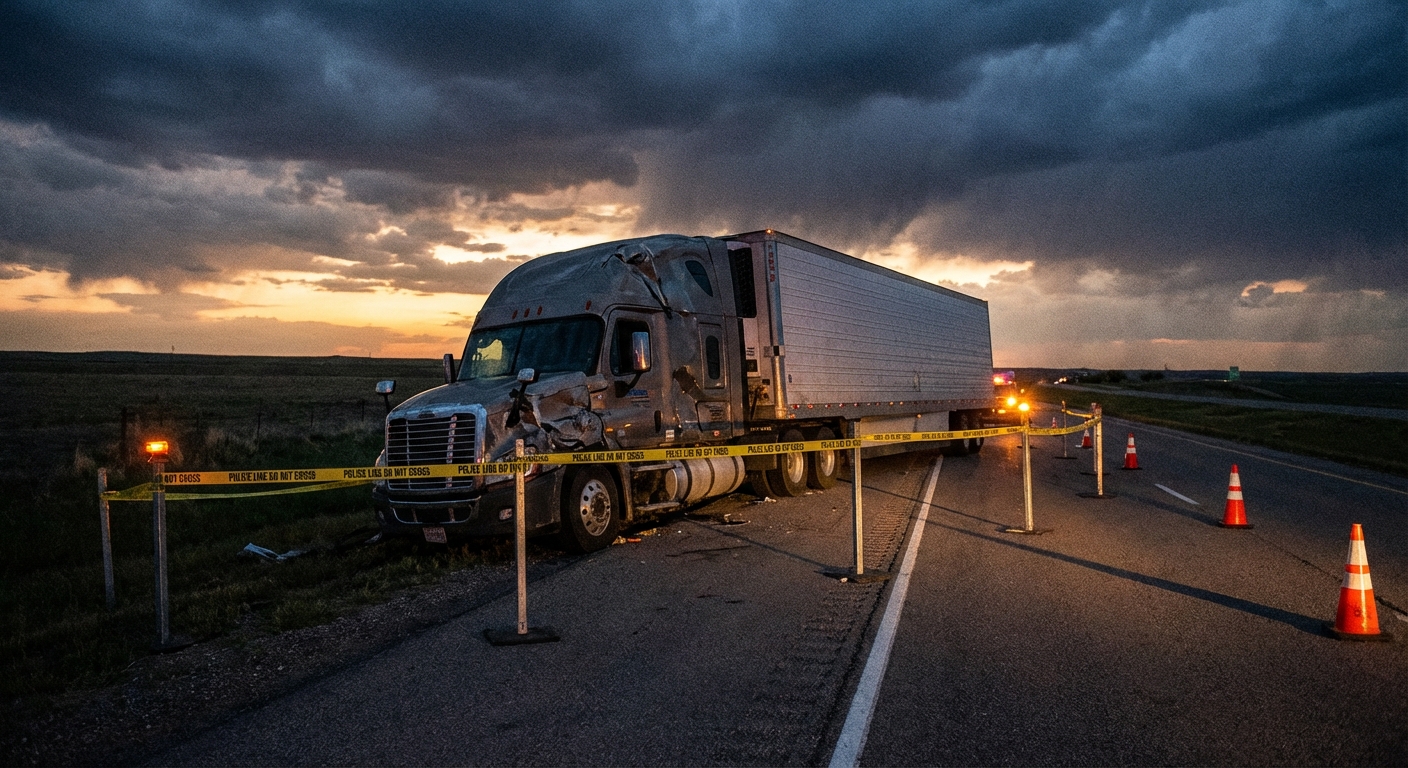
Tow Truck Accident Attorney: Federal Liability & Settlement
A tow truck accident attorney represents people injured when a towing vehicle causes a crash. Tow trucks are commercial motor vehicles subject to federal DOT and FMCSA regulations — the same rules governing 18-wheelers and semis. When a tow truck causes an accident, liability typically rests with the motor carrier, sometimes the equipment owner, and occasionally the driver. A specialized attorney understands federal regulations, knows how to obtain critical evidence like dispatch records and ELD data, and anticipates how towing companies defend themselves. Settling these cases requires knowledge of vehicle weight, operator fatigue under hours-of-service rules, and equipment maintenance standards. This article explains when you need specialized counsel, what they do, and what to expect.
What a tow truck accident attorney does
A tow truck accident attorney does more than file a claim on your behalf. They investigate the carrier's compliance history, request federal evidence the towing company controls, and build a negligence case grounded in federal motor carrier law — not just general negligence principles.
Here's what that work looks like:
- Evidence preservation. Within days, they send a legal preservation letter to the motor carrier, instructing them to retain all ELD data, dispatch records, driver qualification files, and maintenance logs. Federal regulations allow carriers to delete ELD data after a certain period; a preservation letter stops that clock.
- Regulatory investigation. They pull the motor carrier's CSA (Compliance, Safety, Accountability) score from the FMCSA database, review the driver's qualification file and DOT medical certificates, and check for prior safety violations. These records often prove negligence independent of the crash itself.
- Factual investigation. They obtain the ELD logs to verify whether the driver violated hours-of-service regulations. They analyze dispatch records to see if the driver was under unreasonable time pressure. They request maintenance records to identify if equipment failure contributed.
- Carrier liability strategy. They identify whether the motor carrier itself is liable under vicarious liability, negligent hiring, negligent retention, or negligent supervision — each theory has different discovery requirements and settlement implications.
A general personal injury attorney may not know where these records live or how to demand them. A specialized tow truck accident attorney does.
Federal regulations that apply to tow trucks
Tow trucks are classified as commercial motor vehicles. If the truck's gross vehicle weight rating (GVWR) exceeds 10,001 pounds, it falls under federal DOT jurisdiction and must comply with FMCSA hours-of-service regulations.
This matters legally because it means:
- Hours of service rules apply. The driver can work a maximum of 14 hours in a day (with required off-duty periods), and can drive only 11 of those hours. If the crash occurred outside those windows — say, in hour 15 — that's a federal violation that strengthens your negligence claim. The [Federal Motor Carrier Safety Administration](https://www.fmcsa.dot.gov/) publishes these rules and monitors compliance.
- Electronic logging devices are required. Tow trucks over 10,001 GVWR must use an ELD to log hours. The driver cannot use a paper log. ELD data is stored on the device and transmitted to the carrier's server; it's a contemporaneous record of when the driver was behind the wheel, resting, and performing duties.
- Driver qualification files must be maintained. The motor carrier is required to keep a DQF on every driver, including hiring records, a valid commercial driver's license, DOT medical certification, prior employment history, and road test results. If these records are missing or falsified, the carrier may face additional liability.
- CSA scoring tracks safety. The FMCSA publishes carrier safety scores based on roadside inspections and crash history. A high CSA in the 'unsafe driving' or 'hours-of-service' categories shows a pattern of violations and supports a direct negligence claim against the carrier.
These aren't optional rules. They're federal law, and violations often prove fault.
Talk to a truck accident lawyer today
Free consultation — no fees unless your case wins.
Get started →Evidence preservation in tow truck crashes
Tow truck crashes generate a specific set of evidence that disappears quickly if not preserved. An attorney's first action is often a preservation letter — a formal demand that the motor carrier retain all potentially relevant records.
Here's why that matters: ELD data, for instance, is stored on the device and synced to the carrier's server. Federal regulation allows carriers to delete ELD data after a certain retention period (typically one year or more, depending on regulation). A preservation letter blocks deletion and creates a legal duty; destroying records after receiving that letter is spoliation and can trigger adverse inferences in court.
The critical evidence in a tow truck case includes:
- ELD logs and download data. Hours of work, rest, and driving. Violations prove the driver was fatigued or operating illegally.
- Dispatch records. Who assigned the job, when, and what instructions were given. This shows whether the driver was under unreasonable time pressure.
- Driver qualification file. Hiring records, licensing, medical certification, prior violations. Gaps or falsifications suggest negligent hiring or retention.
- Maintenance records. Service logs, repair history, brake inspections, tire wear. Equipment failure may be a concurrent cause.
- CSA scores and safety audits. Public records showing the carrier's compliance history.
- Post-crash drug screen results. Often used in the defendant's defense; you need these records to verify accuracy or contest them.
Without a preservation letter sent immediately after the crash, much of this evidence can legally disappear. Request the attorney send that letter within 48 hours of retaining them.
Liability in tow truck accidents
Tow truck accident liability typically flows in multiple directions.
Motor carrier liability (vicarious liability). The towing company is almost always liable for the driver's negligence on the job, regardless of the driver's employment status (employee or independent contractor). This is called vicarious liability. It's broad liability — the company doesn't have to be directly negligent; the driver's negligence alone triggers it.
Negligent hiring, retention, or supervision. If the motor carrier hired a driver with a history of safety violations, failed to verify credentials, or knew the driver had prior crashes and did nothing, the company faces direct negligence liability separate from vicarious liability. This is powerful because it reaches the carrier's decision-making, not just the driver's conduct. [NHTSA crash data](https://www.nhtsa.gov/) shows that carriers with histories of driver violations are statistically more likely to be involved in subsequent crashes.
Driver liability. The individual driver may be sued for negligence, reckless driving, or hours-of-service violations. However, individual drivers rarely carry insurance sufficient to cover serious injury claims; judgment against the driver often yields little recovery. The motor carrier and equipment owner are the meaningful defendants.
Equipment owner liability. If the trailer, tow dolly, or tow package failed — a brake failure, a lighting failure, a coupling failure — the equipment's owner may bear liability independent of the driver's conduct. This is particularly important if the tow truck was leased and the lessee did not maintain it.
Comparative negligence. Some states allow the plaintiff's own negligence to reduce recovery. If you contributed to the crash, your recovery may be reduced proportionally. An attorney skilled in carrier cases knows how to minimize this exposure through strong evidence of the carrier's own violations.
When to hire a tow truck accident attorney
You should hire a tow truck accident attorney as soon as you're injured by one. Here's why:
The evidence window is narrow. ELD data, dispatch records, and maintenance logs can be legally deleted within months if not preserved. A preservation letter must go out immediately. General personal injury attorneys often don't know this, and by the time you realize it, critical evidence is gone.
Federal law is specialized. Tow trucks fall under the FMCSA, and their rules are different from general negligence law. An attorney who doesn't know hours-of-service rules, CSA scoring, or ELD requirements will miss critical negligence evidence. Conversely, an attorney who does know these rules can build a much stronger case.
Settlement value is often substantial. Tow truck crashes frequently cause severe injury or death because of the weight and speed involved. The motor carrier's insurance is usually substantial, and liability is often clear. A settlement case worth $100,000 to a general attorney might be worth $300,000 to a specialized attorney because they know what to demand and when.
Carrier defense strategies are predictable. Towing companies and their insurers follow patterns. They'll blame the plaintiff for the crash, claim the driver was independent (to limit vicarious liability), or dispute the severity of injuries. A specialized attorney anticipates these moves and counters them.
Statute of limitations. Most states allow 2-3 years to file a personal injury claim. That sounds like time, but evidence preservation and investigation need to happen immediately. Consult an attorney early rather than waiting; evidence can legally disappear within months.
The difference between a general attorney and a specialized tow truck accident attorney is often the difference between a low settlement and a fair one.
Common questions
Is a tow truck considered a commercial truck?
Yes. If the tow truck's gross vehicle weight rating exceeds 10,001 pounds, it's classified as a commercial motor vehicle and must comply with federal DOT and FMCSA regulations, including hours-of-service rules and electronic logging device requirements. This classification matters legally because it subjects the operator and motor carrier to federal safety standards and allows an attorney to build a negligence case using federal violations as evidence.
Who is liable if a tow truck hits my car?
Liability typically rests with the motor carrier (towing company) under vicarious liability — they're responsible for the driver's negligence, even if the driver is an independent contractor. The carrier may also face direct liability if they negligently hired, trained, or supervised the driver. The driver themselves is also liable, though they rarely carry sufficient insurance. The equipment owner may also be liable if equipment failure contributed to the crash.
How much time do I have to file a claim?
Most states allow 2-3 years from the date of the crash to file a personal injury lawsuit (this is called the statute of limitations). However, evidence preservation must happen immediately. ELD data, dispatch records, and maintenance logs can legally disappear within months. Consult an attorney within days, not weeks, so they can send a preservation letter before critical evidence is deleted.
What happens if the towing company deletes the ELD data?
If ELD data is deleted after a preservation letter was served, it's called spoliation. Depending on your state, spoliation can trigger an adverse inference — a court instruction to the jury that deleted evidence was unfavorable to the towing company. This strengthens your case considerably. Without a timely preservation letter, the company can legally delete the data and you lose critical evidence.
Can I settle my tow truck accident claim without a lawyer?
Technically yes, but it's often a mistake. Tow truck accident insurance claims involve federal regulations, technical evidence (ELDs, CSA scores, driver qualification files), and specialized legal arguments. The motor carrier's insurance company has experienced attorneys on their side. A settlement offer made early, before evidence is preserved and analyzed, is usually far below fair value. A specialized attorney's fee often comes from additional recovery they negotiate.
What evidence should I preserve from the crash scene?
Preserve photos of vehicle damage from multiple angles, the crash scene, road conditions, and weather. Collect witness contact information and statements. Save your own medical records and treatment notes. Request a copy of the police crash report. However, the most important evidence — the tow truck's ELD logs, dispatch records, driver qualification file, and maintenance records — is controlled by the motor carrier and requires a lawyer to demand. Contact an attorney immediately to ensure this evidence is legally preserved.
Experienced truck accident attorneys. No upfront cost.
Free consultation →