

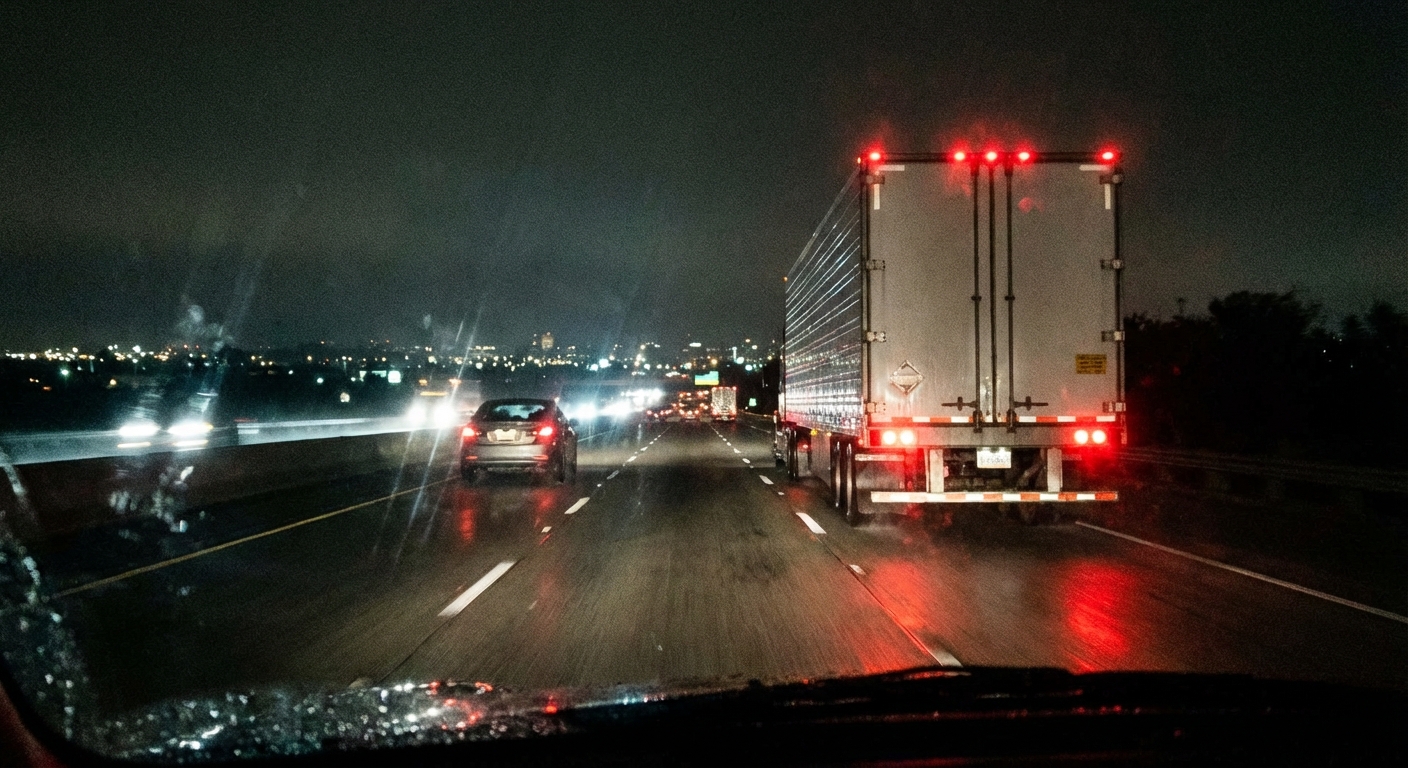
Escondido Truck Accident Lawyer: Commercial Motor Vehicle Expertise
Truck accident cases are legally different from car accidents. When an 18-wheeler hits a passenger vehicle, liability turns on federal motor carrier regulations, the driver's hours-of-service records, maintenance logs, and dispatch communications. An Escondido truck accident lawyer experienced in commercial motor vehicle law knows what evidence to preserve immediately, understands FMCSA violations and CSA scores, and can identify liability against the carrier, the driver, and potentially the shipper or broker. The physics of an 80,000-pound rig means severe injuries are common. Settlement ranges often exceed standard car accident cases. The first 30 days are critical for evidence preservation. A lawyer familiar with trucking industry practices can secure settlements in the millions.
At a Glance: What an Escondido Truck Accident Lawyer Does
A truck accident lawyer in Escondido who understands commercial motor vehicle law performs tasks that a general personal injury attorney cannot. They preserve ELD (electronic logging device) data before the trucking company's systems cycle and overwrite it. They request the driver's qualification file, the most recent DOT physical, and the CSA (Compliance, Safety, and Accountability) score for the motor carrier. They send spoliation preservation letters within the first 48–72 hours, which stops the clock on the carrier's legal right to delete dispatch records and communications.
They understand FMCSA (Federal Motor Carrier Safety Administration) regulations: hours-of-service rules, maintenance standards, hazmat compliance, and driver safety records. If a crash occurred at 12:30 a.m. and the driver's log shows he was operating the CMV (commercial motor vehicle) in hour 13 or 14 of his shift, that's a federal violation and it strengthens the plaintiff's negligence claim directly.
They know which parties to investigate beyond the driver. Was the trailer owner separate from the motor carrier? Did a broker arrange the load? Was the shipper responsible for loading weight distribution? In Escondido cases that proceed through San Diego County Superior Court, the assignment of liability to multiple defendants often determines whether the case settles in the low six figures or the low millions.
Why Truck Accident Cases Demand Specialized Legal Knowledge
The Federal Motor Carrier Safety Regulations (49 CFR Part 382) create a different legal landscape than standard personal injury law. A trucking company is liable not only for the negligent acts of its driver but also for negligent hiring, retention, or supervision of that driver—and sometimes for violations of federal safety standards that exist independently of driver fault.
CSA scores are public. If a motor carrier has an unsafe driving CSA score above the intervention threshold, that carrier is flagged for heightened federal scrutiny. [NHTSA publishes annual CSA thresholds](https://www.nhtsa.gov/). In civil litigation, a high CSA score is admissible evidence of a culture of negligence.
Federal agencies publish crash data and investigation standards. The [Federal Motor Carrier Safety Administration](https://www.fmcsa.dot.gov/) maintains records on carrier violations, accident histories, and safety audits. If the trucking company violated standards documented in FMCSA guidance—such as defective brakes, inadequate maintenance records, or driver training failures—those violations become central to the case.
California's pure comparative negligence rule applies to truck accident cases. If the jury finds the plaintiff 30% at fault and the defendant 70% at fault, the plaintiff recovers 70% of damages. This creates complex settlement negotiations because both sides must assess the plaintiff's exposure to comparative fault. A lawyer unfamiliar with trucking industry liability may undervalue the plaintiff's case or fail to identify third-party defendants (the shipper, the loader, the trailer maintenance company) whose own negligence can shift liability.
The stakes are high: an 80,000-pound fully loaded tractor-trailer generates forces that cause severe injuries—spinal cord damage, traumatic brain injury, amputation, and death. Medical damages alone can run into millions.
Talk to a truck accident lawyer today
Free consultation — no fees unless your case wins.
Get started →Evidence Preservation: The First 30 Days Matter
After a truck crash, the clock starts immediately on evidence that the trucking company can legally destroy. ELD systems cycle continuously. Dispatch communications get archived. Maintenance records may be held only for regulatory minimums unless a lawyer sends a preservation letter demanding retention.
A preservation letter, issued within 48–72 hours of the crash, imposes a duty on the motor carrier to retain all evidence related to the vehicle, the driver, the cargo, and the crash. Without it, the company is legally entitled to follow its normal data-retention schedule, which may mean ELD logs cycle off the system in 10–14 days. Once that data is gone, it's gone. No re-discovery, no subpoena that brings it back.
What must be preserved:
- ELD (electronic logging device) data for the driver and vehicle for at least 30 days before the crash
- Driver's qualification file (DQF): hiring records, training materials, safety evaluations, prior violations
- The most recent DOT physical examination report and medical certification
- Dispatch records and communications (radio logs, text messages, emails between dispatcher and driver)
- Maintenance and repair records for the tractor and trailer
- The bill of lading and cargo documentation
- Post-crash drug-screen results and toxicology reports
- Video from dashboard cameras or on-board recording systems if equipped
Many Escondido cases are filed in San Diego County Superior Court. The court allows 30 days to respond to a lawsuit, but evidence collection begins from day one. A lawyer should be investigating and preserving evidence before filing suit. This is why calling an attorney immediately—within 24 hours of a crash—is critical. Delays of even a few days can result in permanent loss of electronic data.
Identifying All Liable Parties in Escondido Truck Crashes
A truck accident case is rarely a one-defendant case. The driver is typically the first named defendant. The motor carrier (the company that employs or contracts the driver) is the second. But liability may extend further.
The Broker or Shipper: If a freight broker arranged the shipment, the broker may be liable for negligent selection of the carrier, negligent loading instructions, or failure to verify the carrier's safety record. If the shipper loaded the trailer unsafely, creating weight distribution imbalances or improper securement, the shipper bears independent liability.
The Trailer Owner: Commercial trailers are often owned by third parties, leased to motor carriers. If the trailer had defective brakes, worn tires, or structural damage, and the owner failed to maintain it, the owner is liable.
The Maintenance Contractor: Some carriers contract maintenance out to third-party shops. If maintenance records show the maintenance vendor failed to repair known defects, that vendor is liable.
Regulatory Records as Evidence: Public CSA scores, FMCSA inspection histories, and prior crash data for the carrier and driver are discoverable and often admissible. These records provide context for comparative negligence assessments and jury arguments. An experienced attorney checks them before deciding whether to file suit against the carrier alone or to expand the defendant list.
In California's pure comparative negligence framework, assigning fault among multiple defendants often determines settlement value. A case that appears to be a $500,000 driver-negligence case may be a $2–3 million case when the broker, the shipper, and the trailer owner are jointly and severally liable.
Choosing the Right Truck Accident Lawyer for Your Case
Not all personal injury attorneys are equipped to handle truck accident cases. A lawyer who regularly handles fender-bender cases lacks the expertise to identify FMCSA violations, interpret ELD data, or cross-examine a motor carrier's safety practices.
When interviewing an Escondido truck accident lawyer, ask:
- Have you handled truck accident cases where the defendant was the motor carrier, not just the driver? This shows whether the lawyer knows how to pursue corporate liability.
- Do you understand hours-of-service regulations and how to identify HOS violations? A yes means they can spot when the driver was operating beyond his 11-hour on-duty limit.
- Have you retained accident reconstruction experts who specialize in heavy vehicle dynamics? Truck crash cases often require expert testimony about the physics of the collision, stopping distance, and braking performance. A general auto accident expert is not qualified.
- Are you familiar with CSA scores and FMCSA inspection histories? This tells you whether they'll dig into the carrier's safety record.
- What is your experience with jury trials in San Diego County? Some attorneys settle every case. Trucking companies know this and low-ball settlement offers. A lawyer willing to take a case to trial in San Diego County Superior Court commands more respect in negotiations.
Settlements in truck accident cases depend heavily on which lawyer is on the other side. A carrier's insurance company and defense counsel make calculated decisions about settlement value. An attorney with a track record of successful trials and large settlements in trucking cases will negotiate from a position of strength.
Your case is worth the time to vet the attorney carefully. A truck accident claim is typically not a quick settlement. It may take 18–24 months to trial. Choose a lawyer who knows the trucking industry, understands the law, and has the resources to invest in your case for the long term.
Common questions
How much is a typical truck accident settlement in Escondido or San Diego County?
Settlement values vary widely depending on the severity of injury, the degree of the plaintiff's liability, and the carrier's insurance limits. Minor injuries may settle for $50,000–$150,000. Moderate injuries range $150,000–$500,000. Severe injuries and wrongful death claims often exceed $1 million. A few large cases have settled in the $3–5 million range when the plaintiff sustained catastrophic injury, the carrier had a poor safety record, and multiple defendants shared liability.
How long do I have to file a lawsuit after a truck accident in California?
California's statute of limitations for personal injury is two years from the date of injury. You must file a complaint in San Diego County Superior Court before the two-year deadline expires, or you lose the right to sue. However, you should contact a lawyer within days of the crash, not weeks, because evidence preservation cannot wait for the statute to run.
What should I do immediately after a truck crash?
First, seek medical attention for yourself and any passengers. Call 911 and report the crash to local police. Get the driver's name, company, insurance information, and driver's license number. If safe, take photos of the crash scene, the vehicle damage, and the truck's license plate and company markings. Do not discuss fault with the driver or anyone else. Call a truck accident lawyer within 24 hours so they can issue a preservation letter immediately.
Can I be found partially at fault in a truck accident and still recover damages?
Yes. California follows pure comparative negligence rules. Even if you are found 20%, 30%, or 40% at fault, you can still recover damages equal to the percentage the defendant is at fault. If you are 40% at fault and the defendant is 60% at fault, you recover 60% of your total damages. This is why it's important to have a lawyer assess your liability exposure early.
What is a preservation letter and why does my lawyer need to send one?
A preservation letter is a formal written demand that the trucking company retain all evidence related to the crash, including ELD data, dispatch records, maintenance logs, and driver files. Without it, the motor carrier is legally entitled to follow its normal data-retention schedule and delete evidence after 10–14 days. A preservation letter must be sent within 48–72 hours of the crash to be effective. Failure to preserve evidence can lead to sanctions or adverse inference jury instructions.
Should I handle a truck accident claim on my own?
No. Truck accident cases involve federal regulations, multiple defendants, and complex evidence. Insurance companies know that unrepresented claimants often accept far less than their cases are worth. An experienced truck accident lawyer can identify liable parties, preserve critical evidence, retain expert witnesses, and negotiate from a position of strength. Most truck accident lawyers work on a contingency fee basis—you pay nothing unless you win.
Experienced truck accident attorneys. No upfront cost.
Free consultation →