

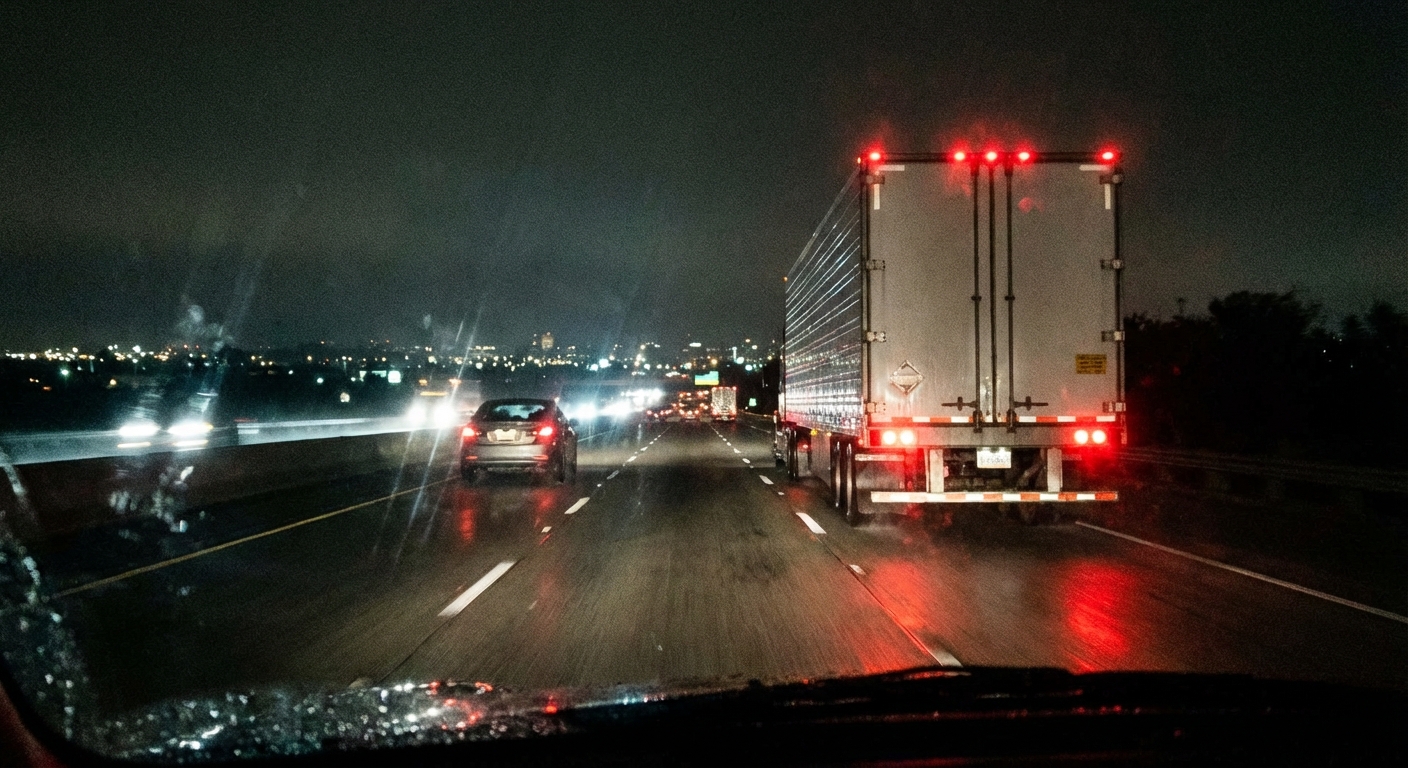
Delivery Truck Accidents: What Evidence Matters
Delivery truck accidents are fundamentally different from passenger vehicle collisions because these vehicles operate under federal hours-of-service rules, electronic logging device mandates, and carrier liability standards that shape both the accident investigation and subsequent legal action. The evidence that matters most—ELD data, maintenance records, driver qualification files, and dispatch communications—is controlled by the delivery company and can be permanently lost if you don't act quickly. A preservation letter from a lawyer, sent immediately after the crash, stops that deletion clock and forces retention. The liability picture extends beyond the driver: you may have claims against the driver, the carrier, the broker, the shipper, or the loader, depending on the crash circumstances and how the accident occurred.
Delivery truck accidents involve specific federal rules
Delivery trucks that meet certain weight thresholds are classified as commercial motor vehicles and fall under FMCSA (Federal Motor Carrier Safety Administration) regulations. The most critical rule for crash litigation is the hours-of-service requirement: federal law limits a driver to 11 hours of operation per 14-hour window, with a mandatory 10-hour off-duty rest period. If the crash happened in hour 12 or 13, that's a federal violation and it strengthens a negligence claim considerably.
Many delivery trucks are also fitted with electronic logging devices (ELDs) that automatically record driving time, location, speed, and hard-braking events. Unlike handwritten logs, ELD data is precise and tamper-evident. That data is gold in litigation. You can see exactly when the driver started, when they should have stopped for rest, and what happened in the moments before impact.
The driver must also maintain a valid DOT medical certificate. If the driver was operating on an expired or fraudulently obtained certificate, that's another independent negligence violation. The driver's qualification file, kept by the carrier, includes all certifications and any disqualifying medical conditions. Request it immediately.
Physics and weight create a liability advantage
A loaded delivery truck can weigh 80,000 pounds. A passenger car weighs roughly 4,000 pounds. That 20:1 weight ratio fundamentally changes the dynamics of the crash. A delivery truck traveling at 35 miles per hour has roughly the same kinetic energy as a passenger vehicle traveling at 150 miles per hour. The injuries are often catastrophic.
In legal terms, this weight disparity creates a doctrine called the 'heavy vehicle presumption' in some jurisdictions. The defendant (the delivery company) has a harder time arguing that the passenger vehicle occupants were even partially at fault. The physics tell a story: the truck's weight and momentum overwhelm smaller vehicles.
This is also why delivery truck maintenance matters so much. A truck with failing brakes cannot decelerate as quickly as a properly maintained vehicle. Worn tires cannot grip the road in wet conditions. Defective steering can cause loss of control. The carrier is legally required to maintain the vehicle in safe condition. [NHTSA publishes crash data by vehicle type](https://www.nhtsa.gov/) that shows the injury and fatality rates for large truck crashes—data you can cite to show the inherent danger.
Talk to a truck accident lawyer today
Free consultation — no fees unless your case wins.
Get started →Evidence preservation is your first legal step
The moment a delivery truck accident occurs, a legal clock starts ticking. Many trucking carriers have policies that allow them to purge ELD data, dash cam footage, and dispatch records after 15, 30, or 90 days. Without a preservation letter, that evidence disappears legally and becomes inadmissible in court—even if it exists somewhere in the company's servers.
A preservation letter, sent by an attorney immediately after the crash, imposes a legal duty to retain all relevant evidence. It stops the deletion clock and creates a spoliation claim if the carrier destroys evidence after receiving notice. That's enormous leverage.
Specific evidence to demand in the preservation letter includes: the driver's ELD data for 30 days before and after the crash; all dash cam and in-cab camera footage; maintenance records for the past 12 months; dispatch communications and trip history; the driver's hours-of-service records; the driver's qualification file and medical certifications; post-crash drug screen results; any internal incident reports or photographs taken at the scene; and the vehicle's CSA (Compliance, Safety, and Accountability) score history. [FMCSA regulations specify record-keeping and retention requirements](https://www.fmcsa.dot.gov/). Don't wait for the insurance adjuster to ask for this. Make the demand yourself.
Liability extends beyond the driver
A common mistake is assuming the driver is the only defendant. In delivery operations, liability can be spread across multiple parties, and each may have insurance.
The motor carrier (the delivery company) is liable under vicarious liability for the driver's negligence. But the carrier can also be directly negligent: hiring an unqualified driver, failing to maintain the vehicle, failing to enforce hours-of-service compliance, or approving unrealistic delivery schedules that incentivize speeding or skipping mandatory breaks.
The shipper or loader may also be liable if they over-loaded the truck beyond its weight rating (GVWR—Gross Vehicle Weight Rating) or loaded cargo improperly, causing handling or braking issues. Violations of weight standards give rise to independent negligence claims.
The broker, if the shipment was brokered, can be liable for hiring a carrier with a poor safety record. The trailer owner can be liable for failing to maintain brakes or tires. The third-party maintenance facility can be liable if recent work was performed negligently.
Identifying all responsible parties early expands the scope of insurance coverage and increases settlement value.
Steps to protect your claim after a delivery truck crash
First: call 911 and get to safety. Document the scene with photos and video from multiple angles if you're physically able.
Second: exchange information with the driver, note the carrier name and USDOT number (displayed on the truck), and get contact details for any witnesses. Note the vehicle's license plate, the truck's identification number (VIN), and take photos of the cargo placards if visible.
Third: do not give a recorded statement to the trucking company's insurance adjuster without speaking to an attorney first. Anything you say can and will be used against you. Do not sign any document the adjuster presents.
Fourth: seek medical evaluation immediately, even if you feel fine. Injuries from truck accidents can be delayed. Get a complete medical record documenting the exam and any injuries found.
Fifth: consult an attorney who specializes in commercial truck accident cases within days, not weeks. Time is critical for evidence preservation. A lawyer can send the preservation letter, issue discovery demands, and begin building the liability case before the statute of limitations runs or evidence is destroyed.
Don't attempt to negotiate or settle on your own. These cases are complex and the damages often run into six or seven figures.
Common questions
What data do ELDs record that matters in a truck accident case?
ELDs automatically log driving time, location, speed, acceleration, hard-braking events, and rest periods. If a crash occurred during a period when the driver should have been off-duty, or if the hard-brake log shows excessive speeding or aggressive driving before the crash, that data proves negligence. It's digital and tamper-evident, making it far more reliable than handwritten logs.
How long does a delivery truck company have to keep evidence after a crash?
Federal regulations don't specify a retention period, so carriers often delete ELD data, dash cam footage, and dispatch records after 15 to 90 days unless a legal hold is in place. A preservation letter from an attorney, sent immediately after the crash, stops that deletion clock and creates a spoliation liability if the carrier destroys evidence afterward. This is why speed matters.
Can I sue the shipper or loader if the cargo was improperly loaded?
Yes. If improper loading contributed to the crash—by destabilizing the vehicle, exceeding weight limits, or creating braking problems—the shipper, loader, and broker can all be held liable. These parties often have separate insurance policies, which increases the total recovery available to you.
What is the driver's qualification file and why does it matter?
The driver's qualification file contains the driver's employment history, medical certificates, driving record, training records, and any disqualifying conditions. If the driver was operating under an expired medical certificate or with a known medical issue, that's an independent negligence claim. Request this file immediately after a crash.
What damages can I recover from a delivery truck accident?
You can recover past and future medical expenses, lost wages, loss of earning capacity, pain and suffering, permanent disability, disfigurement, and loss of life enjoyment. In cases involving gross negligence or a violation of federal safety regulations, some jurisdictions allow punitive damages as well. The specific amount depends on the severity of your injuries and the liability facts.
Should I give a statement to the trucking company's insurance adjuster?
No. Do not give a recorded statement or sign any document from the adjuster without an attorney. Anything you say can be used against you in settlement negotiations or trial. Speak to a truck accident lawyer first, and let them manage communication with the insurance company.
Experienced truck accident attorneys. No upfront cost.
Free consultation →