

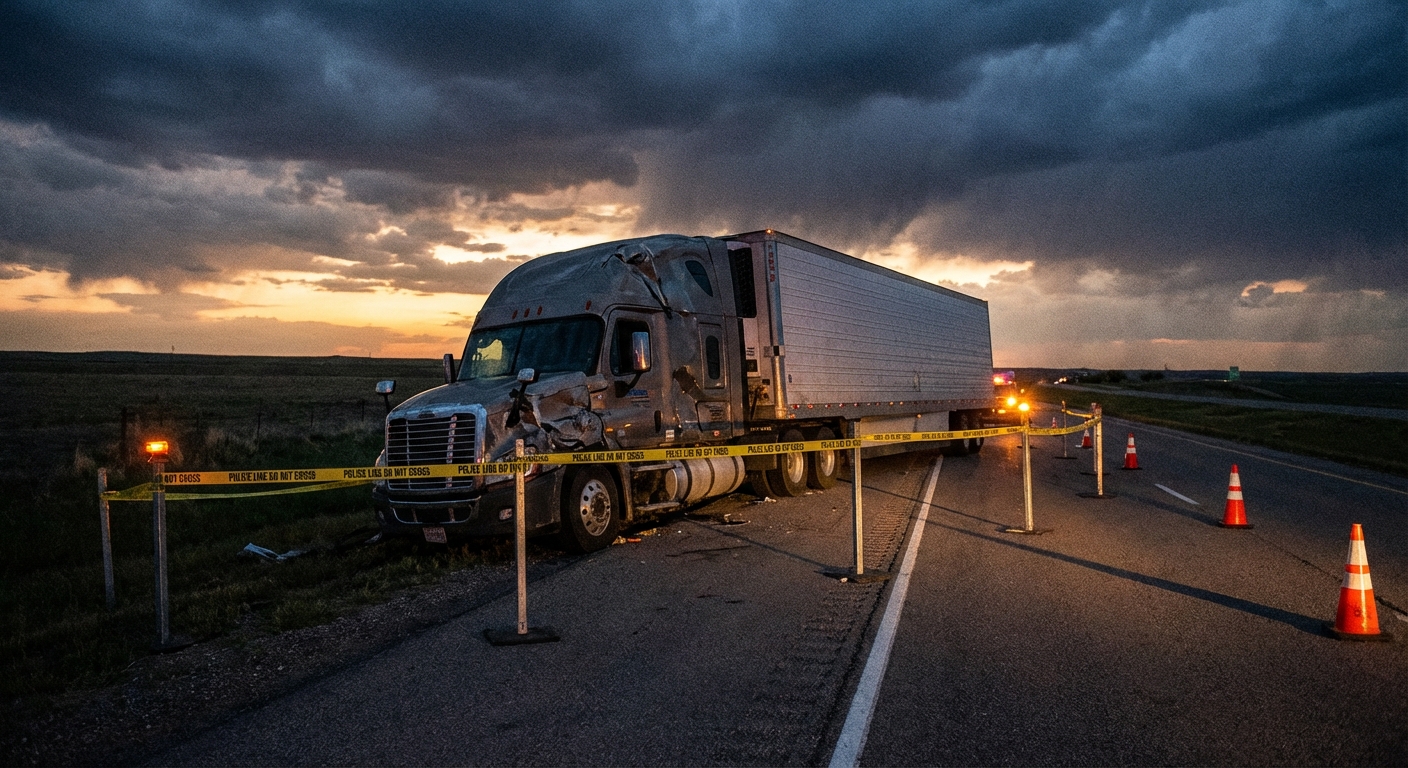
Truck Accident Injury Attorney: Commercial Motor Vehicle Crash Cases
A truck accident injury attorney specializes in cases involving commercial motor vehicles colliding with passenger vehicles. These cases operate under federal regulations that don't apply to standard car accidents. An 80,000-pound fully loaded 18-wheeler versus a 4,000-pound passenger car creates physics that almost always results in severe injury or death. Your attorney must understand hours-of-service violations, electronic logging device (ELD) data interpretation, CSA scores, and evidence preservation before the trucking company legally deletes critical records. The first 15 days after a crash are often the most critical — this is when preservation letters must be issued and evidence secured.
What a Truck Accident Attorney Does (At a Glance)
A truck accident injury attorney handles far more than insurance paperwork. They understand federal motor carrier regulations, interpret technical evidence, and identify all liable parties — not just the driver.
Commercial truck crashes involve federal rules that passenger vehicle cases never touch. Hours-of-service violations, electronic logging device (ELD) data, driver qualification files, maintenance records, and dispatching practices all become discoverable evidence. The trucking company controls all of it. They also have the legal right to delete certain records after specific time periods. A preservation letter from your attorney stops that clock immediately and forces the company to retain evidence that might prove your case.
The physics of truck-versus-car collisions change everything about injury severity and liability. A fully loaded Class 8 truck weighs up to 80,000 pounds and needs roughly 40% more stopping distance than a passenger car from 60 mph. When that vehicle hits a passenger car, the injuries are catastrophic in ways that standard settlement calculators don't capture. Your attorney needs medical economics expertise and deep understanding of lifetime care costs in truck accident cases.
You're not filing against a single insurance company. You're identifying which entities bore responsibility — the motor carrier, the driver, the freight broker, the shipper, the trailer owner, or a combination. Each has different liability standards and separate insurance limits. A thorough attorney examines all of them.
Federal regulations create liability pathways that car accident cases never have. According to the [Federal Motor Carrier Safety Administration (FMCSA)](https://www.fmcsa.dot.gov/), carriers must maintain specific safety standards, driver qualifications, and hours-of-service compliance. Violations of these federal rules often form the foundation of negligence claims.
Evidence Preservation and Federal Discovery Rules
The moment a commercial truck crashes, a countdown starts. The trucking company can legally delete certain records after 15 days in most states. That includes the ELD data that would prove whether the driver violated federal hours-of-service rules at impact.
A preservation letter from a truck accident attorney pauses that countdown. It triggers a legal duty to keep:
- Electronic logging device records and backup paper logs
- Driver qualification files with DOT medical certifications
- Maintenance and inspection records for truck and trailer
- Dispatch communications and routing data
- Dashcam or onboard video if equipped
- Post-crash drug and alcohol screening results
- Training records and safety compliance documentation
The defense will argue that certain records were routinely deleted before your attorney's preservation letter. Courts see through this. Suspicious timing strengthens your case considerably. If your attorney moves slowly and evidence is deleted before preservation notice reaches the company, that substantially damages your claim.
Your attorney also issues discovery requests for the motor carrier's safety records, complaint history, driver hiring practices, and CSA (Compliance Safety Accountability) score. These reveal patterns of negligence that juries respond to powerfully. A carrier flagged by the FMCSA itself as having an intervention-level CSA score in unsafe driving or hours-of-service violations is already a documented safety risk.
According to [National Highway Traffic Safety Administration (NHTSA) data](https://www.nhtsa.gov/), commercial vehicle crashes result in over 5,000 fatalities annually. The severity of these crashes makes evidence preservation and careful discovery absolutely critical — these cases routinely involve permanent disability or death, and evidence quality directly determines case value.
Talk to a truck accident lawyer today
Free consultation — no fees unless your case wins.
Get started →Federal Regulations and Liability Theories
Truck accident cases often hinge on federal violations that create strict liability or negligence claims against the motor carrier itself, separate from driver liability.
Federal hours-of-service (HOS) rules allow a driver to operate a CMV for up to 11 hours following 10 consecutive hours off-duty. Violating these rules is a federal violation. If your crash occurred in hour 12, or if the driver was in violation at impact, that's foundational evidence for negligence against the carrier. The carrier is legally responsible for monitoring HOS compliance through ELD data. If they failed to do so, that's negligent supervision — and it strengthens your case considerably.
Driver qualification files (DQF) must include:
- Valid commercial driver's license (CDL)
- Current DOT medical certification
- Multi-year driving record checks
- Road test results
- Training documentation
If the driver had a suspended medical certification, prior violations, or documented unsafe driving history and the carrier hired or retained them anyway, you have a negligent hiring or retention claim. Juries hold carriers liable for these failures because they're preventable.
Maintenance and inspection records also drive liability. If the truck had known defects — brake failures, tire blowouts, steering issues — and the carrier continued operating it, that's negligent maintenance. This matters especially if the defect contributed to the crash or made injuries worse.
Third parties often bear liability too. Shippers sometimes overload trailers beyond legal weight limits, destabilizing the load. Brokers may pressure carriers into unsafe conditions. Trailer owners may fail maintenance. Each creates separate liability that your attorney must identify and pursue in discovery.
Federal regulations are not optional — they're the legal baseline for how commercial trucking operates. Violations of these standards form the strongest claims in your case.
Settlement Factors in Truck Accident Cases
Settlement values in truck accident cases typically far exceed passenger vehicle crashes, but specific factors determine the actual number.
Medical damages are foundational. Emergency surgery, ICU stays, ongoing rehabilitation, and permanent disability create substantial medical economics. Your attorney works with life care planners and vocational experts to project future medical needs. A 35-year-old with a spinal cord injury needs 50 years of care — that's millions in medical damages alone.
Lost earning capacity often exceeds past wage loss by multiples. If the injury prevents you from ever returning to your profession, your attorney calculates the difference between pre-injury and post-injury earning capacity over your remaining work life. A 40-year-old permanent disability claim might cover 25 years of earnings — a substantial multiplier.
Pain and suffering damages in truck accident cases are typically higher than minor injury cases. Juries understand the physics — an 80,000-pound vehicle hitting a passenger car creates lifelong pain, psychological trauma, and PTSD. Your attorney presents medical testimony about chronic pain conditions, quality-of-life impacts, and permanent functional limitations.
The defendant's liability strength affects settlement. If records show egregious violations — a driver with documented HOS violations, known equipment failures, or inadequate training — the settlement pool increases. Insurance carriers for trucking companies know juries will hit them hard in these cases, and they often settle rather than proceed to trial.
Multiple defendants expand settlement value. If the shipper, broker, and motor carrier all bear liability, you're negotiating with three insurance carriers. This gives your attorney more leverage and typically increases total compensation. A single defendant with $1 million in liability insurance can't match three defendants with $5 million each.
Settlement timing also matters. Early settlement offers (within days of the crash) are typically insufficient and may indicate the defendant's insurer recognizes substantial liability. Your attorney evaluates each offer against the case's actual value as discovery progresses.
When You Need a Truck Accident Attorney: A Decision Guide
Not every truck accident requires an attorney — but most do. The threshold is whether the case involves injuries, significant vehicle damage, federal violations, or multiple liable parties. If any of those apply, consult an attorney immediately.
You absolutely need an attorney if:
- The crash resulted in serious injury or hospitalization
- The at-fault driver operated a commercial motor vehicle
- The trucking company or their insurer already contacted you
- Liability is unclear or disputed
- The crash involved a federal violation (HOS, maintenance, CSA history)
- Multiple vehicles or parties may bear liability
Red flags demanding immediate legal counsel:
- The trucking company contacted you directly (they shouldn't)
- You received a settlement offer within days of the crash (typically too low)
- Evidence is disappearing (truck being repaired or sold immediately)
- You're being pressured to sign medical releases or waivers
- Your injuries are worsening or new symptoms are emerging
When selecting an attorney, look for truck accident specialization. Attorneys handling general car accident cases often miss the federal regulation angle entirely. They won't know to preserve ELD data, request CSA scores, or identify third-party liability. Your attorney should understand trucking industry operations well enough to spot violations non-specialists miss.
Initial consultations with truck accident attorneys are typically free and confidential. Ask about their experience with federal regulations, track record in truck accident cases, and evidence preservation approach. If they don't immediately mention preservation letters or ELD data, they may lack the specialized knowledge you need.
Time is critical. The first 15 days after a crash are essential for evidence preservation. The first 30 days are critical for witness statements, scene photography, and police report acquisition. Waiting weeks to contact an attorney means losing irreplaceable evidence that might have proven your case.
Common questions
How much time do I have to file a truck accident injury lawsuit?
Most states allow two to three years from the crash date, though some extend to four or five years. However, evidence preservation happens in days, not months. Federal preservation rules for motor carriers are much shorter than statute of limitations deadlines. Contact an attorney within the first week to ensure critical evidence isn't legally deleted.
Can I sue the trucking company directly, or only the driver?
You can sue both the driver and the motor carrier. In fact, you typically must, because the carrier's negligence in hiring, training, or supervising the driver is a separate liability claim. You may also sue the truck owner, freight broker, shipper, or maintenance contractor depending on circumstances. Your attorney identifies all liable parties and pursues each.
What is the most important evidence in a truck accident case?
Electronic logging device (ELD) data showing whether the driver violated federal hours-of-service rules at impact. This is followed by the driver's qualification file, maintenance records, dispatch communications, and the motor carrier's CSA score. Your attorney must preserve this evidence immediately — don't wait.
Why do truck accident settlements exceed typical car accident settlements?
The physics of 80,000-pound vehicles colliding with 4,000-pound passenger cars create predictably severe injuries. Injuries are catastrophic more often, and lifetime care costs are substantially higher. Insurance carriers for trucking companies also recognize that juries hold them liable at higher rates, so they settle more readily to avoid trial risk.
How long does a truck accident case typically take from filing to settlement?
Most truck accident cases settle within 18 months to three years. Cases involving multiple parties, significant liability disputes, or catastrophic injuries may take longer. Settlement timelines depend on discovery speed, whether the defendant contests liability, and whether trucking company insurance covers the damages. Your attorney will provide a specific estimate based on your case.
What damages can I recover in a truck accident lawsuit?
You can recover medical expenses (past and future), lost wages, lost earning capacity, pain and suffering, permanent disability costs, and sometimes punitive damages if the trucking company's conduct was egregiously negligent. Your attorney works with medical experts and vocational specialists to quantify these accurately. Truck accident settlements often run into millions because lifetime care and lost earnings calculations are substantial.
Experienced truck accident attorneys. No upfront cost.
Free consultation →