

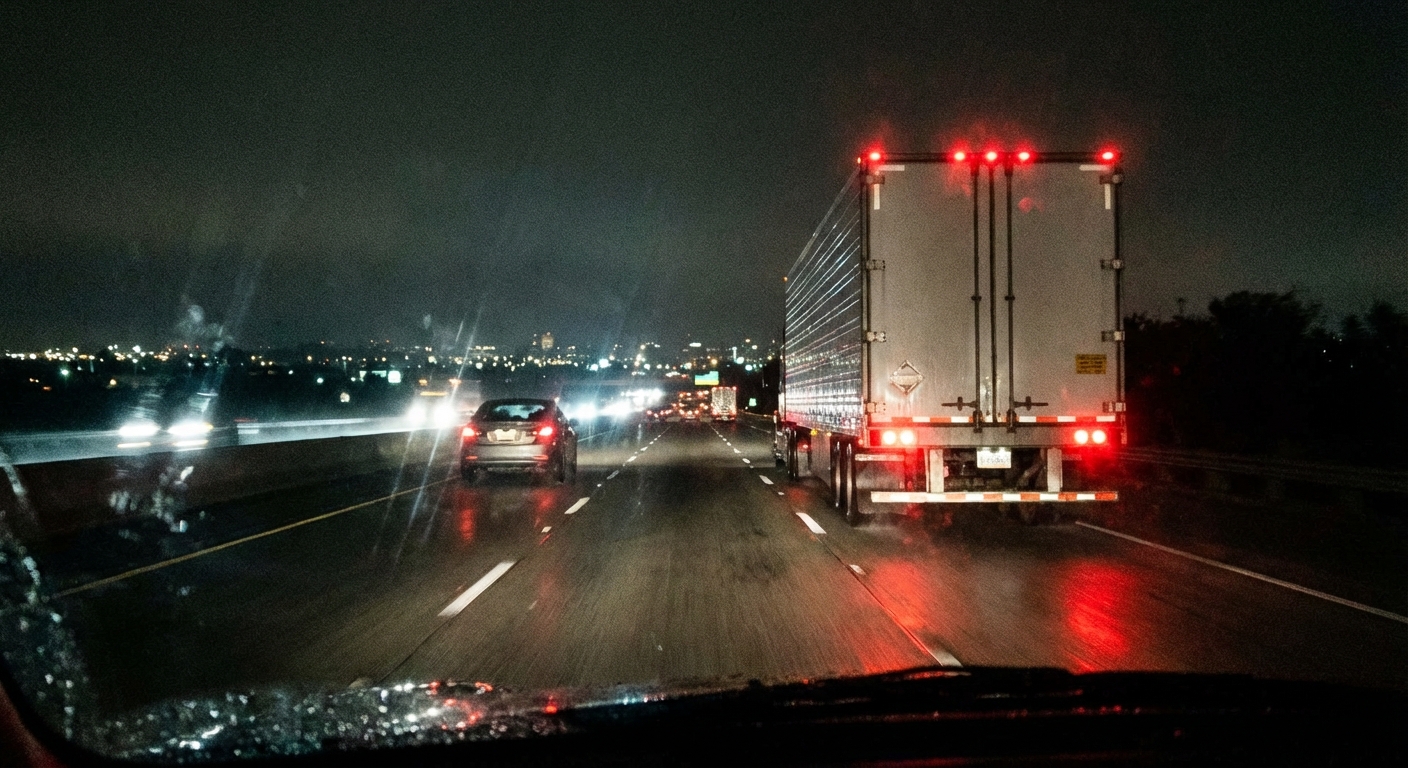
7 Things a Truck Accident Attorney in Los Angeles Must Know
A truck accident attorney in Los Angeles handles a specialized category of personal injury law distinct from routine auto accidents. Truck crashes involve federal regulations—hours of service, electronic logging devices, driver qualification files—that typical personal injury lawyers won't know. Your attorney must understand CSA scores, preservation letters to prevent evidence destruction, and discovery procedures for maintenance records from the carrier. Los Angeles County courts handle significant commercial motor vehicle litigation. Your lawyer needs courtroom experience with judges who preside over trucking cases, knowledge of California's comparative negligence rules, and the ability to identify multiple defendants—driver, motor carrier, shipper, or broker. The stakes in 18-wheeler crashes are substantial. Choose an attorney who understands both the technical and regulatory dimensions of commercial trucking, not just the injury side.
1. Understand Federal Hours-of-Service and Electronic Logging Device Regulations
Federal motor carrier safety regulations define how long a driver can operate without rest. The current rule allows 11 hours of driving after 10 consecutive hours off-duty, within a 14-hour window. Drivers cannot exceed 60 hours in 7 days or 70 hours in 8 days, then must rest 34 hours. Electronic logging devices (ELDs) record these hours automatically, replacing old paper logs that were easy to falsify.
Hours-of-service (HOS) violations are critical evidence. If a crash occurred during hour 12 or 13—beyond the 11-hour limit—that's a federal violation and strengthens your negligence claim significantly. Additionally, Compliance Safety Accountability (CSA) scores track motor carrier safety metrics across multiple categories. You want your attorney to pull the motor carrier's public CSA data immediately. If the unsafe driving or HOS categories exceed federal intervention thresholds, that's direct evidence of systemic negligence, not just a one-off mistake.
This regulatory framework exists because truck crashes at highway speeds produce severe injuries. The [Federal Motor Carrier Safety Administration (FMCSA)](https://www.fmcsa.dot.gov/) publishes all carrier safety data publicly.
2. Demand the Driver Qualification File in Your First Request
The driver qualification file (DQF) is a federal requirement—every commercial motor vehicle driver must have one on file with the carrier. It contains hiring documents, the driver's Commercial Driver's License (CDL), medical certification (DOT physical), any previous employment history from the past 3 years, and incident reports or safety violations.
Trucking companies sometimes minimize a driver's history of infractions, speeding tickets, or previous accidents when hiring. Your attorney must request the complete DQF early. A driver with multiple HOS violations at previous carriers, medical certifications that were borderline, or a pattern of incidents becomes a liability issue for the carrier itself—not just the individual driver.
Los Angeles sees high-volume trucking traffic along I-10 and I-405 corridors. Drivers hired without proper vetting or medical certification checks strengthen your case for negligence in hiring. Request the DQF, the last three DOT physicals, and any pre-hire background checks. This file often reveals patterns the trucking company ignored.
Talk to a truck accident lawyer today
Free consultation — no fees unless your case wins.
Get started →3. File a Preservation Letter Before the 15-Day Spoliation Window Closes
Trucking companies are required by federal regulation to maintain ELD data for six months. However, in most states—including California—they're not required to preserve data beyond that unless they receive notice of litigation. Many carriers delete or don't back up ELD records after 15 days as a routine practice. Once that data is gone, it's gone.
Your attorney must send a spoliation letter immediately—within days of the crash. This formal letter instructs the motor carrier to preserve all evidence: ELD data, GPS records, maintenance logs, dispatch communications, fuel records, and on-board video (if installed). Failure to preserve after receiving notice can result in severe sanctions or adverse inference instructions to a jury (an instruction telling them to assume the destroyed evidence would have proved your case).
Los Angeles County Superior Court judges handling trucking litigation understand the stakes of evidence preservation. A spoliation letter is not optional—it's the first critical legal move in a commercial truck case.
4. Identify All Potential Defendants Beyond the Driver
Commercial truck crashes rarely involve liability of just the driver. The motor carrier is almost always liable if the driver was acting within the scope of employment. The shipper (the company that hired the carrier to move goods) may be liable if they overloaded the truck or failed to secure cargo properly. The broker—the company that arranged the transportation—can be liable for negligent hiring or retention of carriers with poor safety records.
The loader, if contracted separately, may bear liability for improper cargo handling. The trailer owner, if leased separately from the tractor, could be liable for maintenance failures. Your attorney must map out the supply chain. A crash on I-10 near downtown Los Angeles might involve a shipper in Long Beach, a motor carrier based out-of-state, and a trailer owned by a leasing company.
Multiple defendants mean multiple insurance policies and potentially higher settlement value. This complexity is why a specialized trucking attorney matters—a general personal injury lawyer might miss liable parties entirely. Request copies of the bill of lading, shipping records, and dispatch assignments to identify all parties in the contractual chain.
5. Obtain Discovery of Maintenance Records and Dispatch Communications
Brake failures, worn tires, and non-functioning safety equipment all point to negligent maintenance by the motor carrier. Your attorney needs to request the service records for the specific tractor and trailer involved in the crash—not just a general overview. Maintenance records show dates, what was serviced, and whether recommended repairs were delayed or deferred.
Dispatch communications (email, radio logs, text messages to the driver) reveal whether the carrier pushed the driver to meet impossible schedules, violating rest requirements. If a driver was dispatched from Los Angeles with orders to reach Phoenix overnight—a 370-mile drive—that's evidence of systematic pressure to violate HOS rules. The carrier's internal communications often expose negligence more clearly than the driver's conduct.
Additionally, request the motor carrier's accident history. Do they have a pattern of crashes? LAC+USC Medical Center handles many critical trauma cases from commercial vehicle accidents and can provide medical testimony about injury severity. Discovery of these records is essential—carriers won't volunteer this information.
6. Pull the Motor Carrier's Public CSA Safety Score
The Compliance Safety Accountability (CSA) program tracks motor carriers across categories: unsafe driving, hours-of-service compliance, driver fitness, controlled substance use, hazmat compliance, and vehicle maintenance. Each category has a percentile score (lower is better). A score above the 65th percentile in unsafe driving or hours-of-service categories triggers federal intervention—increased inspections, potential disqualification.
This score is public. Your attorney should obtain it immediately. If the motor carrier you're suing has a CSA score above intervention thresholds, that's direct evidence of systemic negligence. You're not just suing because one driver was careless—you're suing because the carrier knowingly operated with a poor safety record. This strengthens your claim for punitive damages in some states and demonstrates negligent hiring and retention.
The [Federal Motor Carrier Safety Administration (FMCSA)](https://www.fmcsa.dot.gov/) maintains the public Safety and Fitness Electronic Records System (SAFER) online. A high CSA score at the time of the crash shows the carrier was on notice of its own safety problems. Los Angeles County courts recognize CSA scores as key evidence in trucking negligence cases.
7. Understand California's Pure Comparative Negligence Rule
California applies pure comparative negligence. This means a plaintiff can recover damages even if they are 99% at fault—as long as the defendant bears 1% responsibility. This rule is rare; most states cap recovery at 50% or 51% of fault. If you were on the highway and a truck partially crossed into your lane due to driver inattention, even if you contributed to the crash, you can still recover your proportional share of damages.
This rule works heavily in your favor in trucking cases. The defendant's insurance will argue comparative negligence—that you were speeding, didn't see the truck, or failed to avoid the collision. But California juries often apportion small percentages to the plaintiff and large percentages to the 80,000-pound commercial vehicle.
The Los Angeles Superior Court Central Civil Courthouse at 111 North Hill Street handles significant trucking litigation. Judges there understand the physics of truck-versus-car collisions and the regulatory framework governing the industry. The [California State Bar](https://www.calbar.ca.gov/) maintains licensing information for attorneys in the state. California's pure comparative negligence rule, combined with the serious nature of truck crash injuries, produces substantial settlements.
Common questions
How long do I have to file a truck accident lawsuit in California?
California gives you two years from the date of the crash to file a personal injury lawsuit. This is called the statute of limitations. If you miss this deadline, you lose your right to sue, regardless of how strong your case is. File immediately after the crash.
Can I sue the trucking company if I wasn't directly hit by the truck?
Yes. If the truck's negligence caused your injury—whether through a direct collision, jackknife, cargo spill, or forcing you off the road—you can sue the motor carrier. The carrier is often vicariously liable for the driver's negligence if the driver was acting within the scope of employment.
What is a spoliation letter and why does my attorney need to send one?
A spoliation letter is a formal notice demanding the trucking company preserve all evidence: ELD data, maintenance records, GPS logs, dispatch communications, and video. Without this letter, the carrier can legally delete ELD data after 15 days. After receiving the letter, destroying evidence triggers severe court sanctions or adverse inference instructions favoring your case.
How much is my truck accident settlement worth?
Settlement value depends on injury severity, medical expenses, lost wages, and the defendant's comparative fault. Mild injuries might settle for $50,000–$150,000; moderate injuries often exceed $500,000. Cases involving permanent injuries or death reach into millions. An experienced trucking attorney evaluates your specific circumstances and liability exposure.
Experienced truck accident attorneys. No upfront cost.
Free consultation →