

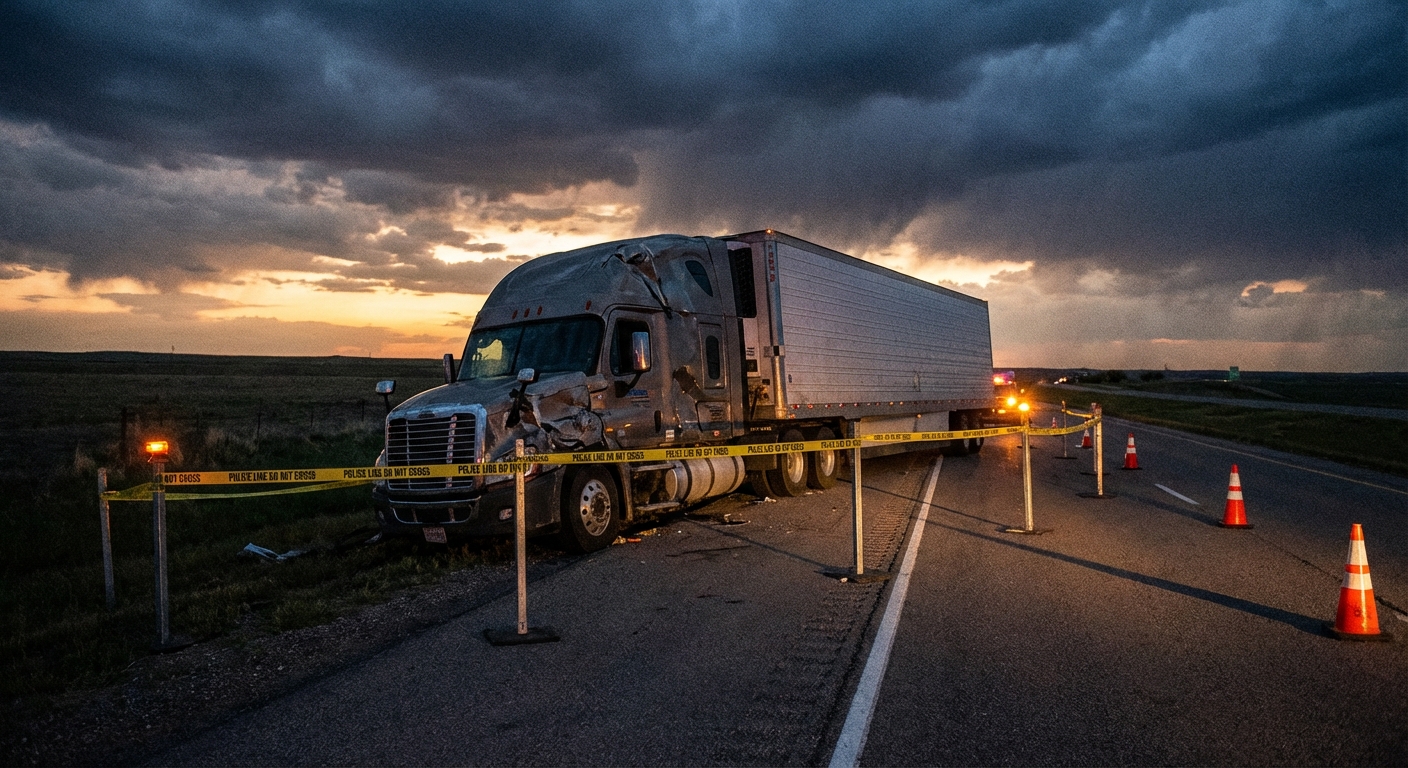
Semi Truck Accident Settlement Calculator
A semi crash settlement depends on injury severity, liability strength, and regulatory violations. Truck accident cases typically result in settlements ranging from $100,000 to $5,000,000+, with catastrophic cases exceeding that. What sets truck cases apart is that liability often extends beyond the driver. Federal trucking regulations—HOS violations, CSA scores, vehicle maintenance records, and driver qualification files—create independent negligence claims against the motor carrier itself. A settlement value requires understanding the damage profile, the defendant's insurance limits, the strength of evidence (especially ELD data and dispatch records), and whether resolution occurs before expert discovery. The trucking company's existing liability footprint—CSA scores, prior crash history, regulatory compliance record—directly influences both jury perception and defense strategy, which shapes settlement leverage.
What factors determine your settlement?
Commercial truck accident settlements hinge on a specific set of factors that federal trucking law makes central to liability analysis:
• Injury severity and prognosis. Medical documentation, permanence, and life expectancy post-injury.
• HOS violations. Hours-of-service logs showing driver worked past the 11-hour limit or failed rest requirements—this is a federal negligence claim.
• CSA score and carrier compliance history. A motor carrier with a [CSA score above 70](https://www.fmcsa.dot.gov/safety/data-analysis-center) in Unsafe Driving or HOS may face direct liability independent of the driver.
• ELD (electronic logging device) and dispatch data. Real-time proof of violations or contradictions in the driver's story.
• Driver qualification file defects. Missing DOT physicals, prior violations, or falsified credentials.
• Vehicle maintenance records. Brake failure, tire blowout, or mechanical defect evidence strengthens product liability claims.
• Defendant's insurance limits. Many motor carriers carry $1M minimum federal limits; some carry $5M+ depending on hazmat or passenger transport.
• Pre-accident liability footprint. Prior crashes, safety complaints, or FMCSA enforcement actions against the motor carrier.
• Expert discovery strength. Accident reconstruction, human factors, biomechanics, and trucking industry standard-of-care experts.
• Jury pool and venue. Federal court (often mandatory for interstate commerce) versus state court; urban versus rural juries; industry-friendly jurisdictions.
• Settlement timing. Pre-discovery settlements are lower; post-expert discovery settlements reflect full evidence exposure.
Typical settlement ranges by severity tier
These ranges reflect national averages for cases that proceed to discovery or trial. Actual settlements vary based on liability clarity and defendant resources.
Minor Injury (soft tissue, quick recovery): $50,000–$200,000
Healing within 12 months, no permanent impairment, minimal wage loss. Settlement depends primarily on medical cost multiplier and defense admission of liability.
Moderate Injury (fractures, extended recovery): $200,000–$750,000
Healing extends beyond 12 months, temporary loss of earning capacity, ongoing physical therapy. Regulatory violations (HOS, CSA) begin to meaningfully increase settlement value.
Severe Injury (permanent disability, major wage loss): $750,000–$2,500,000
Permanent loss of earning capacity, ongoing medical care, psychological impact. Federal trucking violations and strong CSA evidence typically appear in this range.
Catastrophic (wrongful death, multiple fatalities, permanent neurological damage): $2,500,000–$10,000,000+
Fatality cases involving multiple decedents or single-victim permanent neurological damage. [NHTSA data](https://www.nhtsa.gov/) shows fatality rates in heavy truck crashes run 8–10 times higher than passenger vehicle crashes due to mass disparity. These cases often trigger FMCSA enforcement actions in parallel, which elevate defense stakes and settlement pressure.
Talk to a truck accident lawyer today
Free consultation — no fees unless your case wins.
Get started →How federal trucking law shapes settlement value
Federal trucking regulations create multiple independent pathways to liability that aren't available in ordinary car crashes.
Hours of Service (HOS) violations. [Federal law (49 CFR Part 395)](https://www.fmcsa.dot.gov/regulations/hours-service) limits drivers to 11 hours of driving after 10 consecutive hours off-duty. A crash occurring in hour 12 is not just negligence—it's a federal violation that creates a non-delegable duty by the motor carrier to ensure compliance. This strengthens plaintiff leverage considerably.
CSA Score as evidence of negligence. The FMCSA publishes Compliance, Safety, and Accountability (CSA) scores for every motor carrier. A carrier with an unsafe-driving CSA above 70 is subject to intervention. This score is admissible evidence of the carrier's general negligence and pattern of safety failures, separate from the individual driver's conduct.
Carrier vicarious liability. The motor carrier is directly liable for the driver's negligence under traditional vicarious liability, but also liable for their own negligence in hiring, training, and supervision. A driver with prior violations in the qualification file, or a carrier with a pattern of HOS violations in their fleet, strengthens the "carrier negligence" claim.
Insurance coverage. Federal minimum is $750,000 for most CMVs, $1,000,000 for hazmat. Many carriers purchase excess coverage. Checking the defendant's USDOT number reveals carrier insurance limits publicly.
These federal factors explain why truck accident settlements often exceed car accident settlements by a factor of 10 or more.
When a calculator isn't enough
Settlement ranges assume a straightforward two-party case: plaintiff and the motor carrier (and/or driver). Real cases are often more complex.
Multiple defendants. The shipper, broker, freight forwarder, or trailer owner may share liability. Each adds insurance limits and complicates negotiation.
Regulatory action in parallel. The FMCSA sometimes opens a safety investigation concurrent with the civil suit. This can increase the defense's motivation to settle quickly (to avoid reputational damage) or to litigate longer (to avoid admissions in discovery). Either way, the civil case value shifts.
Coverage disputes. Some carriers try to invoke policy exclusions or dispute coverage limits. Litigation over insurance can delay settlement by 12–18 months.
Comparative negligence. A few states follow modified comparative negligence (plaintiff barred if >50% at fault) while others follow pure comparative negligence. If the plaintiff shared any contributory negligence (failed to maintain lane discipline, unclear visibility), the settlement decreases proportionally.
Independent contractor claims. Some trucking companies claim their drivers are independent contractors, which can limit carrier liability. This requires detailed analysis of the company's control over the driver's operations.
A settlement calculator provides a starting point. The final settlement reflects the actual evidence, the defendant's risk tolerance, and the jurisdiction's legal and jury dynamics.
Common questions
What's the average settlement for a semi truck crash?
Truck accident settlements range from $100,000 to $5,000,000+ depending on injury severity and liability strength. Minor soft-tissue cases settle around $50,000–$200,000. Cases with permanent disability or wrongful death exceed $2,500,000. The presence of federal trucking violations (HOS, CSA, maintenance) and strong ELD evidence significantly increases settlement value.
Can I sue the trucking company or only the driver?
You can sue both. The motor carrier is vicariously liable for the driver's negligence and also directly liable for their own negligence—failure to hire safely, inadequate training, or failure to enforce HOS compliance. In fact, carrier liability often exceeds driver liability in truck cases because carriers control fleet safety policies, ELD systems, and driver supervision.
How does the motor carrier's CSA score affect my settlement?
The CSA score is the motor carrier's safety record, not the individual driver's. A carrier with an unsafe-driving CSA above 70 is evidence of a pattern of negligence that supports both a negligence claim and punitive damages in some jurisdictions. A high CSA score directly increases settlement pressure on the carrier's insurer.
What role do HOS violations play in settlement value?
Hours-of-service violations are federal negligence per se—they create a legal presumption of fault. If the crash occurred during a violation (driver worked hour 12 when limited to 11), that's independent grounds for liability against the carrier, separate from the driver's momentary negligence. This dramatically increases settlement leverage.
How long does a semi truck settlement typically take?
Simple liability cases with clear injury can settle in 6–12 months. Complex cases requiring expert discovery, CSA analysis, and regulatory investigation often take 18–36 months. Federal court cases tend to move slower than state court. Earlier settlement (pre-discovery) usually results in lower payouts; post-discovery settlements reflect fuller evidence exposure.
What if the trucking company claims the driver was an independent contractor?
That claim is often incorrect. Federal motor carrier regulations and state employment law create strict liability standards that generally classify truck drivers as employees, not contractors. Even if the classification is genuinely disputed, the motor carrier remains liable under federal trucking regulations for safety violations and negligent hiring, so the independent-contractor defense rarely eliminates carrier liability entirely.
Experienced truck accident attorneys. No upfront cost.
Free consultation →