

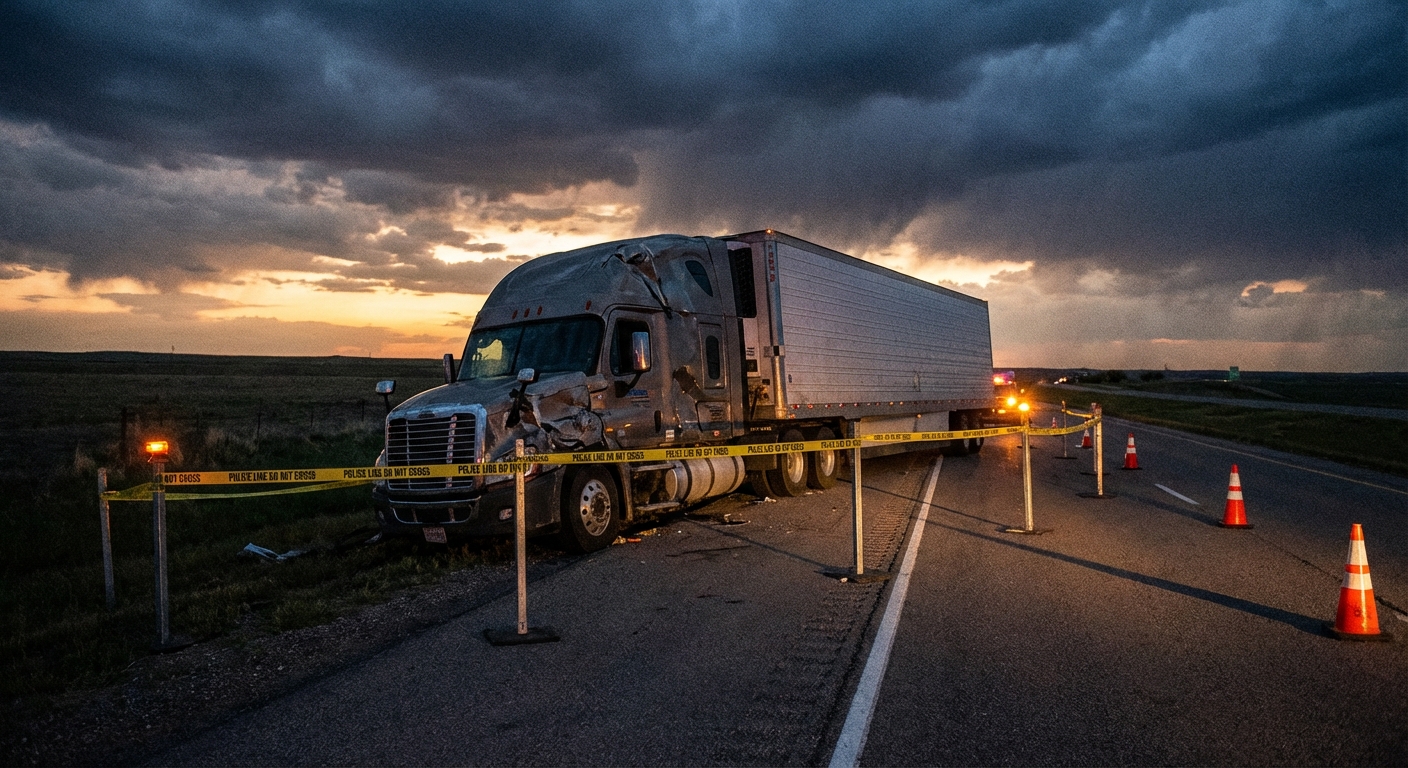
7 Immediate Actions After a Commercial Truck Accident in Santa Ana
After a commercial truck accident in Santa Ana, your immediate actions are crucial for both your health and any future legal claim. First, ensure safety and seek immediate medical attention at a facility like UCI Medical Center, a Level I trauma center serving Orange County. Report the crash to the Santa Ana Police Department or California Highway Patrol, especially if on Interstate 5. Critical evidence, such as the driver's Hours of Service logs, ELD data, and the motor carrier's dispatch records, must be preserved promptly. California law allows two years from the injury date to file a personal injury lawsuit, but securing evidence requires much faster action. Documenting the scene with photos and witness information is also vital. Consulting a legal specialist familiar with FMCSA regulations and California's pure comparative negligence rule is the next critical step to protect your rights.
1. Secure the Scene and Seek Medical Attention Immediately
Following a collision with a commercial motor vehicle, your physical safety is paramount. Move to a safe location if possible, but do not leave the scene until law enforcement arrives. Even if you feel fine, seek medical attention right away. Injuries from an 18-wheeler crash can be severe and sometimes have delayed symptoms. In Santa Ana, a Level I trauma center like UCI Medical Center in nearby Orange is equipped to handle serious injuries. Prompt medical documentation links your injuries directly to the incident, which is vital for any subsequent claim. A delay in care can create arguments for the defense that your injuries were not caused by the crash.
2. Report the Crash to Law Enforcement and Your Insurer
You must report any commercial truck accident to the appropriate law enforcement agency. If the crash occurs on city streets, contact the Santa Ana Police Department. For incidents on major freeways like Interstate 5 or State Route 55, the California Highway Patrol (CHP) will typically respond. Their official report documents basic facts, including involved parties, vehicle information, and often a preliminary determination of fault. It's also critical to notify your own insurance company promptly, but stick to the facts and avoid speculating about fault or the extent of your injuries. Remember, anything you say can potentially be used against you later.
Talk to a truck accident lawyer today
Free consultation — no fees unless your case wins.
Get started →3. Preserve Critical Evidence from the Trucking Company
Commercial trucking companies are subject to strict federal regulations, and their vehicles generate a vast amount of data. This data is often the most compelling evidence in a crash investigation. Key pieces include the driver's Hours of Service (HOS) logs, Electronic Logging Device (ELD) data, vehicle black box information, maintenance records, and post-crash drug and alcohol screens. Many trucking companies have policies that allow them to purge this data within a short period, sometimes as little as 15 days, if not specifically requested. A legal specialist can issue a preservation letter, formally demanding that the motor carrier retain all relevant evidence, preventing spoliation. Without this, crucial proof of violations like driver fatigue could be lost forever. For more information on federal regulations, consult the [Federal Motor Carrier Safety Administration (FMCSA) website](https://www.fmcsa.dot.gov/).
4. Document the Scene Thoroughly
The scene of a commercial motor vehicle crash offers valuable, time-sensitive evidence. Use your smartphone to take extensive photos and videos. Capture damage to all vehicles, skid marks, road conditions, traffic signs, and any debris. Photograph the position of the vehicles before they are moved, if safe to do so. Get contact information from any witnesses, including their names, phone numbers, and email addresses. Note the commercial truck's company name, DOT number, and license plate. This detailed documentation can help reconstruct the accident, identify potential contributing factors, and support your account of what happened. Even small details can become significant later in an investigation.
5. Understand California's Specific Trucking Regulations and Laws
California law introduces specific elements to truck accident claims. The state operates under a pure comparative negligence rule, meaning you can still recover damages even if you were partially at fault, though your compensation will be reduced by your percentage of blame. Furthermore, California imposes a two-year statute of limitations for most personal injury claims, as outlined in California Code of Civil Procedure § 335.1. This means you generally have two years from the date of the injury to file a lawsuit in a court like the Orange County Superior Court, Central Justice Center. Failing to meet this deadline almost always means losing your right to pursue compensation. Specialized knowledge of these state-specific nuances is critical for a successful outcome.
6. Be Cautious with Statements to Insurers
Soon after a commercial truck accident, you will likely be contacted by insurance adjusters, both your own and the trucking company's. Be extremely careful about what you say. The trucking company's insurer is not on your side; their goal is to minimize their payout. Avoid giving recorded statements or signing any documents without first speaking with a legal specialist. Do not speculate about fault, the extent of your injuries, or the value of your claim. Simply provide basic facts and direct them to your legal representative. Premature statements can inadvertently harm your case, providing the defense with material to challenge your claims later.
7. Consult with a Legal Specialist in Commercial Trucking Law
Commercial truck accidents are far more complex than typical car crashes due to federal regulations, multiple potentially liable parties, and the high stakes involved. A legal specialist with an industry-insider perspective understands the specific evidence needed, how to interpret ELD data, and the tactics trucking companies and their insurers use. They can ensure a preservation letter is sent, gather critical evidence, interview witnesses, and navigate the specific legal landscape of Orange County and California law. For guidance on finding qualified legal counsel in California, you can refer to resources from the [State Bar of California](https://www.calbar.ca.gov/). Engaging specialized counsel early is the strongest move to protect your rights and pursue full compensation.
Common questions
How long do I have to file a lawsuit after a truck accident in California?
In California, you generally have two years from the date of the injury to file a personal injury lawsuit. This is known as the statute of limitations, and it's crucial to meet this deadline for your claim to proceed.
What kind of evidence is most important in a Santa Ana truck accident case?
Critical evidence includes the truck's Electronic Logging Device (ELD) data, driver's Hours of Service logs, maintenance records, post-crash drug and alcohol screens, and vehicle black box data. Photos and witness statements from the scene are also highly valuable.
Will my own negligence affect my claim in California?
Yes, California follows a pure comparative negligence rule. This means if you are found partially at fault for the accident, your total compensation will be reduced by your percentage of blame, but you can still recover damages.
Should I talk to the trucking company's insurance adjuster?
You should be very cautious. It's best to avoid giving recorded statements or signing any documents from the trucking company's insurer without first consulting a legal specialist. Their objective is to minimize their liability, not to protect your interests.
Experienced truck accident attorneys. No upfront cost.
Free consultation →