

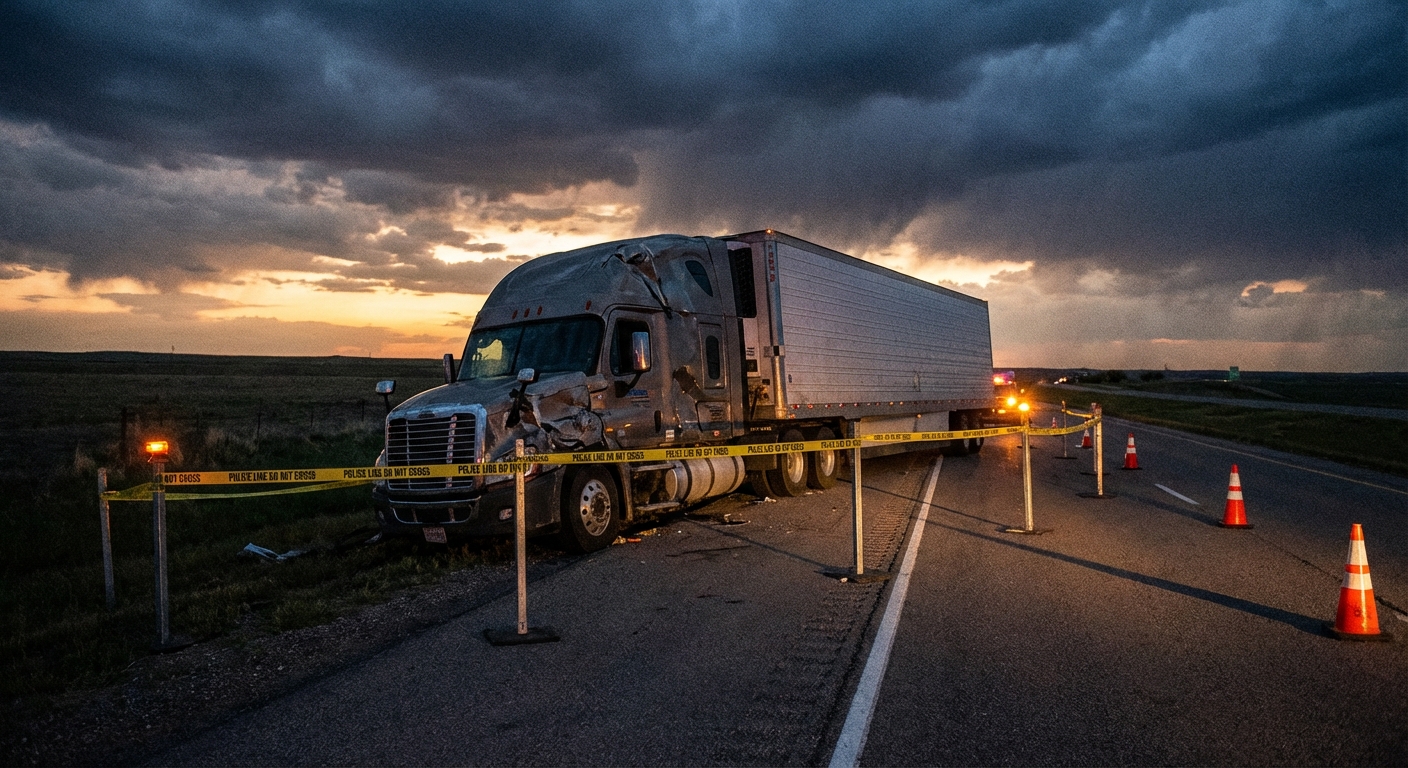
Calculating San Francisco Truck Accident Settlements
Settlement values for commercial motor vehicle (CMV) accidents in San Francisco vary significantly, typically ranging from tens of thousands to multi-million dollars. The final amount depends heavily on factors like injury severity, the clarity of liability, and the trucking company's compliance with federal regulations. Unlike standard car crashes, truck accident cases involve complex federal rules, higher insurance policy limits, and the potential for multiple liable parties beyond just the driver. Understanding these elements is crucial for evaluating potential compensation. Cases involving extensive medical treatment, long-term disability, or fatalities naturally command higher settlements due to the profound impact on victims and their families. Each case requires a thorough investigation into the specifics of the collision and the operational history of the motor carrier.
What Factors Determine Your Truck Accident Settlement?
Several critical factors influence the settlement value in a San Francisco truck accident claim. These are often more complex than those in a typical passenger car collision due to the unique nature of commercial trucking operations.
Key elements include:
- Severity of Injuries: This is paramount. Extensive medical treatment, permanent disability, disfigurement, or chronic pain directly increase the value. Medical records, prognoses, and expert opinions are essential here.
- Total Economic Damages: This includes current and future medical expenses, lost wages, diminished earning capacity, and property damage. Detailed documentation of all financial losses is necessary.
- Non-Economic Damages: Pain and suffering, emotional distress, loss of enjoyment of life, and loss of companionship (in wrongful death cases) are significant components, though harder to quantify precisely.
- Clarity of Liability: How clearly can fault be established? Evidence like ELD data, HOS logs, dashcam footage, witness statements, and accident reconstruction reports are vital. The more indisputable the motor carrier's fault, the stronger the claim.
- FMCSA Violations: Any breach of federal trucking regulations, such as hours-of-service (HOS) violations, improper maintenance, or negligent hiring, can significantly increase a motor carrier's liability. The Federal Motor Carrier Safety Administration (FMCSA) sets these standards to prevent crashes.
- Motor Carrier's Insurance Policy Limits: Commercial trucking companies carry substantial insurance policies, often in the millions. These limits directly impact the maximum available compensation.
- Spoliation of Evidence: If a motor carrier destroys or alters critical evidence after a crash, this can lead to severe legal penalties and strengthen the plaintiff's case.
- Jurisdiction: San Francisco juries are often perceived as plaintiff-friendly, which can influence settlement offers.
Typical Ranges by Injury Severity Tier
Estimating a precise settlement without knowing the specifics of a case is impossible. However, based on injury severity, general ranges can provide a framework. These figures are illustrative and not guarantees, as every case is unique.
- Minor Injuries (e.g., whiplash, sprains, minor soft tissue damage without surgery): These cases often settle for amounts ranging from $25,000 to $150,000. While less severe, the involvement of an 18-wheeler means higher potential for underlying issues.
- Moderate Injuries (e.g., fractured bones, concussions, disc herniations requiring surgery, but with good recovery prospects): Settlements for moderate injuries might fall between $150,000 and $750,000. These cases typically involve more extensive medical intervention and a longer recovery period.
- Severe Injuries (e.g., multiple complex fractures, traumatic brain injury (TBI), spinal cord injury, organ damage, significant disfigurement, long-term disability): These cases frequently result in settlements ranging from $750,000 to $3,000,000 or more. The long-term medical needs and impact on quality of life drive these higher values.
- Catastrophic Injuries or Wrongful Death (e.g., permanent paralysis, severe TBI with permanent impairment, loss of limb, fatal collisions): These are the highest value cases, often reaching multi-million dollar settlements. They account for immense future medical care, lost earning capacity for life, and profound non-economic damages. The average cost of a large truck crash resulting in a fatality can be substantial, as documented by organizations like the [National Highway Traffic Safety Administration (NHTSA)](https://www.nhtsa.gov/).
Talk to a truck accident lawyer today
Free consultation — no fees unless your case wins.
Get started →San Francisco and California-Specific Factors
California law introduces specific considerations that impact truck accident settlements in San Francisco.
First, California operates under a pure comparative negligence rule. This means that if you are found partially at fault for the accident, your total compensation will be reduced by your percentage of fault. For example, if a jury awards you $1,000,000 but finds you 20% responsible, you would receive $800,000. This rule allows recovery even if you are mostly at fault, unlike some other states.
Second, the statute of limitations for personal injury claims in California is generally two years from the date of the injury. For property damage, it's three years. Missing this deadline means you forfeit your right to file a lawsuit in civil court, such as the San Francisco Superior Court, Civil Division, at 400 McAllister Street.
Third, San Francisco juries are often seen as favoring plaintiffs in personal injury cases, especially when the defendant is a large corporation. This local tendency can sometimes encourage motor carriers and their insurers to offer more favorable settlements to avoid the risk of a trial verdict. However, every jury is different, and outcomes are never guaranteed.
Finally, California's busy roadways, including major arteries like I-80 near the Bay Bridge approach, see a high volume of commercial traffic. This increases the potential for CMV crashes, making local understanding of traffic patterns and common accident zones valuable.
When a Settlement Calculator Isn't Enough
Online calculators can offer a very basic estimate, but they cannot account for the intricate details and legal strategies unique to commercial motor vehicle crashes. These cases are rarely simple. The stakes are high due to the potential for catastrophic injuries and the deep pockets of trucking companies and their insurers.
Accurately valuing a truck accident claim requires a deep dive into evidence that includes ELD data, driver HOS logs, post-crash drug screens, maintenance records, and the motor carrier's CSA score. Understanding how to interpret these records and how they relate to federal regulations is paramount. Furthermore, the defense will employ sophisticated tactics to minimize their payout. They might challenge the severity of your injuries, attempt to shift blame, or even try to destroy critical evidence if not prevented by a preservation letter.
Expert testimony from accident reconstructionists, medical specialists, and vocational rehabilitation experts often becomes necessary to prove the full extent of damages and liability. A calculator simply cannot factor in the nuances of spoliation arguments, the strategic demands for discovery, or the complex negotiation dance with well-funded insurance adjusters. For claims involving significant injuries or disputes over fault, a generic calculator falls short of providing a realistic or reliable estimate.
What is the statute of limitations for a truck accident in California?
In California, the statute of limitations for most personal injury claims, including those arising from a truck accident, is two years from the date of the injury. For property damage claims, this period is three years. It is important to file your lawsuit before this deadline expires, or you may lose your right to pursue compensation.
How does California's comparative negligence rule affect my settlement?
California follows a 'pure comparative negligence' rule. This means that if you are found to be partially at fault for the truck accident, your total settlement amount will be reduced by your percentage of fault. For example, if you are awarded $1,000,000 but are found 10% at fault, your recovery would be $900,000.
What kind of evidence is critical in a San Francisco truck accident case?
Critical evidence in a San Francisco truck accident case includes electronic logging device (ELD) data, driver's hours-of-service (HOS) logs, post-crash drug and alcohol screening results, vehicle maintenance records, inspection reports, dashcam footage, and the motor carrier's CSA safety scores. This evidence helps establish liability and regulatory compliance.
Can I sue the trucking company directly, not just the driver?
Yes, in many cases, you can sue the trucking company (motor carrier) directly, in addition to or instead of the driver. This is possible if the company was negligent in its hiring, training, supervision, maintenance, or if it pressured the driver to violate federal regulations. Such claims are separate from the driver's direct fault.
How long does a truck accident settlement typically take in San Francisco?
The timeline for a truck accident settlement in San Francisco varies widely based on the case's complexity, injury severity, and the willingness of all parties to negotiate. Simple cases might settle in months, while complex claims involving severe injuries or disputed liability can take several years to resolve through litigation or trial.
What is a preservation letter and why is it important after a CMV crash?
A preservation letter is a formal legal notice sent to a trucking company demanding that they retain all evidence related to a commercial motor vehicle (CMV) crash. This is crucial because trucking companies may legally purge certain data, like ELD records, after a specific period (often 15 days). A timely preservation letter prevents spoliation of this vital evidence.
Common questions
What is the statute of limitations for a truck accident in California?
In California, the statute of limitations for most personal injury claims, including those arising from a truck accident, is two years from the date of the injury. For property damage claims, this period is three years. It is important to file your lawsuit before this deadline expires, or you may lose your right to pursue compensation.
How does California's comparative negligence rule affect my settlement?
California follows a 'pure comparative negligence' rule. This means that if you are found to be partially at fault for the truck accident, your total settlement amount will be reduced by your percentage of fault. For example, if you are awarded $1,000,000 but are found 10% at fault, your recovery would be $900,000.
What kind of evidence is critical in a San Francisco truck accident case?
Critical evidence in a San Francisco truck accident case includes electronic logging device (ELD) data, driver's hours-of-service (HOS) logs, post-crash drug and alcohol screening results, vehicle maintenance records, inspection reports, dashcam footage, and the motor carrier's CSA safety scores. This evidence helps establish liability and regulatory compliance.
Can I sue the trucking company directly, not just the driver?
Yes, in many cases, you can sue the trucking company (motor carrier) directly, in addition to or instead of the driver. This is possible if the company was negligent in its hiring, training, supervision, maintenance, or if it pressured the driver to violate federal regulations. Such claims are separate from the driver's direct fault.
How long does a truck accident settlement typically take in San Francisco?
The timeline for a truck accident settlement in San Francisco varies widely based on the case's complexity, injury severity, and the willingness of all parties to negotiate. Simple cases might settle in months, while complex claims involving severe injuries or disputed liability can take several years to resolve through litigation or trial.
What is a preservation letter and why is it important after a CMV crash?
A preservation letter is a formal legal notice sent to a trucking company demanding that they retain all evidence related to a commercial motor vehicle (CMV) crash. This is crucial because trucking companies may legally purge certain data, like ELD records, after a specific period (often 15 days). A timely preservation letter prevents spoliation of this vital evidence.
Experienced truck accident attorneys. No upfront cost.
Free consultation →