

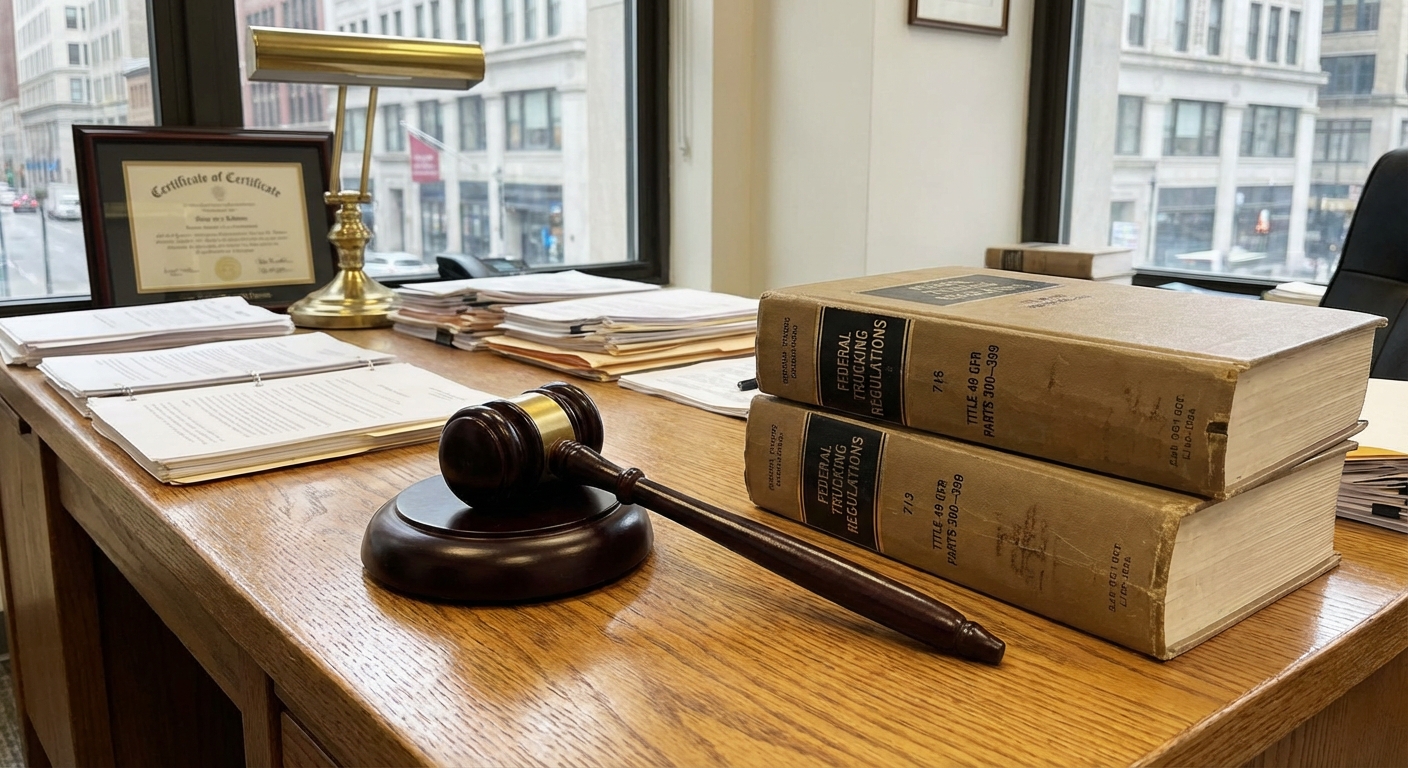
Los Angeles Commercial Vehicle Accident Lawyers
Los Angeles commercial vehicle accident lawyers investigate collisions involving tractor-trailers, buses, and other large commercial motor vehicles to establish liability and pursue compensation. These cases differ significantly from car accidents due to federal FMCSA regulations, the sheer scale of the vehicles, and the corporate entities often involved. Attorneys prioritize securing critical evidence, such as electronic logging device (ELD) data, driver qualification files, and post-crash drug screen results, which motor carriers frequently control. They work to prevent spoliation of this evidence and identify all potentially negligent parties, including the driver, motor carrier, or even shippers. Understanding California's pure comparative negligence rule and the two-year statute of limitations is central to their approach for victims in Los Angeles County.
What Makes Commercial Vehicle Accidents Different in Los Angeles?
Commercial motor vehicle (CMV) accidents in Los Angeles County involve unique complexities that set them apart from standard car crashes. The primary difference lies in the sheer size and weight of an 18-wheeler, which can reach up to 80,000 pounds when fully loaded. The physics of such a collision often leads to severe or catastrophic injuries for occupants of smaller passenger vehicles. Beyond the physical impact, federal regulations from the Federal Motor Carrier Safety Administration (FMCSA) govern nearly every aspect of commercial trucking, from driver hours-of-service (HOS) rules to vehicle maintenance standards.
Los Angeles, as the second-largest city in the United States, sees immense commercial traffic across its vast freeway network, including critical routes like Interstate 5 (I-5) through the Tejon Pass and Interstate 10 (I-10) connecting the city to the port. This high volume increases the potential for incidents. When a crash occurs, the investigation extends beyond the individual driver to include the motor carrier, dispatch company, and potentially others in the commercial chain. Each of these entities will have legal teams prepared to defend against claims, making the process significantly more involved than a typical car accident case.
Key Evidence in a Los Angeles Commercial Vehicle Crash Claim
Evidence collection is paramount after a commercial vehicle crash. Unlike car accidents, where evidence might be limited to police reports and witness statements, big rig cases involve a wealth of specialized data. Electronic logging devices (ELDs) record a driver's HOS, speed, and other operational data. Driver qualification files contain critical information about their training, medical certifications, and driving history. Maintenance records reveal the CMV's service history, which can indicate mechanical failures or negligent upkeep. Post-crash drug and alcohol screens are also standard, mandated by federal law, and their results are vital.
The swift preservation of this evidence is crucial. Motor carriers often have policies that allow for the deletion of ELD data, dashcam footage, and other records after a specific period, sometimes as short as 15 days. Issuing a spoliation letter or preservation letter immediately after an incident legally compels the motor carrier to retain all relevant information. Without this intervention, crucial evidence that could prove fault may disappear. Law enforcement agencies like the California Highway Patrol (CHP) and the Los Angeles Police Department (LAPD) will document the scene, but their reports may not capture the intricate details needed to build a comprehensive commercial vehicle accident claim. Understanding what data points to request and how to secure them is an industry-insider advantage.
Talk to a truck accident lawyer today
Free consultation — no fees unless your case wins.
Get started →Understanding Liability: Who Pays After a Big Rig Accident in Southern California?
Determining liability in a commercial vehicle accident often involves more than just the driver. Multiple parties can hold responsibility, reflecting the complex nature of the trucking industry. The driver, of course, can be negligent through violations of HOS rules, distracted driving, or improper vehicle operation. However, the motor carrier that employs the driver often bears significant liability under legal principles like vicarious liability. This means the company is responsible for the actions of its employees while on duty.
Beyond vicarious liability, a motor carrier can also be directly negligent. This occurs if the company failed to properly vet, train, or supervise its drivers, or if it pressured drivers to violate HOS rules. Other potential defendants include the company that leased the trailer, the freight broker who arranged the shipment, the shipper who loaded the cargo, or even a third-party maintenance company if a mechanical failure contributed to the crash. California operates under a pure comparative negligence rule, meaning that even if an injured party is partially at fault, they can still recover damages, reduced by their percentage of fault. This contrasts with other states and highlights the importance of thorough investigation to assign fault accurately.
The Statute of Limitations for Commercial Vehicle Cases in California
For personal injury claims arising from commercial vehicle accidents in California, a strict deadline applies: the statute of limitations. Generally, injured parties have two years from the date of the accident to file a lawsuit. This rule is codified in California Code of Civil Procedure § 335.1. If a lawsuit is not filed within this two-year window, the right to pursue compensation is typically lost forever.
While two years may seem like ample time, investigating a complex commercial vehicle crash, securing expert testimony, and negotiating with large motor carrier insurance companies takes considerable effort. There are limited exceptions that can extend this deadline. For instance, if the injured party was a minor at the time of the crash, the clock might not start until they turn 18. Claims against government entities, such as a city or county, often have much shorter filing deadlines, sometimes as little as six months, requiring specific administrative procedures. Understanding these nuances and acting promptly is critical to preserving a claim.
Choosing a Los Angeles Commercial Vehicle Accident Attorney
Selecting the right legal representation after a commercial vehicle accident in Los Angeles is a critical decision. These cases demand a lawyer with a specific understanding of the trucking industry, not just general personal injury law. Your attorney should be fluent in FMCSA regulations, HOS rules, and the types of evidence motor carriers produce. They need to know how to interpret ELD data, driver logs, and CSA scores to build a strong case.
Familiarity with the local legal landscape in Los Angeles County is also valuable. This includes understanding the procedures at the Los Angeles County Superior Court, such as the Stanley Mosk Courthouse, where many civil cases are heard. A lawyer who understands the local medical community, including Level I trauma centers like Cedars-Sinai Medical Center, can help ensure you receive appropriate care and that your medical evidence is properly documented. The unique challenges of Los Angeles traffic and the scale of commercial operations here mean that local insight can be just as important as federal regulatory knowledge in advocating for your claim.
Common questions
How long do I have to file a commercial vehicle accident claim in California?
In California, you generally have two years from the date of the commercial vehicle accident to file a personal injury lawsuit, as outlined in California Code of Civil Procedure § 335.1. Missing this deadline typically means losing your right to pursue compensation, so it's important to act quickly.
What is a preservation letter, and why is it important in a big rig accident case?
A preservation letter, also known as a spoliation letter, is a formal legal document sent to a motor carrier or other involved parties. It legally compels them to retain all evidence related to the accident, such as ELD data, driver logs, dashcam footage, and maintenance records. This prevents them from destroying or altering crucial information that could prove liability.
Can a trucking company be held responsible if their driver caused an accident?
Yes, a trucking company can often be held responsible for an accident caused by its driver, under a legal principle called vicarious liability. The company can also be directly liable if it was negligent in hiring, training, supervising, or maintaining its vehicles, which contributed to the crash.
What kind of evidence is crucial after an 18-wheeler crash?
Crucial evidence includes electronic logging device (ELD) data, driver hours-of-service (HOS) logs, driver qualification files, vehicle maintenance records, post-crash drug and alcohol test results, black box data, dashcam footage, police reports, and witness statements. Securing this data quickly is vital.
What is "pure comparative negligence" in California?
California's pure comparative negligence rule means that an injured party can still recover damages even if they were partially at fault for the accident. Their total compensation will be reduced by the percentage of fault assigned to them. For example, if you are 20% at fault, your damages would be reduced by 20%.
How do federal regulations like HOS rules affect my commercial vehicle accident claim?
Federal hours-of-service (HOS) rules dictate how long a commercial driver can operate a vehicle. If a driver violates these rules and causes a crash, it's a direct FMCSA violation that can be powerful evidence of negligence against both the driver and the motor carrier in your claim.
Experienced truck accident attorneys. No upfront cost.
Free consultation →