

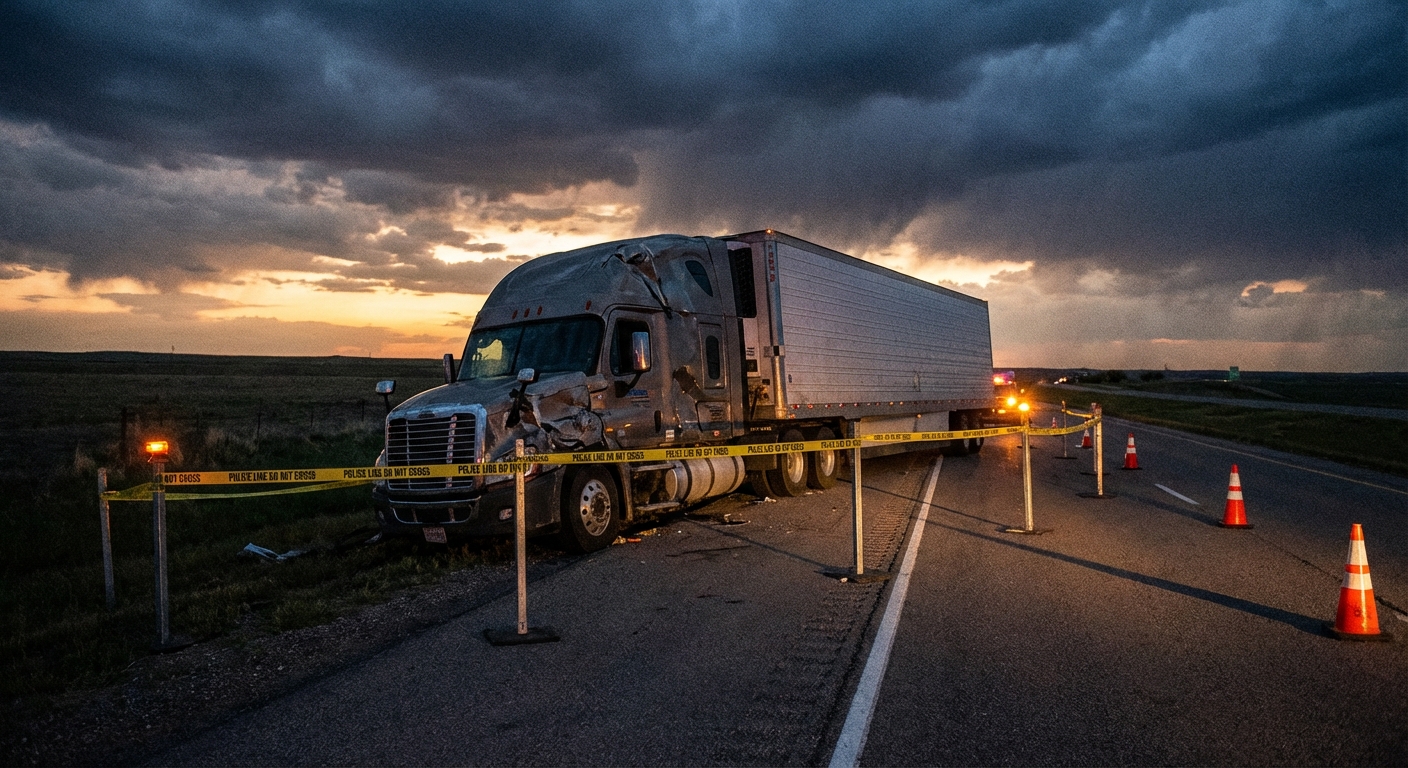
7 Critical Steps You Must Take After an Irvine Commercial Truck Accident
After a commercial truck accident in Irvine, the immediate steps you take are crucial for your safety and any potential legal claim. First, ensure everyone's safety and call 911 for emergency services and the Irvine Police Department. Seek prompt medical attention, even if injuries seem minor, as some symptoms appear later. Document the scene thoroughly with photos and videos, capturing vehicle positions, damage, road conditions, and any visible hazards. Do not admit fault or give recorded statements to trucking company representatives or their insurers. Contacting a legal professional early can help preserve critical evidence, like electronic logging device (ELD) data and driver logs, which motor carriers might otherwise legally discard under spoliation rules.
1. Secure the Scene and Seek Medical Attention Immediately
Your safety and health are the absolute priority after an 18-wheeler collision. Move to a safe location if possible, away from traffic. Immediately call 911 to report the incident to emergency medical services and the Irvine Police Department. Even if you feel fine, accept medical evaluation at the scene. Symptoms of serious injuries, like whiplash or internal trauma, often manifest hours or days later. Prompt medical documentation establishes a clear link between the crash and your injuries. For severe injuries, you may be transported to a facility like UCI Medical Center in Orange, a Level I trauma center serving Orange County, where specialized care is available for complex cases involving commercial motor vehicles.
2. Report the Incident to the Irvine Police Department and Document Everything
A police report from the Irvine Police Department provides an official record of the accident. While officers may not assign fault, their report will document details like the date, time, location (such as on the busy I-5 or I-405 freeways near Irvine), involved vehicles, and witness information. This report is a foundational piece of evidence. Beyond the police, document the scene yourself. Use your phone to take extensive photos and videos of everything: vehicle damage, skid marks, road conditions, traffic signs, debris, and the truck's identifying information (USDOT number, license plate, company name). This visual evidence can be invaluable for understanding how the crash occurred and who was at fault.
Talk to a truck accident lawyer today
Free consultation — no fees unless your case wins.
Get started →3. Preserve Crucial Evidence with a Legal Hold Letter
Commercial truck accident cases turn on evidence often controlled by the motor carrier. This includes the driver's electronic logging device (ELD) data, hours-of-service (HOS) logs, driver qualification files, maintenance records for the rig, and dispatch communications. Many trucking companies have specific data retention policies, and some data can be legally deleted after a certain period, sometimes as short as 15 days, under spoliation rules. An attorney can send a preservation letter, also known as a spoliation letter, to the trucking company. This legally obligates them to retain all relevant evidence, preventing its destruction and safeguarding your ability to prove negligence. This is a critical early step, especially in California, where discovery rules are robust.
4. Understand the Role of FMCSA and DOT Regulations
Commercial motor vehicles are subject to strict federal regulations enforced by the Federal Motor Carrier Safety Administration (FMCSA) and the Department of Transportation (DOT). These rules cover everything from driver qualification and drug testing to vehicle maintenance and hours-of-service limits. For example, a driver can only operate a CMV for up to 11 hours after 10 consecutive hours off-duty. Violations of these regulations, such as a driver exceeding HOS limits or a motor carrier failing to properly maintain a rig, can be direct evidence of negligence. An industry specialist will know how to investigate a motor carrier's compliance safety accountability (CSA) score, which reflects their safety performance, and use it to strengthen your case.
5. Avoid Speaking with Trucking Company Insurers or Representatives
After a commercial truck accident, you can expect the motor carrier's insurance adjusters or representatives to contact you quickly. Their primary goal is to minimize their company's liability and settle your claim for the lowest possible amount. They are not on your side. Any statements you make, even seemingly innocuous ones, could be used against you later. Do not give recorded statements, sign any documents, or accept any settlement offers without first consulting with a legal professional. Direct all communication through your attorney, who understands the tactics used by large trucking insurance companies.
6. Collect Witness Information and Contact Details
Independent witnesses often provide unbiased accounts of a commercial truck accident. Their statements can corroborate your version of events and contradict claims made by the truck driver or motor carrier. If there are bystanders, other drivers, or even passengers who saw the crash, get their names, phone numbers, and email addresses. Even if the Irvine Police Department takes witness statements for their report, having direct contact information allows your legal team to follow up quickly and gather more detailed perspectives. This immediate action can be vital, as witnesses may be difficult to locate later.
7. Consult with a Commercial Truck Accident Specialist in Orange County
Commercial truck accidents are fundamentally different from typical car crashes. The complex federal regulations, the high stakes, and the resources of motor carriers mean you need a legal team that understands the trucking industry. A lawyer specializing in commercial motor vehicle incidents will know how to issue preservation letters, interpret ELD data, and build a case based on FMCSA violations. They also understand the local legal landscape, including filing procedures at the Orange County Superior Court, Central Justice Center in Santa Ana, and navigating California's pure comparative negligence rule. Furthermore, California's statute of limitations, generally two years for personal injury cases under CCP § 335.1, means time is a factor in protecting your rights.
Common questions
What is spoliation in a commercial truck accident case?
Spoliation refers to the destruction or alteration of evidence relevant to a legal case. In trucking accidents, this often involves the motor carrier deleting ELD data, HOS logs, or maintenance records after a specific retention period. A preservation letter from an attorney legally prevents this.
How long do I have to file a lawsuit after an Irvine truck accident?
In California, the statute of limitations for personal injury claims, including those from commercial truck accidents, is generally two years from the date of the injury. This is outlined in California Code of Civil Procedure § 335.1. Missing this deadline typically means losing your right to pursue compensation.
Can I still recover compensation if I was partly at fault?
Yes, California follows a 'pure comparative negligence' rule. This means your compensation can be reduced by your percentage of fault, but you can still recover even if you are found to be mostly responsible. For example, if you are 20% at fault, your damages would be reduced by 20%.
What kind of evidence is critical in a big rig accident claim?
Critical evidence includes the police report, photographs and videos of the scene, witness statements, medical records, ELD data, driver HOS logs, truck maintenance records, driver qualification files, and post-crash drug and alcohol test results. A legal team will work to secure all this data.
Experienced truck accident attorneys. No upfront cost.
Free consultation →