

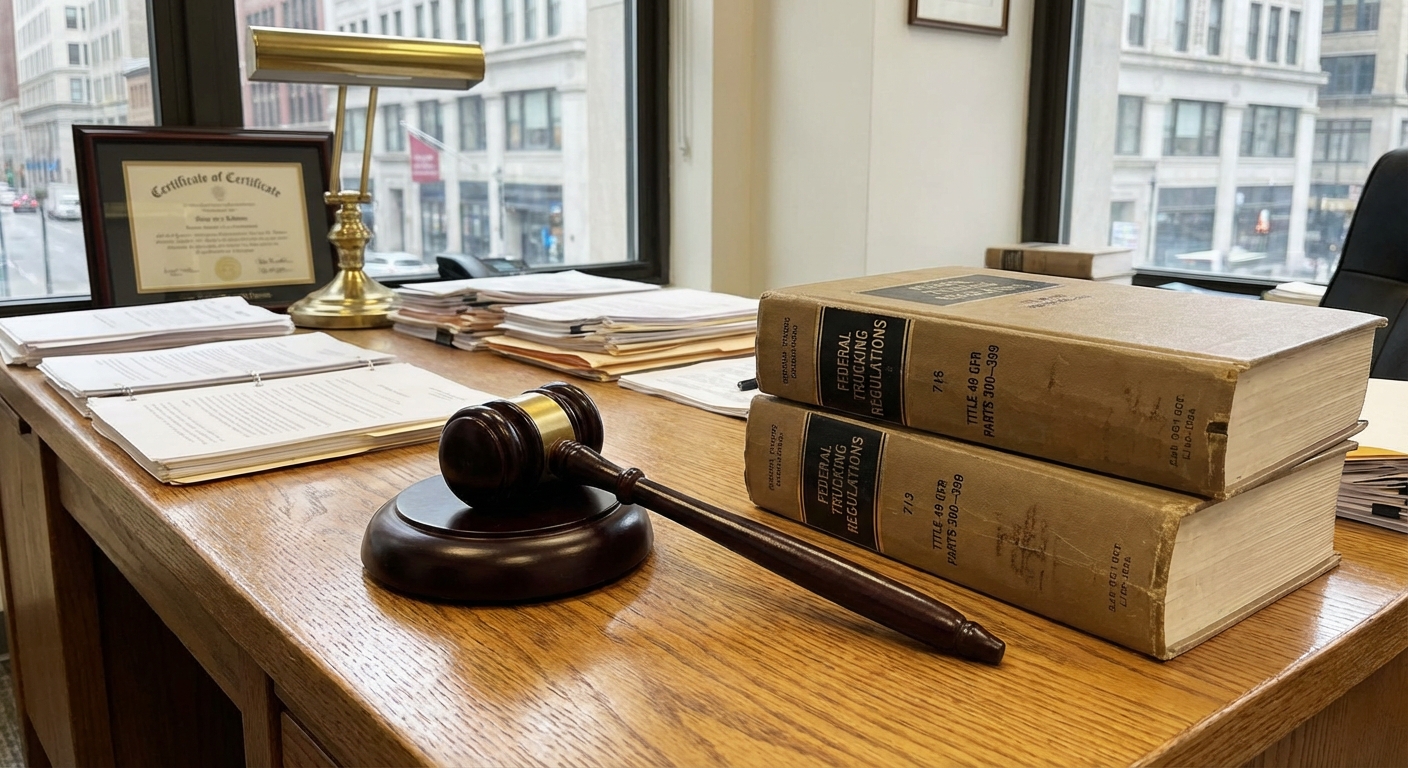
Irvine Truck Accident Statute of Limitations: Protecting Your Claim
The California statute of limitations for personal injury resulting from a commercial motor vehicle accident is generally two years from the date of the incident. This means a lawsuit must be filed within two years in the Orange County Superior Court – Central Justice Center in Santa Ana. Failing to meet this deadline typically results in the permanent loss of your right to seek compensation, regardless of the merits of your claim. This two-year period is established under California Code of Civil Procedure § 335.1 and is a critical deadline for anyone injured in a truck crash in Irvine or elsewhere in the state. Understanding this timeframe is essential for preserving your legal options and ensuring accountability.
California's Two-Year Statute of Limitations for Truck Accidents
In California, most personal injury claims stemming from commercial truck accidents must adhere to a strict two-year statute of limitations. This deadline, codified in California Code of Civil Procedure § 335.1, mandates that you initiate legal action within two years from the date your injury occurred. This applies to incidents involving big rigs, 18-wheelers, and other commercial motor vehicles on roadways like the I-5 in Irvine. If you were hurt in a crash near the Irvine Spectrum Center, for example, the clock starts ticking the day of that incident.
This two-year window is absolute in many cases. It is not an arbitrary suggestion; it is a legal requirement that determines whether your claim can proceed. Even if liability is clear, missing this deadline means the court will likely dismiss your case, preventing you from recovering damages for medical bills, lost wages, or other losses. The precise date of the injury is crucial for calculating this period, which is why immediate action and accurate record-keeping are so important after a commercial motor vehicle collision.
When Does the Statute of Limitations Clock Start?
For most truck accident claims, the two-year period begins on the date the injury occurred. However, California law recognizes certain exceptions that can affect when the "clock" starts ticking. One such exception is the "discovery rule." This rule applies when the injury or its cause isn't immediately apparent at the time of the accident. If you didn't discover your injury until a later date, and a reasonable person wouldn't have discovered it earlier, the two-year period might begin from the date of discovery, not the accident itself.
For instance, a spinal injury or certain internal injuries might not manifest symptoms for weeks or months after a collision with a Class 8 truck. In such situations, the statute of limitations could be extended. However, proving the application of the discovery rule requires specific evidence and legal arguments. It's not an automatic extension. Understanding the precise start date is a critical early step, especially given the complexities of commercial trucking liability, which can involve multiple parties from the driver to the motor carrier and even the shipper or broker. The sooner your legal team investigates, the clearer the timeline becomes.
Talk to a truck accident lawyer today
Free consultation — no fees unless your case wins.
Get started →Exceptions That May Extend the Deadline
While the two-year rule is standard, several specific exceptions can extend the statute of limitations in California commercial motor vehicle cases. These exceptions are often complex and require careful legal analysis:
- Minors: If the injured party was under 18 years old at the time of the truck accident, the statute of limitations typically does not begin to run until their 18th birthday. They then have two years from that date to file a claim.
- Mental Incapacity: If the injured party is legally deemed mentally incapacitated and unable to manage their affairs, the statute of limitations may be paused until their capacity is restored or a legal guardian is appointed.
- Government Claims: Accidents involving a government entity or employee (e.g., a municipal truck) have a significantly shorter notice period, usually six months, to file an administrative claim before a lawsuit can be filed. Missing this initial notice period almost always bars a later lawsuit, even if the two-year personal injury statute hasn't passed.
- Defendant Absence: If the responsible party leaves the state after the accident, the time they are absent generally does not count toward the two-year limit.
These exceptions are not universal and depend heavily on the specific facts of each case. Relying on them without expert legal counsel carries significant risk. It's always prudent to act as though the standard two-year deadline applies to avoid jeopardizing your claim.
The Consequences of Missing the Statute of Limitations
Missing the California statute of limitations for your truck accident claim has severe and usually irreversible consequences. Once the two-year period passes, your right to file a lawsuit in a civil court, like the Orange County Superior Court, is generally lost forever. This means that even if you have compelling evidence of the truck driver's negligence, proof of the motor carrier's HOS violations, or clear documentation of your catastrophic injuries, the court will likely refuse to hear your case.
The defendant's legal team, representing the trucking company and its insurer, will almost certainly file a motion to dismiss your case based on the expired deadline. Judges typically grant these motions, effectively ending your pursuit of compensation. This outcome underscores why prompt action is so vital after an 18-wheeler collision. It's not just about building a strong case; it's about adhering to the fundamental procedural rules that govern the legal system. The FMCSA provides various safety regulations for commercial motor vehicles, but these regulations do not override state-level procedural deadlines for filing lawsuits. For more details on federal trucking regulations, you can visit the [FMCSA website](https://www.fmcsa.dot.gov/).
Steps to Preserve Your Truck Accident Claim Now
To protect your legal rights after an Irvine truck accident, taking proactive steps is crucial, especially concerning the statute of limitations:
- Seek Medical Attention Immediately: Documenting your injuries right away creates an official record linking them to the accident. This is vital for both your health and your legal claim.
- Report the Accident: Ensure the Irvine Police Department or California Highway Patrol creates an official accident report. This report serves as key initial evidence.
- Gather Evidence: Collect photos, videos, witness contact information, and any details about the commercial motor vehicle involved (DOT number, company name on the rig). This data is perishable.
- Send a Preservation Letter: A preservation letter, sent to the motor carrier, demands they retain critical evidence like ELD data, HOS logs, maintenance records, and post-crash drug screen results. This prevents spoliation of crucial information.
- Consult Legal Counsel: A lawyer specializing in commercial truck accidents understands the intricacies of these cases, including California's specific deadlines and the tactics trucking companies use to defend against claims. They can initiate the discovery process and file your lawsuit within the statutory timeframe. This step is particularly important given the complex nature of federal trucking regulations and the high stakes involved. You can find more information about California's legal profession through the [State Bar of California](https://www.calbar.ca.gov/).
Acting quickly allows your legal team to secure evidence before it's lost and ensures all necessary filings are made well within the two-year window. Delaying action can compromise your ability to recover the compensation you deserve.
Common questions
What is the statute of limitations for a truck accident in California?
In California, the statute of limitations for most personal injury claims arising from a truck accident is two years from the date of the incident. This deadline is set by California Code of Civil Procedure § 335.1.
Can the two-year deadline for a truck accident claim be extended?
Yes, in certain limited circumstances, the two-year deadline can be extended. Exceptions include cases involving minors, mental incapacity, or the discovery rule where injuries are not immediately apparent. Claims against government entities have different, much shorter deadlines.
What happens if I miss the statute of limitations for my truck accident case?
If you miss the two-year statute of limitations, you generally lose your right to file a lawsuit in court. The court will almost certainly dismiss your case, preventing you from seeking compensation for your injuries and losses.
Does the statute of limitations apply to property damage from a truck accident?
While this page focuses on personal injury, property damage claims in California typically have a three-year statute of limitations. However, it's common for personal injury and property damage claims to be pursued together.
How can I ensure my truck accident claim meets the California deadline?
To ensure your claim meets the deadline, seek immediate medical attention, report the accident to law enforcement, gather all available evidence, and promptly consult with a lawyer specializing in commercial truck accidents. They can help preserve evidence and file your lawsuit on time.
Experienced truck accident attorneys. No upfront cost.
Free consultation →