

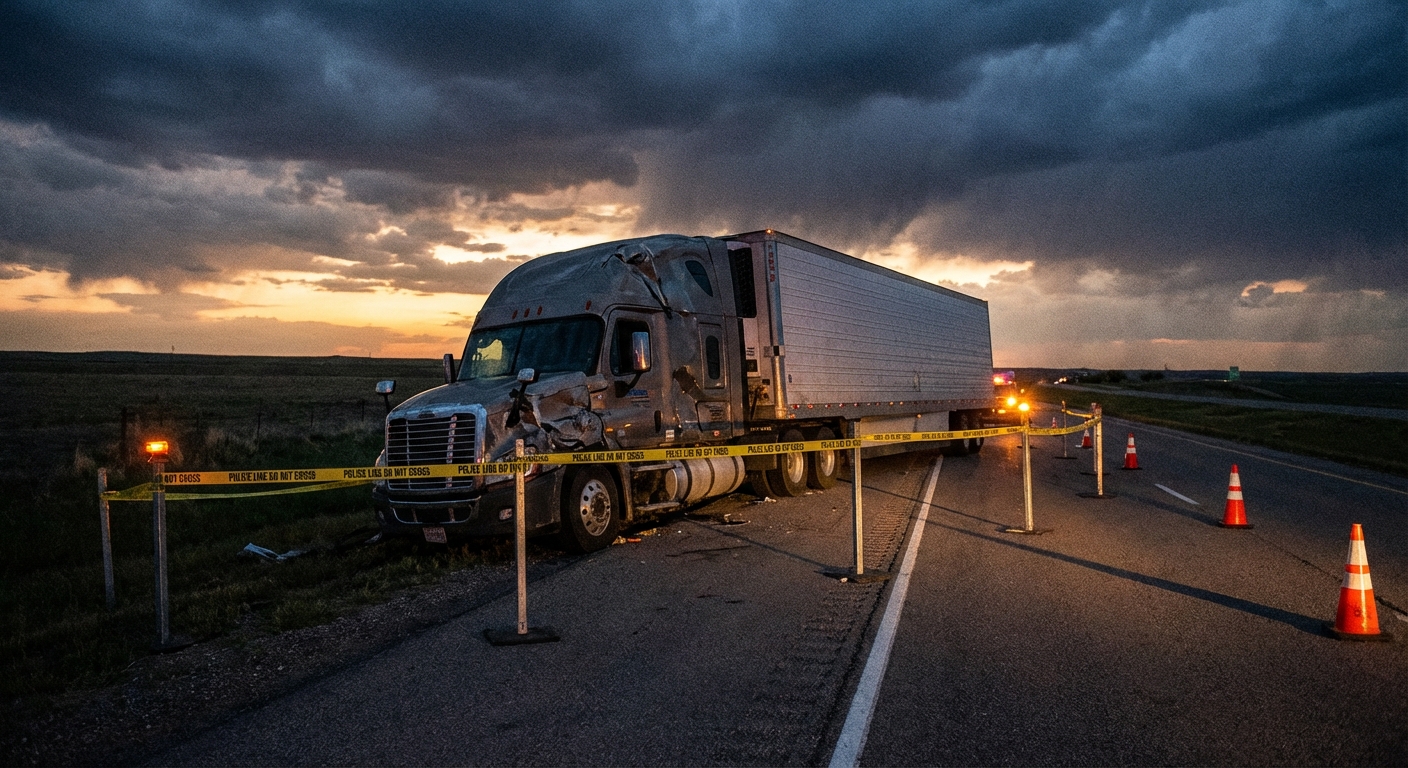
8 Critical Actions After a Truck Accident in Huntington Beach
A truck accident in Huntington Beach isn't a routine fender-bender. An 18-wheeler can weigh 80,000 pounds fully loaded—nearly 20 times a passenger car. The physics creates catastrophic injury patterns, and the legal discovery process is heavily tilted toward evidence the trucking company controls: the driver's electronic logs, dispatch records, maintenance files, and post-crash drug screens. Your first 24 hours matter more than you might think. A single preservation letter sent to the motor carrier stops their legal clock for destroying critical data. In California, you have two years to file a lawsuit, but the evidence battle starts immediately. This guide covers eight essential actions a plaintiff's team takes after a truck crash.
1. Preserve All Electronic Evidence from the Truck Immediately
The trucking company's legal obligation to preserve evidence kicks in the moment they know a crash occurred—usually when the driver calls in the incident. But most motor carriers delete ELD data, dispatch records, and telematics files after 90 days as part of routine data management. A preservation letter from an attorney, sent within 24–48 hours, stops that clock and can prevent spoliation (destruction of evidence). The letter names the specific custodians at the motor carrier and lists every category of evidence that must be held: the driver's electronic logging device records for the 14 days before and after the crash, GPS telematics, on-board camera footage, dispatch logs, communication records between dispatch and driver, and the vehicle's maintenance logs for the preceding year. Without this letter, the company is legally allowed to overwrite that data. Request it in writing immediately.
2. Document the Collision Scene with Photos and Video
If you're able to move safely, photograph everything: the final position of both vehicles, skid marks on the pavement, road conditions, traffic signals, street signs, the condition of the truck's cargo area, and the surrounding landscape. Take close-ups of vehicle damage—it tells the engineer which parts of the truck hit which parts of your car, and that spatial information reconstructs the moment of impact. Video is better than stills when possible; it captures the scale and layout in motion. Get the intersection name or milepost if you're on a highway. Collect contact information from any witnesses who stopped. If police attended, note the officer's name and badge number. The Huntington Beach Police Department responds to most collisions on local roads; highway incidents may involve [California Highway Patrol](https://www.chp.ca.gov/). Request a copy of the collision report within 15 days—it's public record and crucial to your case file.
Talk to a truck accident lawyer today
Free consultation — no fees unless your case wins.
Get started →3. Obtain the Motor Carrier's Regulatory History and CSA Score
Every interstate motor carrier has a public file with the FMCSA (Federal Motor Carrier Safety Administration). The carrier's Compliance, Safety, and Accountability (CSA) score is published and searchable. A high CSA score—particularly in the Unsafe Driving category or Hours of Service violations—shows a pattern of negligence before your crash ever happened. That score is directly admissible in court. You'll need the carrier's legal name and DOT number, usually printed on the side of the truck or in the police report. Search the [FMCSA database](https://www.fmcsa.dot.gov/) for the carrier's safety record. Look for violations involving driver qualification, maintenance, hours of service, and vehicle inspection. If the carrier's score exceeds the intervention threshold in any category, that's a separate liability claim against the company itself, independent of whether the driver was at fault.
4. File a Preservation Letter to Prevent Spoliation of Evidence
A preservation letter is the legal tool that stops a trucking company from destroying evidence. In California, once a company knows litigation is likely, they have a duty to preserve relevant materials. But the letter makes that duty explicit and creates a contemporaneous record if they delete data anyway. The letter should be sent to the motor carrier's registered agent (usually available through the California Secretary of State website) and include the date of the crash, the vehicle identification number, the driver's name, and a detailed list of every document, file, and physical item that must be preserved. Include electronic data: ELD records, telematics, camera footage, GPS coordinates, dispatch communications, fuel logs, and maintenance records. Include physical items: the truck itself (don't let them scrap or repair it), the cargo manifest, the bill of lading, and any post-crash drug test results. Send it via certified mail and email. Keep proof of delivery.
5. Request the Driver's Qualification File and Medical Records
A truck driver's qualification file is a federal requirement under 49 CFR Part 391. It contains the driver's hiring paperwork, road test certificate, medical certification (DOT physical), driving record, and any safety training. This file often reveals background issues the trucking company hired around: a history of accidents, prior violations, or a failed DOT physical that wasn't updated. In California, you can subpoena this file before trial or request it through counsel under a preservation letter. Medical certification is critical: if the driver was operating on an expired DOT physical, or if the physical revealed a condition that should have disqualified them (sleep apnea, vision problems, medication conflicts), that's negligent hiring. The driver's hours-of-service log (now required in digital form via ELD) shows whether they were driving beyond the 11-hour limit or violated the 10-hour consecutive off-duty requirement. Federal hours-of-service violations are per se negligence in many California courts.
6. Gather Dispatch and Maintenance Records
Dispatch records reveal whether the driver was under pressure to meet unrealistic delivery schedules—a common root cause of unsafe driving in commercial trucking. If the dispatch log shows the driver was required to cover 800 miles in a 10-hour window, that implies the company expected violations of federal hours-of-service rules. Maintenance records show whether the truck was in safe operating condition. Look for: brake service history, tire condition reports, any open maintenance tickets that were ignored, and inspection records from the last DOT inspection. A truck involved in a crash that had known mechanical issues—bad brakes, worn tires, or faulty steering—carries liability for the motor carrier separate from driver error. In California, a company that dispatches a vehicle it knows is mechanically unsafe is negligent per se. Request these records through a discovery demand or a preservation letter. The company must produce them.
7. Understand California's Pure Comparative Negligence Rule
California follows pure comparative negligence (Cal. Civil Code § 1431.2), which means even if you're found 99% at fault, you can still recover 1% of your damages from the defendant. But it also cuts the other way: if the jury finds the truck driver 80% at fault and you 20%, your recovery is reduced by 20%. In practice, truck accident cases rarely fall neatly into one party's negligence. The driver might have been speeding, but the motor carrier failed to maintain the brakes. The weather was bad, but the driver's hours-of-service violation meant he was fatigued. A skilled legal team separates these factors and assigns liability where the evidence points. Your job is to gather that evidence. The trucking company's job is to deflect blame onto you. Don't speak to their insurance adjuster without representation.
8. Consult a Truck Accident Specialist Early
A truck accident case isn't a car accident case. The legal landscape is different: federal regulations, motor carrier liability, punitive damages in cases of gross negligence, and discovery battles over proprietary telematics data. An attorney experienced in commercial trucking law will know which questions to ask the motor carrier, which evidence matters most in your specific crash, and how to fight spoliation when the company tries to delete data. In Huntington Beach, cases are filed in the Orange County Superior Court (Central Justice Center, 700 W Civic Center Drive, Santa Ana). An attorney familiar with Orange County judges and local jury tendencies is an asset. Beyond legal representation, a specialist can coordinate with accident reconstruction engineers, medical experts, and vocational economists early—sometimes before a lawsuit is even filed. These experts shape the narrative from day one. The cost of early expert involvement is often far less than the cost of reconstructing a case months later when critical evidence is gone.
Common questions
How long do I have to file a truck accident lawsuit in California?
California's statute of limitations for personal injury cases is two years from the date of injury (California Code of Civil Procedure § 335.1). That clock starts on the date of the crash, not the date you discover your injury. If you miss the deadline, your case is barred forever—there's no exception. File a preservation letter immediately; you can file the lawsuit later, but the evidence preservation cannot wait.
Can I still recover damages if I was partially at fault?
Yes. California's pure comparative negligence law allows you to recover even if you're 99% at fault—you'd receive 1% of your damages from the defendant. However, your recovery is reduced by your percentage of fault. If you're 30% at fault and your damages are $100,000, you recover $70,000. The burden of proving comparative negligence falls on the defendant, so evidence of your actions at the moment of impact matters significantly.
What's the difference between suing the driver and suing the motor carrier?
The driver is the person operating the truck; the motor carrier is the company that owns or leases the truck and employed the driver. In most cases, you sue both. The motor carrier can be liable even if the driver wasn't directly negligent—for example, if the company knowingly dispatched a truck with faulty brakes, or if they hired a driver with a disqualifying medical condition. Motor carrier liability often carries higher damage awards because it targets the company's insurance and deep pockets, not the individual driver.
Should I speak to the trucking company's insurance adjuster?
No. Anything you say can and will be used against you. An adjuster's job is to minimize the claim, not to help you. Once you've retained an attorney, all communication with the insurance company goes through your lawyer. If the adjuster calls, provide your attorney's contact information and hang up. This protects both your legal position and your credibility in any future litigation.
Experienced truck accident attorneys. No upfront cost.
Free consultation →