

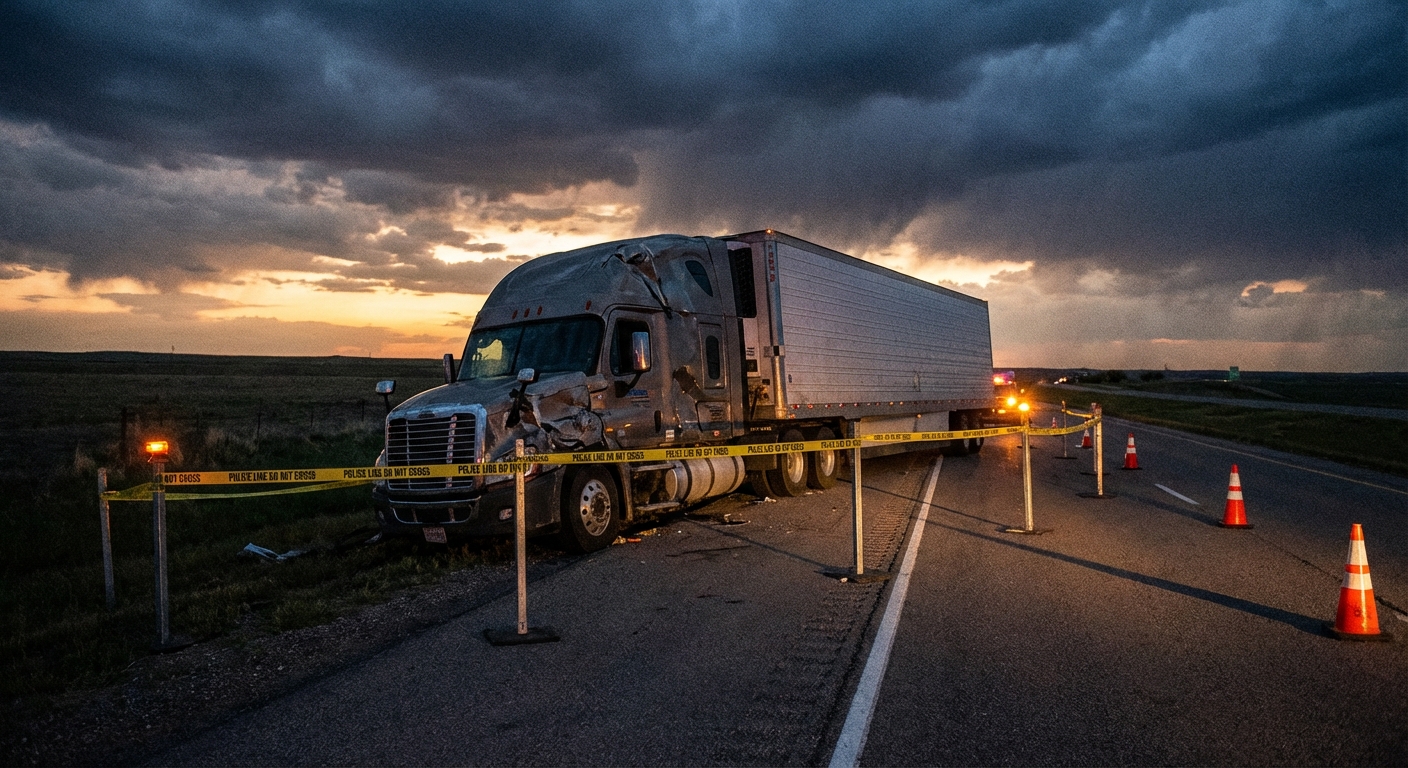
Dallas Semi-Truck Accident Settlement Calculator: Understanding Your Claim's Value
Dallas semi-truck accident settlements can range significantly, from tens of thousands of dollars for less severe injuries to multiple millions for catastrophic harm or wrongful death. The ultimate value of a claim is never guaranteed and depends on several critical factors: the extent of physical injuries, the documented medical expenses, the amount of lost income, and the clarity of liability. Unlike standard car accidents, commercial motor vehicle collisions involve complex federal regulations and often higher insurance policy limits, which can lead to larger settlements. Precise estimation requires a thorough investigation into all available evidence, including ELD data and driver logs.
How Much is a Dallas Semi-Truck Accident Settlement Worth?
Estimating the value of a semi-truck accident settlement in Dallas involves more than just plugging numbers into a formula. While some online calculators offer basic figures, they rarely account for the full spectrum of damages and unique legal complexities involved in commercial motor vehicle cases. An 18-wheeler, fully loaded, can weigh up to 80,000 pounds. The physics of these collisions mean injuries are often severe, driving up medical costs and long-term care needs.
Settlements can vary widely, from around $25,000 to $150,000 for minor injuries like soft tissue damage or sprains, to figures exceeding $3,000,000 for permanent disabilities, traumatic brain injuries (TBI), spinal cord damage, or wrongful death. The motor carrier's insurance policy limits play a significant role here, as federal law requires substantial coverage for these vehicles. The average settlement is not a useful figure because the range is so broad, reflecting the unique facts of each case.
What Factors Determine Your Semi-Truck Accident Settlement?
The value of a semi-truck accident claim is built on concrete evidence and legal precedent. Several key factors directly influence the final settlement amount:
- Severity of Injuries: This is paramount. The type and extent of injuries, including their long-term impact on your health and daily life, dictate medical expenses, future care costs, and pain and suffering.
- Medical Expenses: All past and projected medical bills, including emergency care, surgeries, rehabilitation, medications, and specialized equipment, are direct damages.
- Lost Wages and Earning Capacity: Compensation covers income lost due to time off work, as well as any reduction in your future ability to earn a living.
- Pain and Suffering: This non-economic damage accounts for physical pain, emotional distress, mental anguish, and loss of enjoyment of life caused by the accident.
- Liability and Fault: The clearer the evidence pointing to the truck driver or motor carrier's fault, the stronger the claim. Disputed liability can reduce settlement value.
- Evidence Quality: Robust evidence, such as ELD data, driver HOS logs, dashcam footage, post-crash drug screen results, maintenance records, and witness statements, is critical for proving negligence.
- Motor Carrier's Insurance Policy Limits: Commercial trucking companies carry substantial liability insurance, but even these limits can be a cap on recovery in the most severe cases.
- DOT and FMCSA Violations: Evidence of federal trucking regulation violations (e.g., HOS breaches, improper maintenance, inadequate driver qualification) strengthens a plaintiff's case significantly. The [Federal Motor Carrier Safety Administration (FMCSA)](https://www.fmcsa.dot.gov/) sets these standards.
- Spoliation of Evidence: If a motor carrier destroys critical evidence after a crash, that act can itself create a strong claim for additional damages.
Talk to a truck accident lawyer today
Free consultation — no fees unless your case wins.
Get started →Typical Settlement Ranges by Injury Severity Tier
While every case is unique, semi-truck accident claims generally fall into tiers based on injury severity. These ranges reflect typical outcomes, but specific circumstances can always push a case above or below these figures.
- Minor Injuries (e.g., sprains, whiplash, minor cuts): These often involve soft tissue damage, limited medical intervention, and short recovery periods. Settlements for these injuries typically range from $25,000 to $150,000.
- Moderate Injuries (e.g., non-displaced fractures, concussions, disc herniations): These require more extensive medical treatment, potentially including physical therapy or surgery, and longer recovery times. Settlements usually fall between $150,000 and $750,000.
- Severe Injuries (e.g., complex fractures, internal organ damage, moderate TBI, spinal cord injuries without paralysis): These involve significant medical intervention, often multiple surgeries, and may result in permanent limitations. Settlements for severe injuries can range from $750,000 to $3,000,000.
- Catastrophic Injuries or Wrongful Death (e.g., paralysis, severe TBI, amputation, loss of life): These cases involve lifelong care needs, complete loss of earning capacity, profound pain and suffering, or the tragic loss of a loved one. Settlements for catastrophic injuries or wrongful death often exceed $3,000,000 and can reach $20,000,000 or more depending on the specific facts and jurisdiction.
Dallas and Texas-Specific Factors Affecting Your Claim
The local legal landscape in Dallas, Texas, significantly impacts semi-truck accident settlements. Understanding these specific elements is crucial for accurate valuation.
Texas operates under a modified comparative negligence rule, outlined in Texas Civil Practice and Remedies Code § 33.001. This means if you are found partially at fault for the accident, your recoverable damages will be reduced by your percentage of fault. Crucially, if a jury in the Dallas County Civil District Courts, located at 600 Commerce Street, determines you are more than 50% responsible, you cannot recover any damages at all. This '51% bar' is a critical consideration in every claim.
Additionally, the statute of limitations for most personal injury claims in Texas, including those from semi-truck accidents, is two years from the date of the injury, as per Texas Civil Practice and Remedies Code § 16.003. Missing this deadline almost always bars your right to file a lawsuit, regardless of the merits of your case.
The Dallas metropolitan area, as a major logistics hub, sees significant commercial truck traffic, particularly on thoroughfares like I-35E and I-635. This increases the frequency of CMV-involved incidents. Victims of severe crashes often receive care at Level I trauma centers like Parkland Memorial Hospital, which can generate substantial medical records critical for a claim. Jury tendencies in Dallas County can also be a factor, often reflecting the diverse perspectives of a large urban population.
When a Settlement Calculator Isn't Enough: The Limits of Estimation
While a settlement calculator provides a general idea, it cannot replace a detailed, expert evaluation. These tools lack the ability to analyze the nuances of evidence, the credibility of witnesses, or the specific legal strategies a motor carrier's defense team will employ. They don't account for the impact of a preservation letter on spoliation claims, or the weight of a high CSA score for the carrier.
Furthermore, a calculator won't factor in the intricacies of Texas law, such as the modified comparative negligence rule, or the typical jury awards in Dallas County. The true value of a semi-truck accident claim is determined through meticulous investigation, expert testimony (from accident reconstructionists to medical specialists), and skilled negotiation or litigation. Focusing solely on a calculator's output can lead to unrealistic expectations or, worse, undervalue a significant claim.
Common questions
What evidence is most crucial in a Dallas semi-truck accident case?
Critical evidence includes the truck's ELD data, the driver's HOS logs, post-crash drug and alcohol screen results, the motor carrier's maintenance records, and any dashcam or black box data. Securing this evidence quickly, often through a preservation letter, is essential because trucking companies have rules about how long they must keep it.
How does Texas's comparative negligence rule affect my settlement?
Texas uses a modified comparative negligence rule. If a Dallas jury finds you partly at fault, your settlement will be reduced by your percentage of fault. If your fault is determined to be greater than 50%, you recover nothing under Texas Civil Practice and Remedies Code § 33.001.
What is the statute of limitations for a semi-truck accident claim in Texas?
In Texas, you generally have two years from the date of the semi-truck accident to file a personal injury lawsuit. This deadline is set by Texas Civil Practice and Remedies Code § 16.003, and it's a firm cutoff that can extinguish your claim if missed.
Can I sue the trucking company directly, not just the driver?
Yes, in many semi-truck accident cases, you can pursue claims against the motor carrier directly. This is often based on theories like negligent hiring, negligent supervision, or negligent maintenance, especially if the carrier has a poor CSA score with the FMCSA.
What role do federal trucking regulations play in my claim?
Federal regulations, particularly those from the FMCSA, govern nearly every aspect of commercial trucking. Violations of rules like Hours of Service (HOS) or maintenance standards can be powerful evidence of negligence against the driver or the motor carrier, significantly strengthening your settlement position.
How long does a semi-truck accident settlement typically take in Dallas?
The timeline varies significantly. A clear-liability case with minor injuries might settle in months, but complex cases involving catastrophic injuries, extensive investigation, and difficult negotiations can take years, especially if a lawsuit in Dallas County Civil District Court becomes necessary.
Experienced truck accident attorneys. No upfront cost.
Free consultation →