

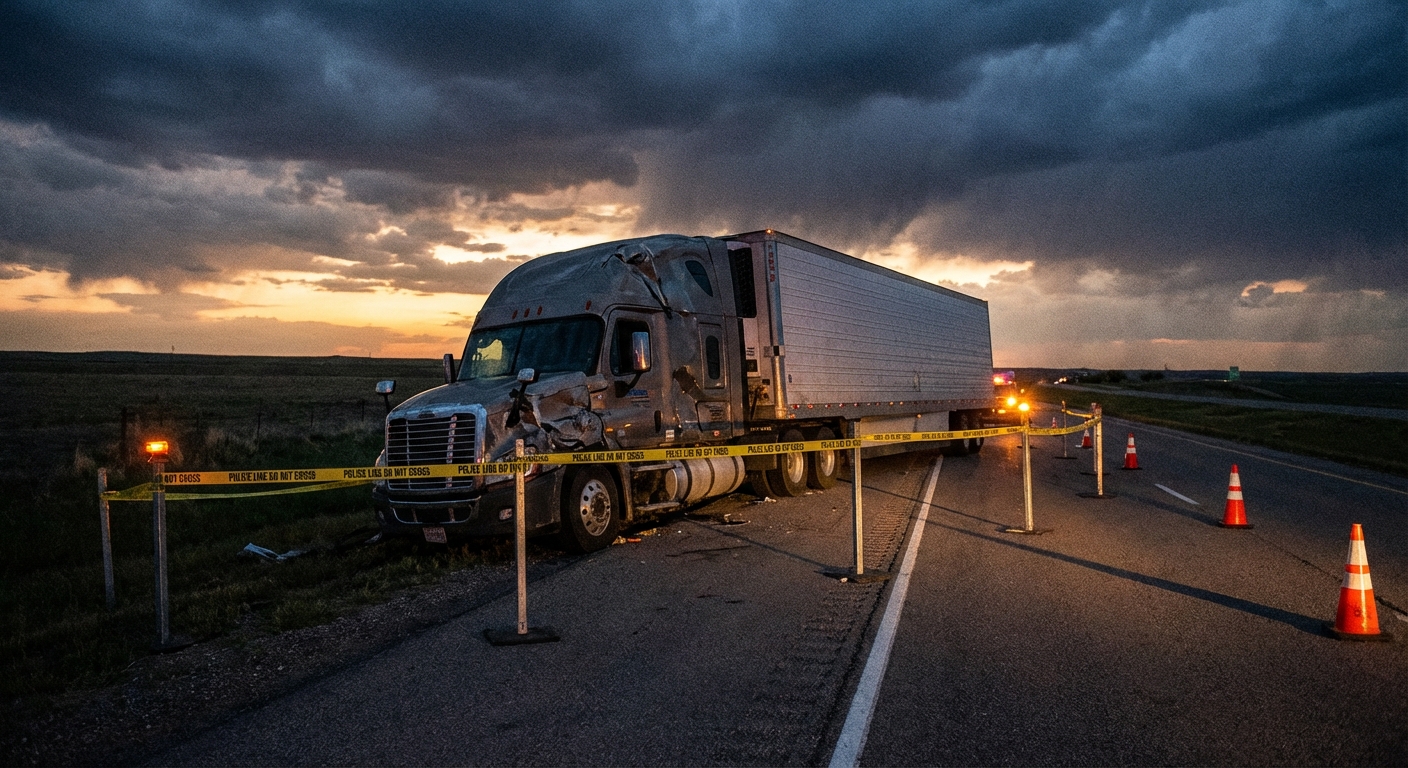
Construction Truck Accident Lawyer: Specialist vs. General Attorney
Construction truck accidents fall under federal FMCSA regulations that don't apply to ordinary vehicles. If your case involves hours-of-service violations, improper load securement, inadequate maintenance, or multi-state operations, you need an attorney fluent in commercial motor vehicle law. A general personal injury lawyer might not recognize federal negligence claims that significantly increase settlement value. The decision comes down to case complexity: simple, single-vehicle liability claims can work with a generalist. Cases with federal violations, serious injury, or multi-state defendants demand a specialist who understands FMCSA discovery, how to challenge CSA scores, and how to read ELD data.
Construction Truck Cases vs. General Personal Injury Cases
A construction truck accident isn't the same as a passenger car wreck, and the legal framework reflects that difference. Construction trucks — dump trucks, concrete mixers, heavy equipment transporters, and material haulers — operate under federal FMCSA rules if they're Class 8 vehicles or carry hazardous materials. A general personal injury attorney handles ordinary negligence: Did the driver swerve into your lane? Did they run a red light? Those cases settle faster because liability is straightforward.
Construction truck cases add federal layers. Was the driver operating within [federal hours-of-service limits](https://www.fmcsa.dot.gov/)? Did the carrier maintain required equipment inspections? Was the load secured according to DOT standards? These questions require someone who reads FMCSA regulations fluently. A specialist knows what discovery to request — the motor carrier's CSA score, ELD records, driver qualification files, maintenance logs — before opposing counsel figures out how to hide them.
For construction accident cases with federal liability angles, hiring a generalist often means leaving significant recovery on the table.
When a Construction Truck Accident Specialist Wins
A construction truck specialist's advantage shows up in five key areas:
- Federal violation recognition. Specialists spot hours-of-service violations, ELD data issues, and CSA thresholds that generalists miss. These violations create direct negligence liability against the motor carrier, separate from the driver.
- Equipment and load liability. Construction trucks carry specialized equipment — cranes, concrete mixers, heavy machinery. A specialist knows the federal standards for securement, load weight distribution, and equipment-specific failures that caused the crash.
- Multi-state operations. If the truck was operating across state lines, federal law takes precedence over state negligence rules. A specialist navigates interstate commerce law and knows which federal court has jurisdiction.
- Carrier negligence patterns. Specialists request the carrier's violation history through [FMCSA's public data](https://www.fmcsa.dot.gov/). CSA scores above intervention thresholds indicate a pattern of negligence that strengthens claims.
- Expert witness networks. Specialists work regularly with FMCSA compliance experts, biomechanical engineers, and accident reconstructionists who understand truck-specific physics and federal standards.
Talk to a truck accident lawyer today
Free consultation — no fees unless your case wins.
Get started →When a General Personal Injury Attorney Is Sufficient
Not every construction truck case requires a specialist. A generalist excels when:
- Liability is unambiguous. The truck ran a red light, was speeding, or struck a stationary vehicle with clear negligence and no federal violations involved.
- Minor to moderate injury. Cases with injuries under $100,000 in economic damages often settle faster with a local attorney who has relationships with the defendant's insurance carrier.
- Single-vehicle incident. One truck, one defendant, no complex corporate structure or multi-state operations.
- Known insurance coverage. The defendant's liability policy is sufficient to cover the claim; no need to pierce the corporate veil or sue the carrier directly.
- Local settlement preference. If you want quick resolution over maximum recovery, a general attorney avoids litigation costs and speeds closure.
A generalist's strength is courtroom relationships and local-jurisdiction knowledge. They know the judges, the local bar, and they can often negotiate faster settlements because they're known quantities. The tradeoff is depth in commercial motor vehicle law.
Settlement Value: What Drives the Difference
Settlement outcomes in construction truck cases vary widely depending on injury severity, federal violations present, and jurisdiction. But specialists and generalists approach valuation differently.
A specialist focuses on multipliers that increase baseline damages. Federal violations — hours-of-service breaches, maintenance defects, improper securement — create independent negligence liability against the motor carrier. That liability theory often substantially increases the settlement compared to driver-only negligence. A CSA score above the FMCSA intervention threshold shows a pattern of carrier negligence, which juries weight heavily.
A generalist typically focuses on the immediate accident facts and negotiates based on the defendant's insurance policy limits. They're often faster to settle because they're not building federal compliance arguments. That speed comes at a cost: lower total value when federal violations exist.
For catastrophic injury — paralysis, amputation, death — the difference between specialist and generalist representation is significant. Specialists file federal question jurisdiction claims, access FMCSA discovery, and build carrier-level negligence arguments that push settlements substantially higher than single-defendant claims.
How to Choose: Key Decision Factors
Start with these four questions:
1. Does your case involve federal violations? Request the crash report and check for hours-of-service, maintenance, or securement violations. If yes, hire a specialist. If no violations are evident, a general attorney works.
2. How serious is the injury? The more severe the injury, the more a specialist's federal litigation expertise pays for itself. Catastrophic cases justify the specialization cost. Minor cases often settle faster with a generalist.
3. Is the defendant operating across state lines? Multi-state operations trigger federal court, FMCSA rules, and interstate commerce issues. You need someone who reads federal procedure. Single-state, local operators don't always require this depth.
4. Did the motor carrier violate federal standards? Check the carrier's public CSA score. If the score is above intervention thresholds in unsafe driving or hours-of-service, hire a specialist. That data alone is powerful evidence in settlement negotiations.
If you're unsure, consult a specialist for a brief assessment. They can review the crash report and tell you whether federal violations are present. Many offer free consultations for exactly this reason.
Common questions
What if I hire a general attorney and later realize I need a specialist?
You can switch attorneys, but you'll lose time and miss critical discovery deadlines. Statute of limitations vary by state, but discovery starts immediately after filing federal claims. A mid-case switch wastes preparation time and can hurt settlement value. Choose your attorney early based on the complexity you've identified.
Do construction truck accident specialists charge more than general attorneys?
Hourly rates may vary, but under contingency fee arrangements, the percentage is typically the same—33-40%. The practical difference is that specialists often recover more total value, so their percentage of a larger settlement ends up being more money overall.
Can a specialist handle my case if I'm out of state?
Yes. FMCSA rules apply nationwide, and many construction truck specialists practice multi-state litigation. They can hire local counsel for court appearances if needed. Federal court permits nationwide practice under certain circumstances. Ask any specialist whether they've handled cases in your state.
How do I know if federal violations actually exist in my case?
The crash report is the starting point. Look for citations to FMCSA regulations, DOT standards, or federal hours-of-service rules. Police reports alone won't mention these; you need an attorney to request the driver's ELD data, maintenance records, and hours-of-service logs through discovery. A specialist knows what to request and where to look.
What's the difference between a trucking lawyer and a construction truck accident lawyer?
A trucking lawyer handles disputes for motor carriers—employment, contract, compliance, regulatory defense. A construction truck accident lawyer represents injury victims and sues trucking companies. The specialty is the same (FMCSA expertise), but the client is opposite. Make sure you hire an attorney representing injury plaintiffs.
Experienced truck accident attorneys. No upfront cost.
Free consultation →