

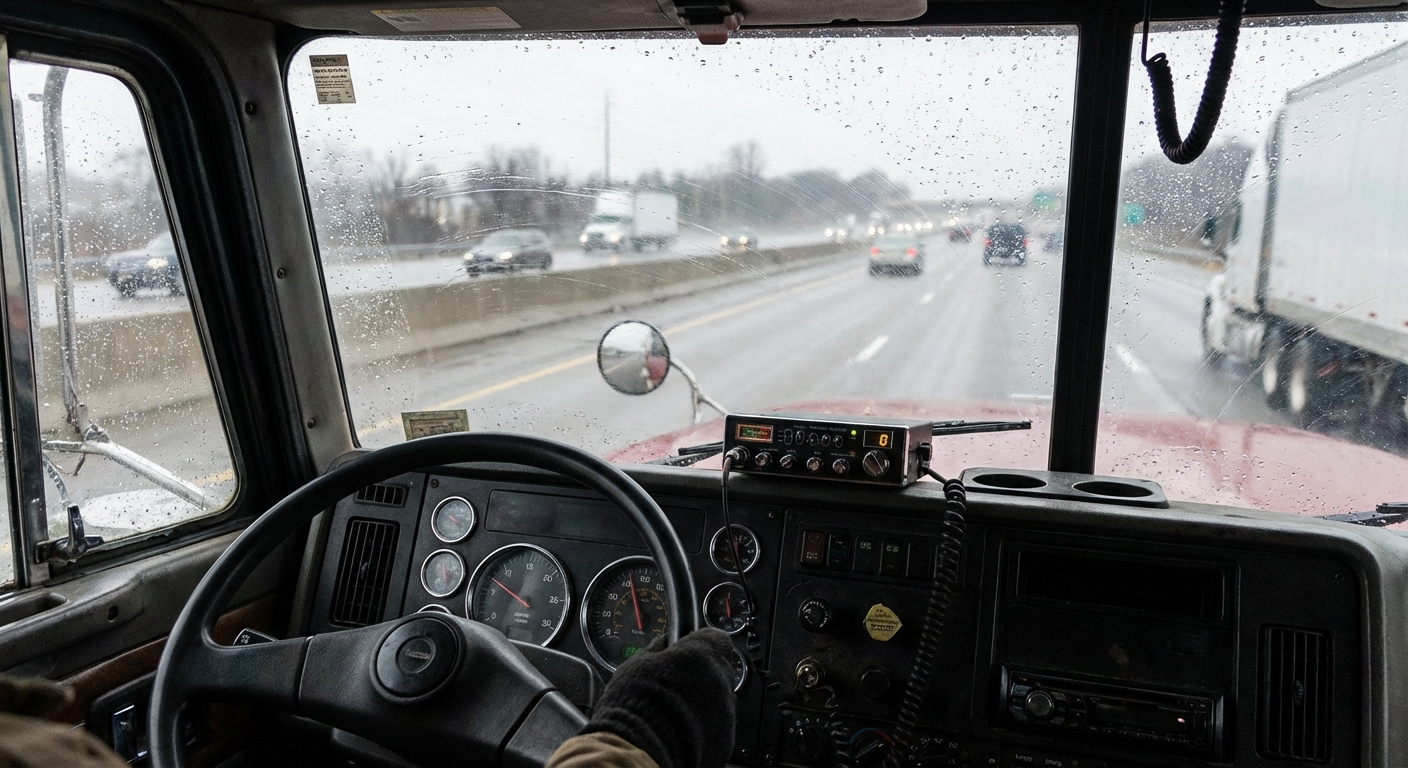
Car Accident Attorney for Commercial Vehicle Crashes
A car accident attorney who handles commercial vehicle cases specializes in crashes involving trucks, buses, or other commercial motor vehicles. These attorneys differ from general car accident lawyers because they understand federal trucking regulations, electronic logging device data, hours-of-service violations, and carrier safety records. Commercial vehicle accidents involve heavier equipment, greater damage, and federal compliance issues that require specific legal expertise. If you've been hit by an 18-wheeler or other commercial vehicle, you need an attorney who knows how carriers operate, what evidence to demand in discovery, and how to use federal violations to establish negligence. General personal injury lawyers often lack the technical knowledge to maximize your case value in commercial vehicle claims.
Commercial Vehicle Accidents Are Different From Regular Car Accidents
The physics of a commercial vehicle accident create liability angles that don't exist in passenger car crashes. An 18-wheeler weighs up to 80,000 pounds fully loaded. A passenger car weighs about 4,000. That mass differential changes everything—the severity of injuries, the mechanism of fault, and the legal strategy to prove it.
Beyond the physics, commercial vehicle operators are subject to federal regulation in ways that private drivers aren't. The [Federal Motor Carrier Safety Administration (FMCSA)](https://www.fmcsa.dot.gov/) sets strict rules on hours of service, vehicle maintenance, driver qualifications, and carrier safety metrics. When a truck crash occurs, those regulations become evidence. A violation of federal HOS rules (hours of service) isn't just a traffic infraction—it's often the foundation of a direct negligence claim.
General car accident attorneys understand personal injury liability. Commercial vehicle attorneys understand carrier compliance. They know which maintenance records to demand, how to read ELD (electronic logging device) data, what a CSA score means, and how to establish that the trucking company itself—not just the driver—bears legal responsibility.
This distinction matters financially. Commercial vehicle cases typically settle for substantially higher amounts because they involve federal violations, greater injury severity, and discoverable evidence of carrier negligence. An attorney without commercial trucking experience may not know to pursue the motor carrier and shipper as co-defendants, or how to use regulatory violations to prove the case.
If you've been injured in a crash with a truck or commercial vehicle, you're not looking for a general personal injury lawyer. You need someone who speaks FMCSA regulations, understands the trucking industry's liability structure, and can extract maximum value from the evidence carriers are required to maintain.
Federal Regulations Create Multiple Liability Pathways
Every commercial motor vehicle operates under a thick layer of federal regulation. That's good news for an injured plaintiff—it creates multiple ways to establish liability beyond simple negligence.
Hours of Service (HOS) violations are the most common. A driver can legally operate a CMV for up to 11 hours after 10 consecutive hours off-duty. Violate that rule, and you've got federal evidence of negligence. Many crashes involving fatigue come with ELD data (electronic logging device records) that prove the driver exceeded HOS limits. If a crash happened in hour 12 of driving, that violation strengthens your case directly against both the driver and the motor carrier for allowing it.
Vehicle maintenance is another regulatory pathway. The FMCSA requires carriers to maintain commercial vehicles to strict standards. Brake failure, tire blowouts, or lighting defects become evidence of carrier negligence if maintenance records show a history of deferred repairs. Request the vehicle's maintenance file, inspection reports, and repair history—they're discoverable and often devastating to the defense.
Driver qualification files can reveal medical certification issues, prior violations, or training deficiencies. A driver operating a CMV must pass a DOT physical. If the driver had expired medical certification or a known safety violation, that's independent negligence by the motor carrier in hiring and retention.
[CSA scores (Compliance Safety Accountability scores) are public data](https://www.fmcsa.dot.gov/safety/data-statistics/crash-injury-and-fatality-data). Check the FMCSA database for the carrier's score. If it's above intervention thresholds in unsafe driving or hours-of-service violations, you've got evidence that the company's own compliance profile made this crash foreseeable.
The key difference: in a passenger car case, you're proving the driver was negligent. In a commercial case, you're often proving the motor carrier itself created the dangerous condition through systematic regulatory violations. That's a much stronger liability position and it produces significantly higher settlements.
Talk to a truck accident lawyer today
Free consultation — no fees unless your case wins.
Get started →Evidence Preservation and Spoliation Concerns
Commercial trucking companies possess evidence that directly relates to fault: ELD data, driver logs, dispatch communications, maintenance records, post-crash drug screens, and incident reports. They also know this evidence is valuable to the other side. Without a preservation letter, some of that evidence can disappear.
Most states impose a 15-day spoliation period after a crash. After 15 days, a motor carrier is legally allowed to delete or destroy data if normal business practices would call for it. ELD records might be overwritten. Dispatch communications might be archived and made inaccessible. A preservation letter from an attorney to the carrier stops that clock immediately and creates a legal duty to retain all evidence.
This is non-negotiable: your attorney should send a preservation letter within days of the crash. It should cover:
- Electronic logging device (ELD) data for the 72 hours prior to the crash
- Driver's hours-of-service logs (paper and electronic)
- Dispatch communications and routing records
- Post-crash drug screen results and alcohol testing
- Maintenance and repair records for the specific vehicle
- Vehicle inspection reports (BIT inspections)
- Driver qualification files
- In-cab camera footage if the vehicle was equipped with cameras
Failure to preserve is spoliation. It's a serious violation, and courts often allow adverse inferences—meaning the judge or jury can assume the destroyed evidence would have proven your case.
A general personal injury attorney may not know to send a preservation letter. A commercial vehicle attorney understands that the motor carrier will cooperate initially but shift to a defensive posture once liability becomes clear. Get ahead of it. Preserve the evidence before it vanishes.
Settlement Ranges for Commercial Vehicle Accident Cases
Commercial vehicle accident settlements run higher than passenger car cases for three reasons: the injury severity matches the mass of the vehicle, federal violations compound liability, and the defendants have deeper pockets.
A minor soft-tissue injury in a passenger car case might settle for $5,000–$25,000. The same injury caused by a truck would more likely settle for $50,000–$150,000 simply because the impact forces were greater. When you're talking about serious injury—broken bones, spinal injury, internal bleeding—truck cases often exceed $500,000 and move toward the millions.
Severe or permanent disability involving a commercial vehicle commonly results in settlements of $1 million to $5 million or more. These numbers reflect both the actual damages (medical costs, lost wages, pain and suffering) and the motor carrier's liability exposure under federal regulation.
Several factors shift the settlement range:
- HOS violations. Fatigue-related crashes backed by ELD data showing hours over 11 increase settlement value significantly.
- Maintenance defects. A crash caused by brake failure when records show deferred repairs moves the case from simple negligence to gross negligence.
- Driver history. Prior violations, failed drug tests, or inadequate training inflate the carrier's own negligence exposure.
- CSA scores. A carrier with a history of unsafe driving violations has a weaker negotiating position.
- Jurisdiction. Texas and California juries tend to award higher damages in commercial cases than rural states.
The insurance carrier defending the commercial vehicle knows all this. They'll often settle rather than litigate because the evidence trail in federal regulation is difficult to overcome. An experienced commercial vehicle attorney knows how to quantify these factors and pressure the defense into a reasonable settlement.
Attempting to negotiate without this expertise typically costs you six figures in settlement value.
Choosing an Attorney Qualified for Commercial Vehicle Claims
Not all personal injury attorneys are equipped to handle commercial vehicle cases. Here's what to look for:
Technical knowledge of FMCSA regulations. Ask whether the attorney understands hours-of-service rules, ELD data interpretation, CSA scores, and driver qualification file requirements. If they stare blankly, they're not your attorney.
Experience with carrier liability. Commercial cases require you to pursue the motor carrier itself as a defendant, not just the driver. The attorney should understand how federal regulation establishes carrier negligence independently of driver conduct.
Evidence preservation protocol. Ask about their process for sending preservation letters. This is table-stakes in commercial cases. If they don't immediately flag the need to preserve evidence, they lack experience.
Discovery strategy in trucking cases. The attorney should know what documents exist in a motor carrier's files, how to demand them, and how to use them in settlement negotiations. This includes ELD data, maintenance files, driver qualification files, and CSA records.
Track record with settlements. Ask for case summaries or references. How many commercial vehicle cases have they handled? What were the settlement ranges? If they're vague or deflect, move on.
Carrier insurance knowledge. Motor carriers carry different insurance products than private drivers. An experienced attorney understands the coverage limits, policy exclusions, and negotiating leverage that vary by insurance carrier.
Industry reputation. In the trucking world, attorneys become known for the cases they win. An attorney who regularly handles truck cases will have a reputation among defense counsel—that reputation affects how seriously your claim is treated in settlement talks.
Hiring a general personal injury attorney for a commercial vehicle case is like hiring a dentist to do heart surgery. They're both doctors, but the specialty matters. In commercial vehicle cases, the specialty determines your outcome. Don't cut corners on attorney selection—the difference between an experienced commercial vehicle attorney and a generalist can easily exceed half a million dollars in your final settlement.
Common questions
What's the difference between a commercial vehicle accident and a regular car accident?
Commercial vehicles (trucks, buses) are subject to federal FMCSA regulations. Violations of hours-of-service rules, maintenance standards, or driver qualification requirements become evidence of negligence. A passenger car accident typically turns only on whether the driver was negligent. A truck accident may establish negligence by both the driver and the motor carrier itself. That's why settlements for truck accidents are significantly higher.
How long do I have to file a commercial vehicle accident claim?
The statute of limitations varies by state (typically 2–3 years), but don't wait. Send a preservation letter immediately to prevent the motor carrier from destroying evidence. The first 72 hours after a crash are critical for securing ELD data, dispatch records, and other evidence that proves your case.
What is a preservation letter?
It's a formal written demand from your attorney to the motor carrier requiring them to retain all evidence related to the crash—ELD data, driver logs, maintenance records, dispatch communications, and video footage. Without it, the carrier may legally delete this evidence after 15 days. A preservation letter stops that clock and creates a legal duty to preserve.
Should I contact the trucking company after an accident?
No. Contact your attorney first. Anything you say to the motor carrier or their insurance company can be used against you. Let your attorney handle all communication with the carrier, their insurer, and their legal team. This protects your claim.
Can I sue just the truck driver, or do I need to sue the motor carrier too?
You should pursue both. Federal regulation often establishes independent liability for the motor carrier (negligent hiring, retention, or maintenance). The motor carrier typically has substantially deeper insurance coverage than the individual driver. Omitting the carrier from your suit leaves money on the table.
How much is my commercial vehicle accident settlement worth?
Settlement value depends on injury severity, federal violations, jurisdiction, and the carrier's liability exposure. Minor injuries might settle for $50,000–$200,000. Serious injury often exceeds $500,000. Severe permanent disability frequently reaches $1 million or more. An experienced commercial vehicle attorney can evaluate the specific factors in your case.
Experienced truck accident attorneys. No upfront cost.
Free consultation →