

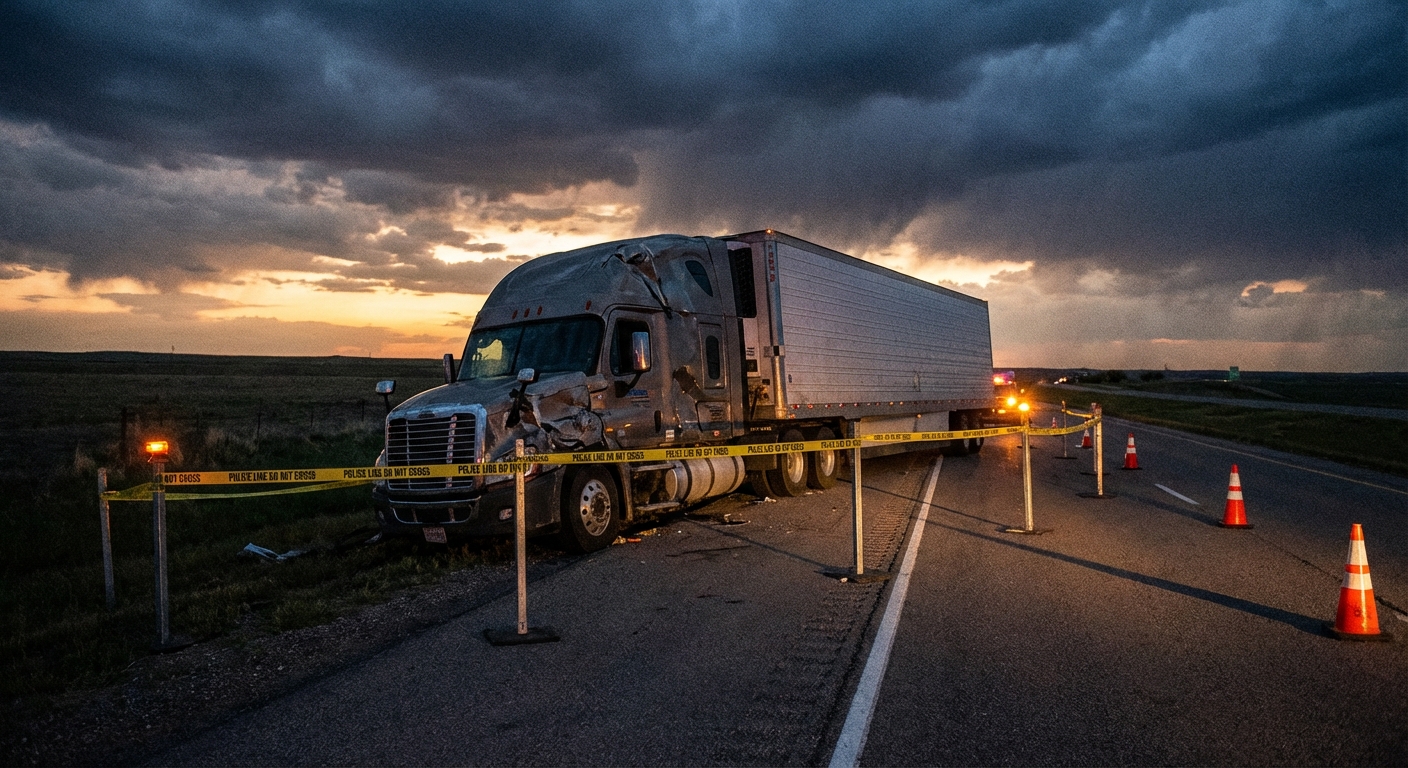
California Truck Accident Lawyer: Understanding Your Rights After a CMV Crash
A California truck accident lawyer focuses on uncovering liability in commercial motor vehicle (CMV) collisions by immediately requesting critical evidence like ELD data, driver logs, and post-crash drug screens. These cases are distinct from standard car accidents, involving federal Hours of Service (HOS) rules and the extensive resources of large motor carriers and their insurers. In California, state-specific laws, including a two-year statute of limitations for personal injury claims and the pure comparative negligence rule, significantly shape legal strategy. A lawyer with industry knowledge identifies all potentially liable parties—the driver, carrier, broker, or even the maintenance provider—to build a comprehensive case, especially given the often-severe injuries and high stakes involved in big rig crashes. Securing this evidence early is paramount to preventing spoliation and proving fault.
What Makes California Truck Accident Cases Different?
Commercial motor vehicle (CMV) collisions in California involve a distinct set of legal and factual challenges compared to standard car accidents. The sheer size and weight of an 18-wheeler, which can weigh up to 80,000 pounds fully loaded, means the physics of these crashes often lead to catastrophic injuries or fatalities. This immediately elevates the stakes, both medically and financially.
Beyond the physical impact, these cases operate under a dual layer of regulation. While California Vehicle Code applies, federal regulations from the Federal Motor Carrier Safety Administration (FMCSA) often take precedence for interstate carriers. These rules cover everything from driver qualification and Hours of Service (HOS) to vehicle maintenance and drug testing. A thorough investigation must analyze compliance with both state and federal law.
California also applies a pure comparative negligence rule. This means that even if an injured party is found partly at fault for the crash, they can still recover damages, though the total award will be reduced by their percentage of fault. This contrasts with other states that might bar recovery if a plaintiff's fault exceeds a certain threshold. The motor carrier and their insurer will deploy significant resources to minimize their liability, making an in-depth understanding of these complex legal frameworks essential for pursuing a claim.
Key Evidence in a California Commercial Truck Collision
The success of a California truck accident claim hinges on the swift and strategic preservation of evidence. Trucking companies control a vast amount of data that can prove negligence, but they are often only legally required to keep it for a limited time. For instance, many critical electronic records have a 15-day spoliation period.
Immediately after a crash, a legal team sends a preservation letter to the motor carrier. This legally mandates them to retain all relevant records. The evidence sought includes:
- Electronic Logging Device (ELD) data: This records a driver's HOS, speed, and location.
- Driver Qualification Files (DQF): Contains the driver's history, medical certifications (including the last three DOT physicals), and training records.
- Maintenance records: Documentation of vehicle inspections and repairs, critical for identifying mechanical failures.
- Post-crash drug and alcohol screens: Federal law mandates these tests after certain types of accidents. Failure to administer them, or a positive result, can be powerful evidence.
- Black box data (Event Data Recorder): Provides pre-crash speed, braking, and other operational data.
- Dispatch records and bills of lading: These show what the driver was hauling and their route, potentially revealing pressure to violate HOS rules.
Additionally, the motor carrier's [Compliance, Safety, Accountability (CSA) score](https://www.fmcsa.dot.gov/safety/data-and-statistics/safety-measurement-system-sms) is public information. If it’s above intervention thresholds in areas like unsafe driving or HOS compliance, it can form the basis for a direct negligence claim against the carrier itself. Gathering this comprehensive body of evidence is a core component of building a strong case.
Talk to a truck accident lawyer today
Free consultation — no fees unless your case wins.
Get started →Understanding Liability in California Trucking Accidents
Determining all liable parties in a California commercial truck collision extends beyond just the driver. While driver negligence, such as distracted driving or speeding on Interstate 5 (I-5), is a common factor, the motor carrier often bears significant responsibility through vicarious liability or their own direct negligence.
Under the principle of *respondeat superior*, a motor carrier is generally liable for the negligent actions of its driver if those actions occurred within the scope of employment. However, a carrier can also be directly negligent through:
- Negligent hiring: Failing to properly vet a driver's background, including their driving record or past safety violations.
- Negligent training: Not providing adequate instruction on safety protocols or specific equipment.
- Negligent supervision: Failing to monitor a driver's HOS compliance or unsafe driving habits.
- Negligent maintenance: Allowing a rig to operate with known mechanical defects, such as faulty brakes.
Beyond the driver and carrier, other entities might share liability. The shipper could be responsible if they improperly loaded cargo, leading to an unstable load. A broker might be liable if they contracted with an unsafe carrier. Even the manufacturer of a defective truck part or the company responsible for vehicle maintenance could be held accountable. Identifying all potential defendants is critical for maximizing recovery, especially given the two-year statute of limitations for personal injury claims in California, as outlined in [California Code of Civil Procedure Section 335.1](https://leginfo.legislature.ca.gov/faces/codes_displaySection.xhtml?lawCode=CCP§ionNum=335.1).
The Role of Federal Regulations in California Truck Crashes
Federal Motor Carrier Safety Administration (FMCSA) regulations are the backbone of safety in the trucking industry. These rules apply to most commercial motor vehicles (CMVs) operating across state lines and often within California as well. Violations of these regulations frequently contribute to crashes and are powerful indicators of negligence in a legal claim.
Key FMCSA regulations include:
- Hours of Service (HOS) Rules: These dictate how long a commercial driver can operate a rig. For example, a driver can operate a CMV for up to 11 hours after 10 consecutive hours off-duty, within a 14-hour duty period. If a crash happens because a driver was operating beyond these limits, it's a clear federal violation and strengthens the plaintiff’s case considerably.
- Commercial Driver's License (CDL) Requirements: Drivers must possess the correct class of CDL and maintain specific endorsements.
- Drug and Alcohol Testing: Regulations mandate pre-employment, random, post-crash, and reasonable suspicion testing for controlled substances and alcohol.
- Vehicle Maintenance and Inspection: Carriers must adhere to strict maintenance schedules and conduct pre-trip and post-trip inspections. Evidence of neglected repairs can point to carrier negligence.
When a driver or motor carrier fails to comply with these [commercial motor vehicle regulations](https://www.fmcsa.dot.gov/), it establishes a direct link to a potential breach of their duty of care. An investigation will meticulously review these records to pinpoint specific violations that contributed to the incident, turning federal safety standards into critical evidence for your claim.
Choosing the Right Legal Representation for a California Truck Accident
Selecting the appropriate legal team after a California commercial truck accident requires specialized consideration. These cases are not typical personal injury matters; they demand an industry-insider perspective and a thorough understanding of both state law and federal trucking regulations.
When evaluating legal representation, look for professionals who demonstrate:
- Specific Industry Knowledge: They should speak the language of trucking—HOS, ELD, CSA scores, DOT physicals. This expertise allows them to anticipate defense tactics and identify overlooked evidence.
- Resources for Complex Litigation: Investigating a big rig crash involves accident reconstructionists, trucking experts, and medical specialists. A capable firm possesses the resources to fund these expert analyses.
- Experience Against Corporate Defense: Motor carriers and their insurers are well-funded. Your legal team must be prepared to go toe-to-toe with their defense attorneys, who specialize in minimizing payouts.
- Familiarity with California Legal Landscape: Understanding how cases proceed through the Los Angeles Superior Court, Stanley Mosk Courthouse, for example, or how [California's pure comparative negligence rule](https://www.calbar.ca.gov/Public/Free-Legal-Information/Legal-Guides/Comparative-Negligence) impacts damages, is crucial. They should also understand the severity of injuries often seen at Level 1 trauma centers like Ronald Reagan UCLA Medical Center, and how these impact long-term care needs.
An attorney with this specialized focus can effectively challenge the motor carrier’s narrative, ensuring all aspects of negligence, from driver fatigue on I-10 to faulty equipment, are brought to light.
Common questions
How long do I have to file a truck accident lawsuit in California?
In California, you generally have two years from the date of the injury to file a personal injury lawsuit, including those arising from truck accidents. This is known as the statute of limitations under California Code of Civil Procedure Section 335.1. Missing this deadline typically means losing your right to pursue compensation.
What if I was partly at fault for the truck accident in California?
California follows a 'pure comparative negligence' rule. This means you can still recover damages even if you were partly at fault for the accident. However, your total compensation will be reduced by your percentage of fault determined by the court or settlement.
What kind of damages can I recover after a California truck accident?
Victims of California truck accidents can seek recovery for economic damages like medical bills, lost wages, and property damage. They can also pursue non-economic damages, which include pain and suffering, emotional distress, and loss of enjoyment of life. In some cases, punitive damages may be awarded if the defendant's conduct was particularly egregious.
How do Hours of Service (HOS) rules affect a California truck accident claim?
Hours of Service (HOS) rules dictate how long commercial drivers can operate their vehicles. If a truck driver violated HOS regulations, and that fatigue contributed to your crash, it can be strong evidence of negligence. Proving an HOS violation significantly strengthens your claim by showing the driver or carrier disregarded safety standards.
What is a preservation letter, and why is it important in California truck accident cases?
A preservation letter is a formal legal notice sent to a trucking company demanding that they retain all evidence related to a crash. This is crucial because critical data like ELD records or maintenance logs can be routinely deleted after a short period. Sending this letter quickly helps prevent the spoliation of evidence that could prove fault.
Are all truck accidents handled the same way in California?
No, truck accidents are not handled the same way as typical car accidents in California. They involve distinct federal regulations, higher potential for severe injuries, and require specialized knowledge to investigate and litigate effectively. The legal strategies and evidence required are far more complex due to the size of the vehicles and the resources of the motor carriers involved.
Experienced truck accident attorneys. No upfront cost.
Free consultation →